
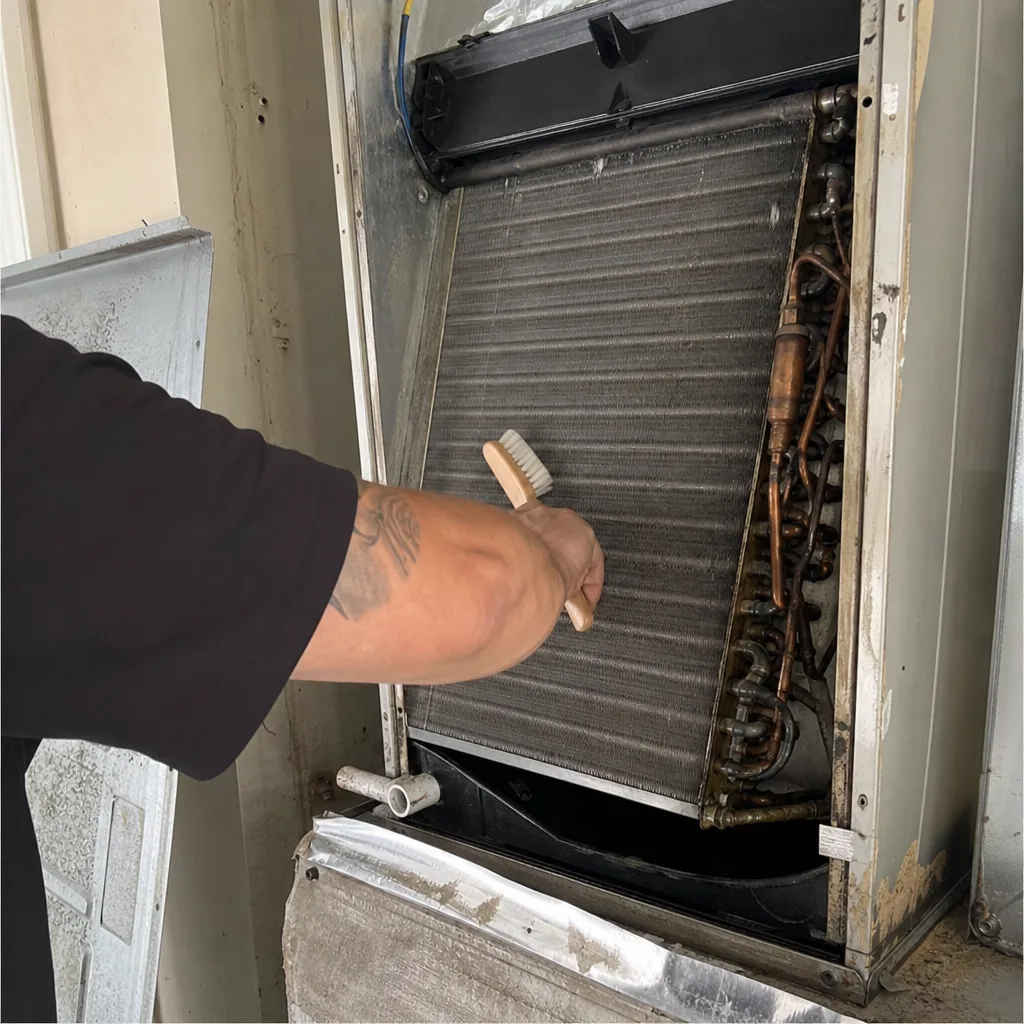
Last updated November 25, 2026
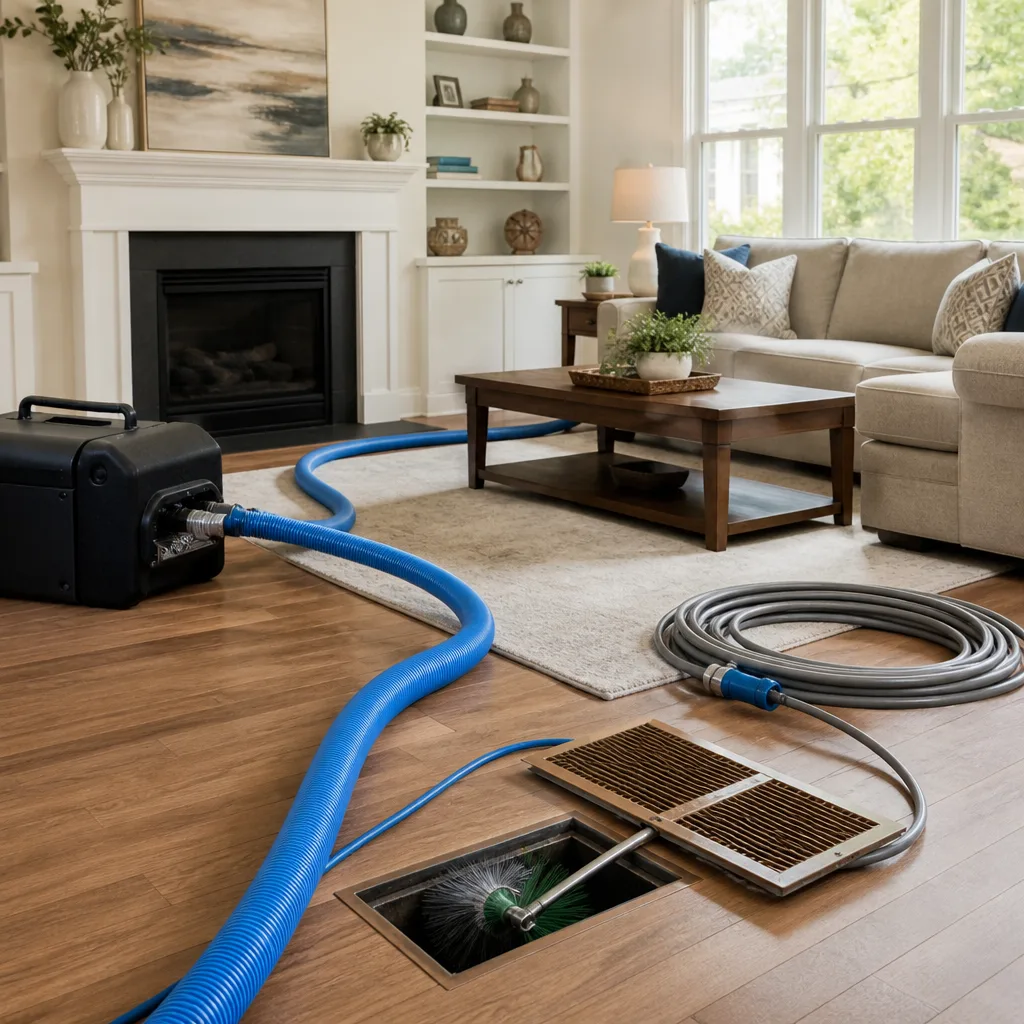 Whole-home duct cleaning
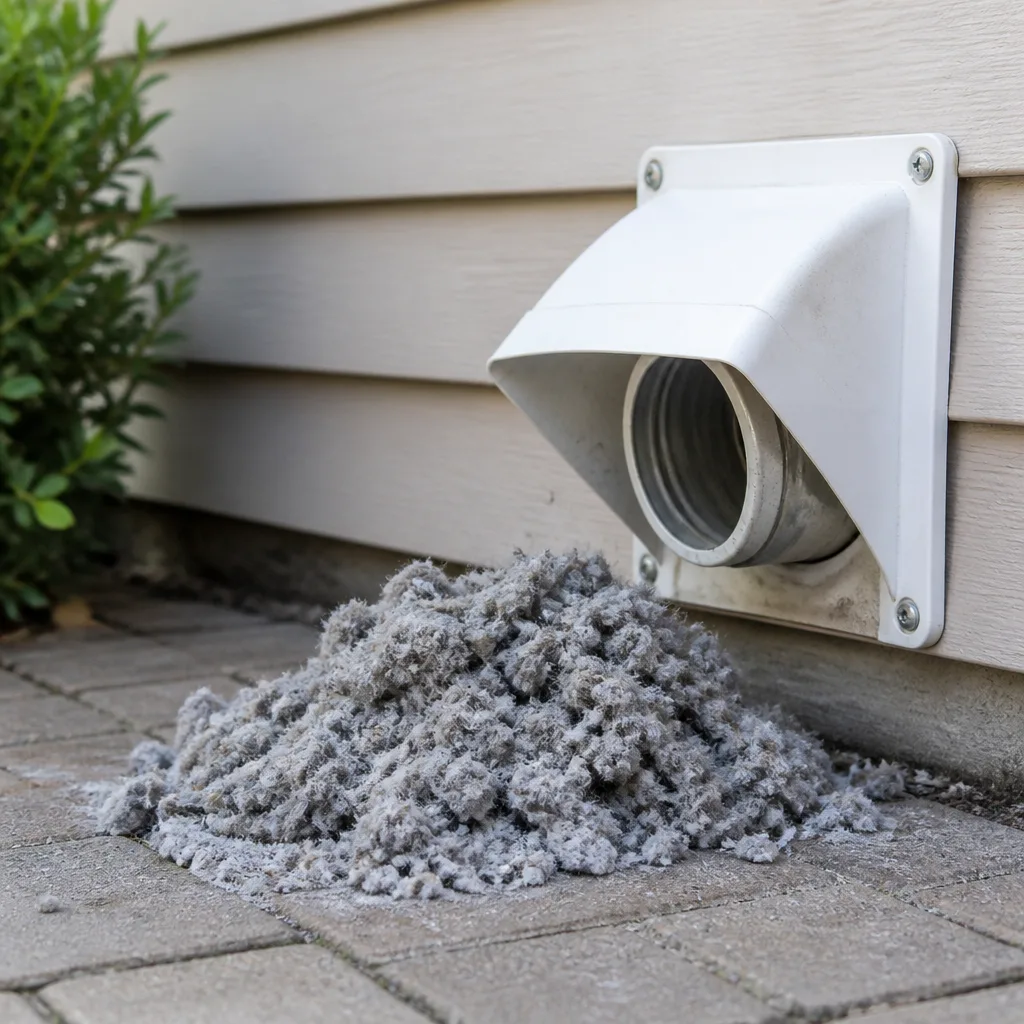 Dryer vent cleaning
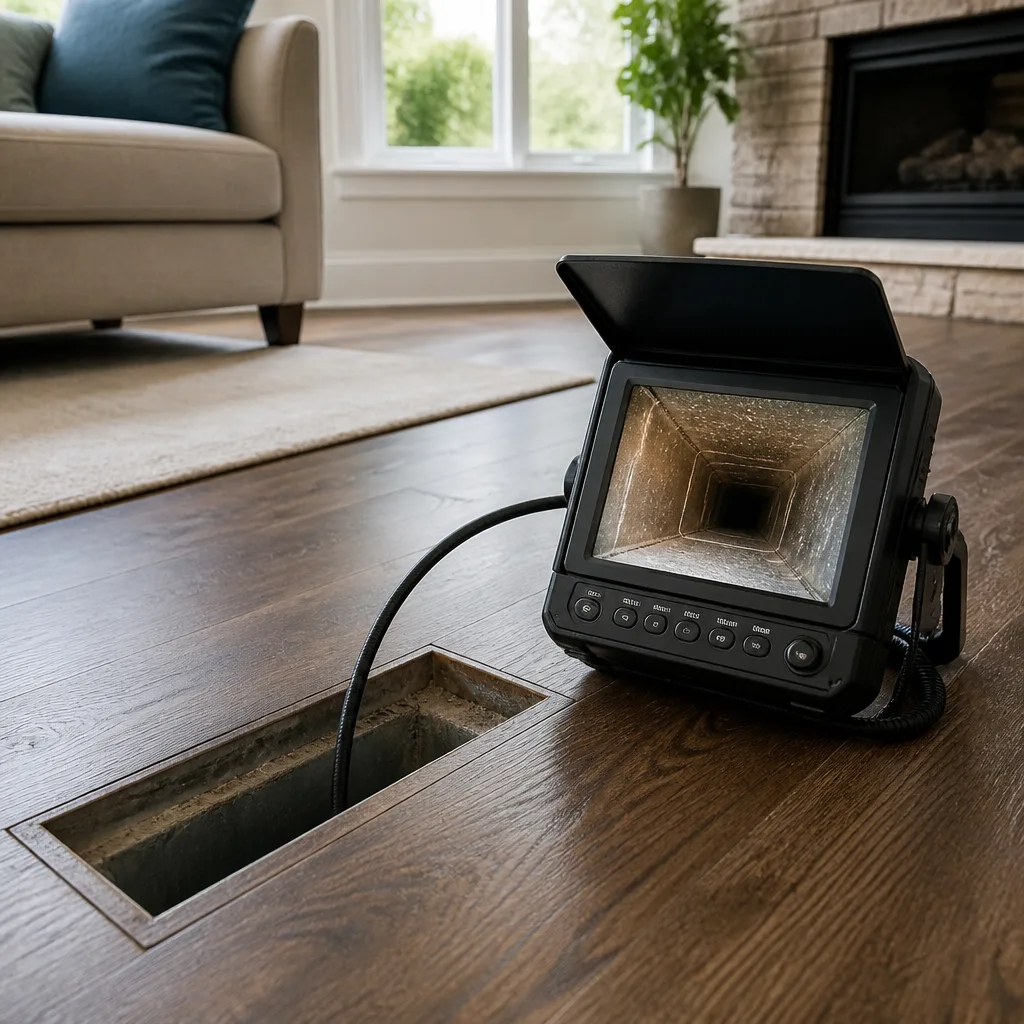 Camera inspection
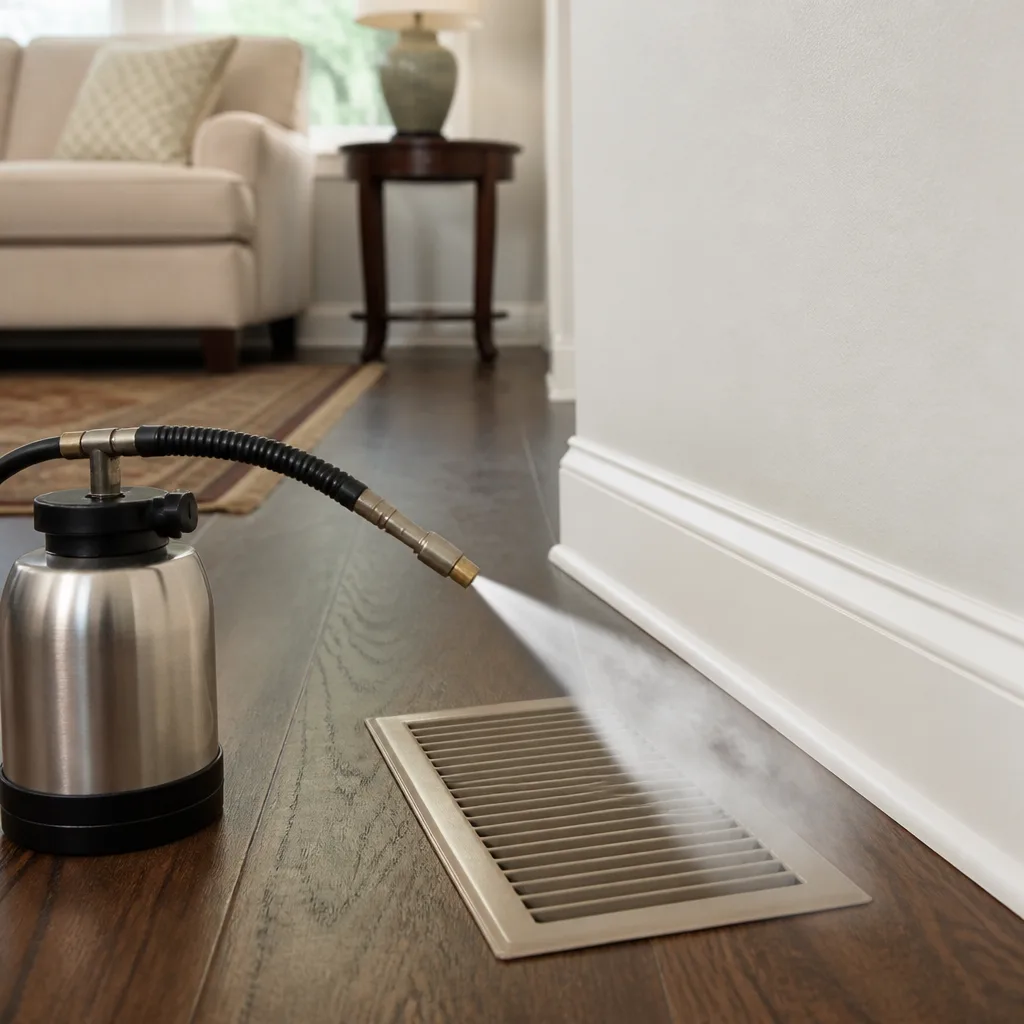 Sanitizing & deodorizing
Whole-system duct and dryer vent check with before-and-after photos - you see exactly what came out of your vents
That "$99 whole-house special" is a bait ad - the real number appears once they are in your hallway, or the "clean" is a shop-vac at the register. We photograph the inside of your ducts before and after instead.
Air Duct Cleaning Maintenance Checklist for Buckhead Homeowners
The filter you change every 90 days tells you almost nothing about what’s happening fifteen feet deeper in your ductwork. That’s the part of the system you can’t see, and it’s exactly where the problems Buckhead homeowners pay the most to fix actually begin – a failing seal behind a register, microbial growth on a damp interior panel, debris packed against an evaporator coil. A maintenance checklist, done right, isn’t a cleaning reminder schedule. It’s a diagnostic calendar that lets you catch those failures while they’re still cheap to correct. This guide gives you that calendar: what you can check yourself each month, what needs a professional, and what to document so every visit starts with real data instead of a guess.
Quick Answer
A practical air duct maintenance checklist for a Buckhead home combines monthly homeowner checks you can do at the registers, professional servicing on a schedule matched to your home’s conditions, and one keep-it-clean step most people skip: sealing duct leaks after cleaning. In our experience, the homes that stay clean are the ones where someone is watching the system, not just paying for a cleaning every few years. Log what you see, fix what you find, and the whole air system holds up better.
Styles & brands we work with
- Whole-home duct cleaning
- Dryer vent cleaning
- Camera inspection
- Sanitizing & deodorizing
Table of Contents
- Why a Checklist Beats a Cleaning Reminder
- Month-by-Month Homeowner Tasks vs. Professional Tasks
- What to Check at the Registers Without Taking Anything Apart
- Logging Filter Discoloration as a Contamination Proxy
- Buckhead Seasonal Triggers: Pollen, Humidity, Leaf Debris
- What to Document Before a Professional Visit
- How Often Professional Service Actually Makes Sense
- Why Clean Ducts Stay Clean When Leaks Are Sealed
Why a Checklist Beats a Cleaning Reminder
A cleaning reminder asks one question: is it time? A checklist asks better ones: what changed, where, and how fast. That’s the difference between maintenance and a calendar. When you track conditions at the registers month to month, you start to see the system’s behavior – the register that darkens faster after a pollen peak, the room that smells faintly musty when the humidity climbs. Those patterns point to a specific failure long before it becomes a remediation project.
In our experience working across Buckhead, the most expensive jobs we see are rarely the dirtiest systems. They’re the ones where a small, visible warning sat unaddressed: a gap at a duct joint pulling attic air, a return that hadn’t been looked at since move-in. Cleaning removes debris. Monitoring catches the reason the debris keeps coming back.
This matters more in Buckhead than in a lot of places because the seasonal swings here are sharp. Spring brings a heavy pollen load. Summer humidity runs high and lingers. Fall drops leaf debris right where exterior intakes sit. Each season stresses your ducts differently, and a checklist built around those triggers will always beat a vague once-every-few-years habit. Think of your Air Duct Cleaning Buckhead plan as the professional layer sitting on top of your own monthly observations – both matter, and neither replaces the other.
What this guide gives you:
- A month-by-month split between what you can safely do and what requires professional equipment.
- The specific visual and olfactory cues to check at registers, no disassembly needed.
- How to log filter discoloration as a proxy for how fast your ducts are loading up.
- Buckhead seasonal triggers to watch for in spring, summer, and fall.
- A documentation routine so a technician can benchmark against your prior conditions.
Month-by-Month Homeowner Tasks vs. Professional Tasks
The cleanest split is this: you handle observation and the inexpensive filter layer, a professional handles anything that touches the duct interior or the mechanical system. Here’s how that plays out over a year in a Buckhead home. Adjust timing to your own filter schedule and how hard your system runs, but keep the observation cadence steady.
Homeowner tasks
- Every month: Look at each supply and return register. Note dust build-up, discoloration streaks, or a dark ring around the grille. Write it down with the date.
- Every month: Check the air filter. Note whether it’s grey, brown, or caked, and roughly how evenly across the surface the discoloration sits.
- Every 30 to 90 days: Replace the filter, or clean it if it’s a reusable type. During a heavy pollen stretch, consider a shorter interval.
- Quarterly: Walk the exterior intakes and vents. Clear leaf debris and check that nothing is blocked. Confirm exterior intake screens are intact.
- Quarterly: Do a scent check. Run the system briefly with windows closed and notice any musty, dusty, or sharp smell from a register.
- Seasonally: Eyeball accessible duct connections you can see in the attic, basement, or mechanical closet. Note any obvious gaps or loose tape. Don’t try to repair them yourself.
Professional tasks
- Deep cleaning of the duct interior with commercial-grade equipment – a homeowner vacuum can’t reach or lift what settles in the run.
- Cleaning of the HVAC system, including the components where debris and moisture combine.
- Sanitizing to address microbial growth and airborne contaminants, not just surface dust.
- Duct repair and sealing to close leaks and gaps discovered during the visit.
- Assessment of filtration and air-quality upgrades matched to your system.
That split is where a full-scope provider earns its keep. The five service categories – air ducts, dryer vents, HVAC, air quality, and duct repair – cover your whole air system, so a technician can act on what your observations surfaced instead of just handing you a report. Our technicians have up to 8 years of experience reading exactly these signals.
What to Check at the Registers Without Taking Anything Apart
You don’t need tools to catch most early problems. Your registers are windows into the ductwork, if you know what to look for. Do this check once a month, in every room, and take a note or a phone photo each time.
Visual indicators
- Uneven dust lines: Heavy dust on one side of a grille and light on the other can suggest airflow is being pulled from a gap or a leak on the dusty side.
- Dark halos or streaks: Grey-to-black staining around the grille edge often means fine particles are collecting where air leaks past a poorly sealed register.
- Pitting or rust at the grille: Metal discoloration hints at moisture, and moisture in a duct is the condition microbial growth needs.
- Visible debris: Anything more than light dust at the register face is worth noting and mentioning to a technician.
- Weak or uneven airflow: Hold a tissue near the supply. A flutter that’s weak in some rooms and strong in others can point to a leak or a blockage somewhere upstream.
Olfactory indicators
- Musty smell: Points toward moisture and microbial growth somewhere in the system.
- Dusty smell right after start-up: Suggests debris sitting in the run that gets lifted when air begins moving.
- Sharp or burning odor: Stop and call a professional – never keep running the system to “see if it clears.”
None of this requires disassembly, and none of it requires touching wiring or duct interiors. What you’re doing is building a record of what’s normal for each register, so a change stands out. When a register you’ve tracked for months suddenly darkens, you’ll catch it in weeks, not years. For a deeper look at air duct cleaning itself, our air duct cleaning page covers the full process.
Logging Filter Discoloration as a Contamination Proxy
Your filter is the single most useful early-warning instrument you own – if you read it properly. Most people glance at it, decide it looks “about done,” and swap it. That throws away the signal. Instead, treat the filter as a gauge and keep a simple log.
Here’s a routine that takes a minute a month:
- Date the swap. Write the install date on the filter frame before you slide it in. That gives you a running record of how long each one lasted.
- Photograph it before you replace it. A monthly phone photo from the same angle builds a visual timeline.
- Note the color and pattern. Grey dust, brown-to-black build-up, and the evenness across the surface each mean something different about what your system is pulling in.
- Rate the load. Use a simple scale – light, moderate, heavy – and note whether build-up concentrated in one area or spread evenly.
- Track the interval. If a filter that used to last 90 days now loads up in 45, that change is a data point about contamination rate.
Why bother? Because the rate at which a filter loads tells you how fast your ductwork is accumulating debris between professional visits. An evenly dusted filter on a normal cycle is reassuring. A filter that darkens fast on one side, or carries a brownish tint, suggests airflow is being pulled through gaps or something in the system is holding moisture. When your log shows the interval shrinking, that’s your cue to schedule service rather than wait for the calendar to catch up. It’s information a technician can use, and it turns a routine chore into system monitoring.
Buckhead Seasonal Triggers: Pollen, Humidity, Leaf Debris
Buckhead sits among mature tree canopy, and that canopy sets the seasonal rhythm your ducts respond to. A checklist tuned to these triggers will always outperform a generic one.
Spring pollen surge
When the pollen counts climb, your filter loads faster and fine particles settle deeper in the run. This is the season to shorten your filter interval and to note build-up at registers more closely. If a filter that used to last a full quarter now looks done in half the time, log it – the surge is doing that, and it tells you the ducts are pulling more through the system.
Summer humidity peaks
Buckhead summers run humid, and that humidity is the condition microbial growth needs. It’s also when a small leak or a poorly sealed joint starts drawing damp outside air into the duct. Watch for musty smells this season, and pay attention to any register that develops a damp or discolored look. If you’re noticing a smell, that’s the point to review sanitizing as part of air quality work, not just a clean – the distinction matters, because removing debris is different from treating growth.
Fall leaf debris near exterior intakes
When leaves drop, they collect at exterior intake vents and screens. A blocked intake strains the system and can pull debris inward. Walk those exterior points quarterly and clear anything that’s built up. Check that screens are intact so leaves and pests stay out of the intake path.
Each of these triggers maps to a different part of your checklist – filter cadence in spring, moisture watch in summer, exterior clearing in fall. Together they’re why a Buckhead-specific schedule makes sense over a one-size-fits-all reminder. When the seasons stress the system, catching it early is what keeps a small correction from becoming a larger repair.
What to Document Before a Professional Visit
The single best way to get more out of a service visit is to arrive with a record. A technician can benchmark against prior conditions only if you’ve captured them. Here’s what to have ready, and it doubles as the file you build all year from your monthly checks.
- Your filter log. Swap dates, photos, color and load ratings, and the interval trend. This tells the technician how fast your system is loading up.
- Register notes. Which registers darken first, which smell off, which feel weak. Room by room.
- Symptom timeline. When did you first notice a musty smell, a weak airflow, or a dust line? Dates turn descriptions into data.
- Recent changes. A new pet, a renovation, new flooring, a fresh paint job – all of it changes what’s in the air and what lands in the ducts.
- System details. Make and model of your HVAC equipment, filter size and type, and when it was last serviced.
- Photos. Register faces, filter close-ups, and any exterior intake screens. A before-and-after comparison starts with your “before.”
- Questions. Write down what you want answered. A recorded photo of your own ducts at the end of the visit lets you compare against the next one.
That documentation turns a routine visit into a real assessment. Instead of starting from scratch, a technician can look at your log, see the contamination rate, and match the work to your home’s actual conditions. We lean on this heavily – commercial-grade equipment from Rotobrush and Nikro lets us reach and contain what a household vacuum can’t, and a documented baseline shows exactly what changed. For HVAC components specifically, our HVAC cleaning page lays out what that work covers.
How Often Professional Service Actually Makes Sense
There’s no universal answer to “how often,” and anyone who gives you a fixed number without looking at your home is guessing. What we can give you is a way to decide, driven by what your checklist reveals and by the conditions your home faces.
- Baseline cleaning makes sense as a starting point for a home you’ve just moved into or one with no service history – it resets the system to a known condition.
- Reschedule sooner when your filter log shows the interval shrinking, when a register starts discoloring faster than before, or when you catch a musty smell.
- Watch for pets and allergies: homes with heavy shedding or with allergy-aware occupants generally benefit from a tighter observation cadence and a professional review sooner.
- After renovations: drywall dust and construction debris load a system fast – a cleaning after the work is done keeps that debris out of the runs and the coil.
- After a leak or moisture event: if the ducts got damp, treat it as a reason to have the system inspected and, where warranted, sanitized.
The honest framing is this: your checklist decides the timing, and the professional visit handles the parts you can’t see or reach. Our role is to give you a written estimate for the job so you know the price before work begins, and to show you before-and-after photos of your own ducts so you can verify the work.
Why Clean Ducts Stay Clean When Leaks Are Sealed
Here’s the step most maintenance plans skip, and it’s the one that makes everything else last: sealing the leaks. A duct system with gaps and poorly sealed joints doesn’t just push air into the walls or attic – it pulls unfiltered air in through those same gaps. That means a freshly cleaned duct can start re-accumulating debris from an unfiltered source the moment the system runs again. Cleaning without sealing treats the symptom.
Duct repair and sealing closes those leaks, so what you cleaned stays clean. In our experience it’s the difference between a cleaning that lasts and a cleaning you repeat ahead of schedule. And because repair and sealing are part of the same full-scope visit as cleaning, you don’t need to line up a separate contractor to fix what the cleaning turned up – it’s handled in the same visit.
This is where a whole-system approach pays off. Your ducts, vents, and HVAC are one connected system, and treating them that way means a fix at one point doesn’t leave a gap at another. When we bring in filtration and air-quality products from Honeywell or Aprilaire, it’s to close the loop – matching the filtration to the system so the air moving through your ducts is cleaner on the way in, too. If you want to understand how cleaning, sanitizing, and sealing fit together, that’s the story of your air system, and it’s one we handle end to end. Dryer vents fit into the same approach as a standalone safety service, since lint build-up in a vent is a leading cause of residential fires; our dryer vent cleaning service addresses it directly.
Common Mistakes to Avoid
- Skipping the sealing step. Cleaning without sealing leaks leaves an unfiltered path back into your ducts, so debris returns faster than it should. Fix the leaks and the clean lasts.
- Replacing the filter without logging it. A swapped filter with no date or photo tells you nothing about the contamination rate. Log before you replace, or you lose the signal.
- Waiting for a smell to become a symptom. A faint musty note is early information – a small moisture or growth issue caught then costs far less to address than one discovered later.
- Ignoring exterior intakes during leaf drop. Buckhead’s tree canopy fills intake screens every fall; a blocked intake strains the system. Clear them quarterly.
- Treating sanitizing as the same as cleaning. Removing debris and treating microbial growth are different jobs. If you notice a damp, musty condition, ask about sanitizing, not just a clean.
- Relying on a household vacuum for a deep job. Consumer vacuums can’t reach or contain what settles deep in the run, and they can stir debris into the air. Leave the deep work to commercial-grade equipment.
- Hiring on price alone without a written estimate. An honest provider gives you a written per-job estimate and before-and-after photos of your own ducts. A vague quote that changes once work starts is the thing to walk away from.
See the difference
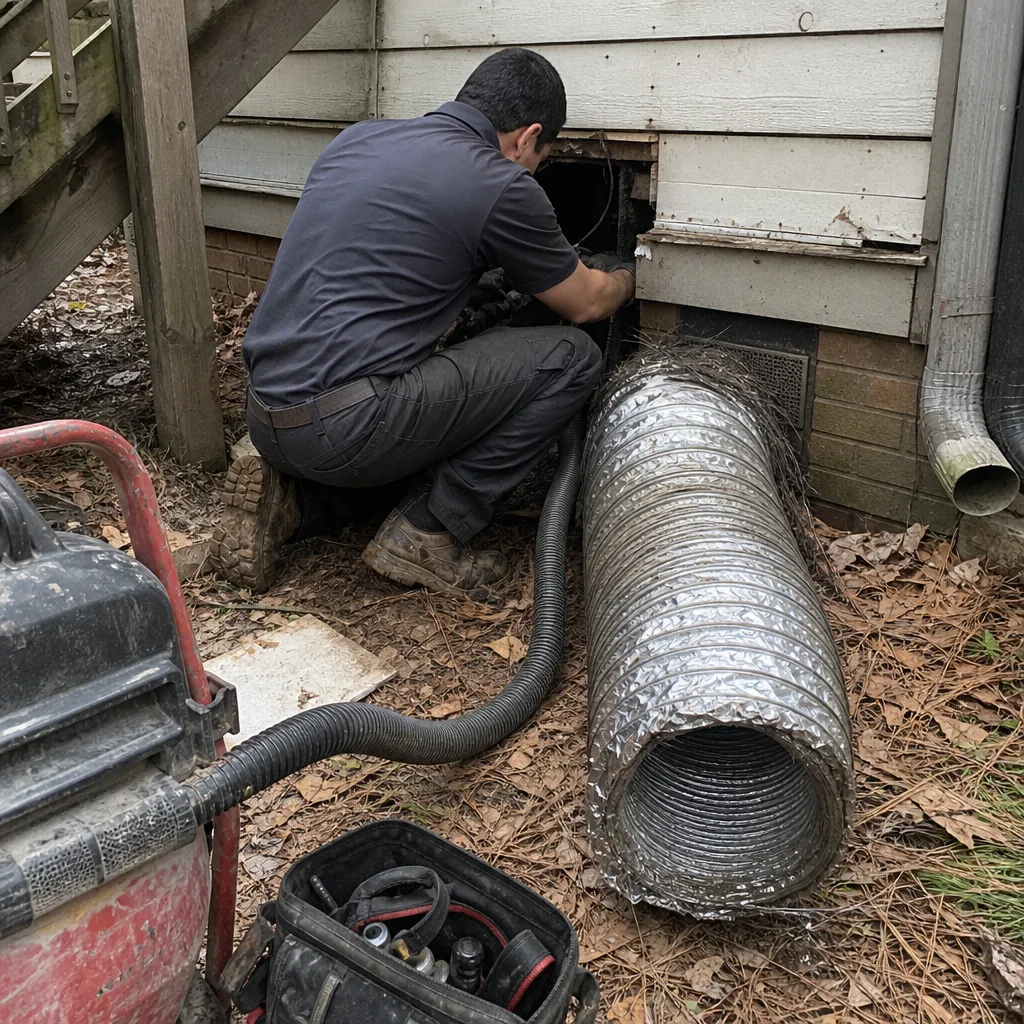 Before
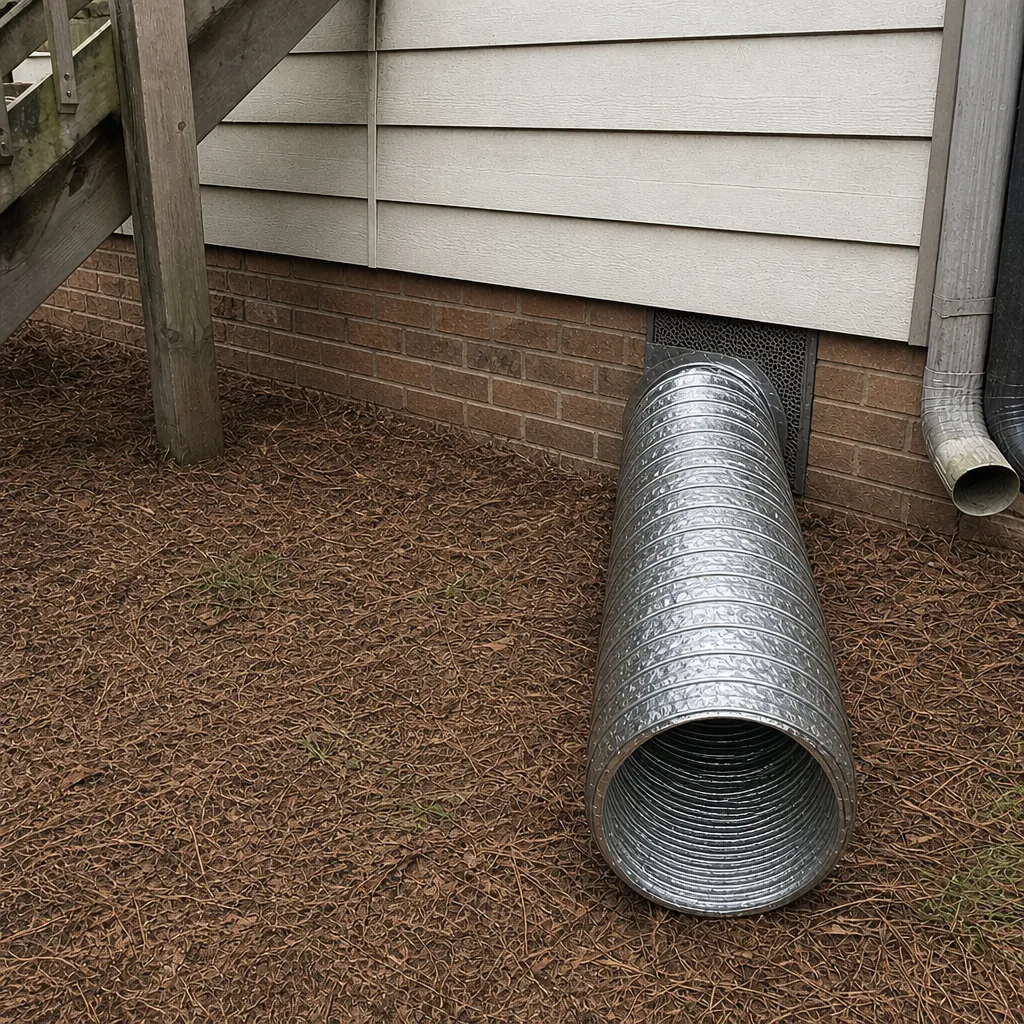 After
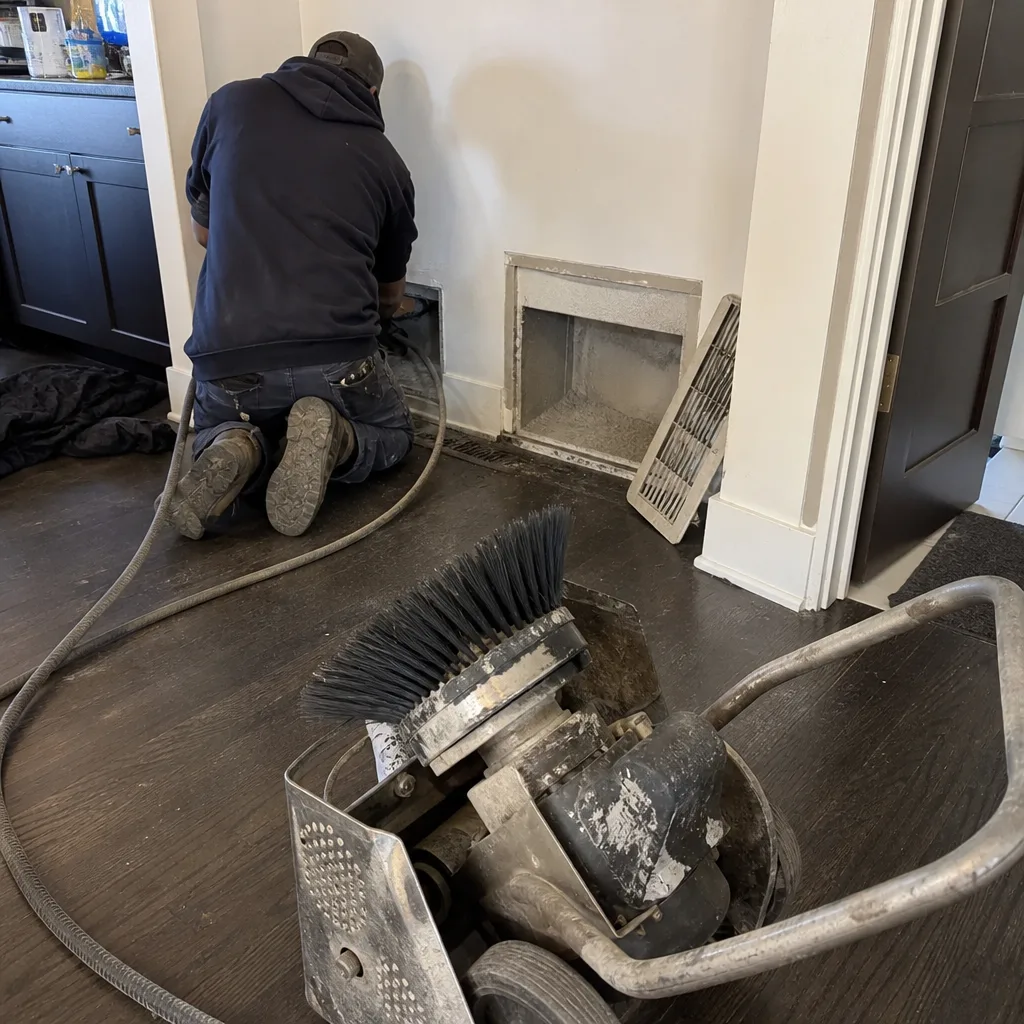 Before
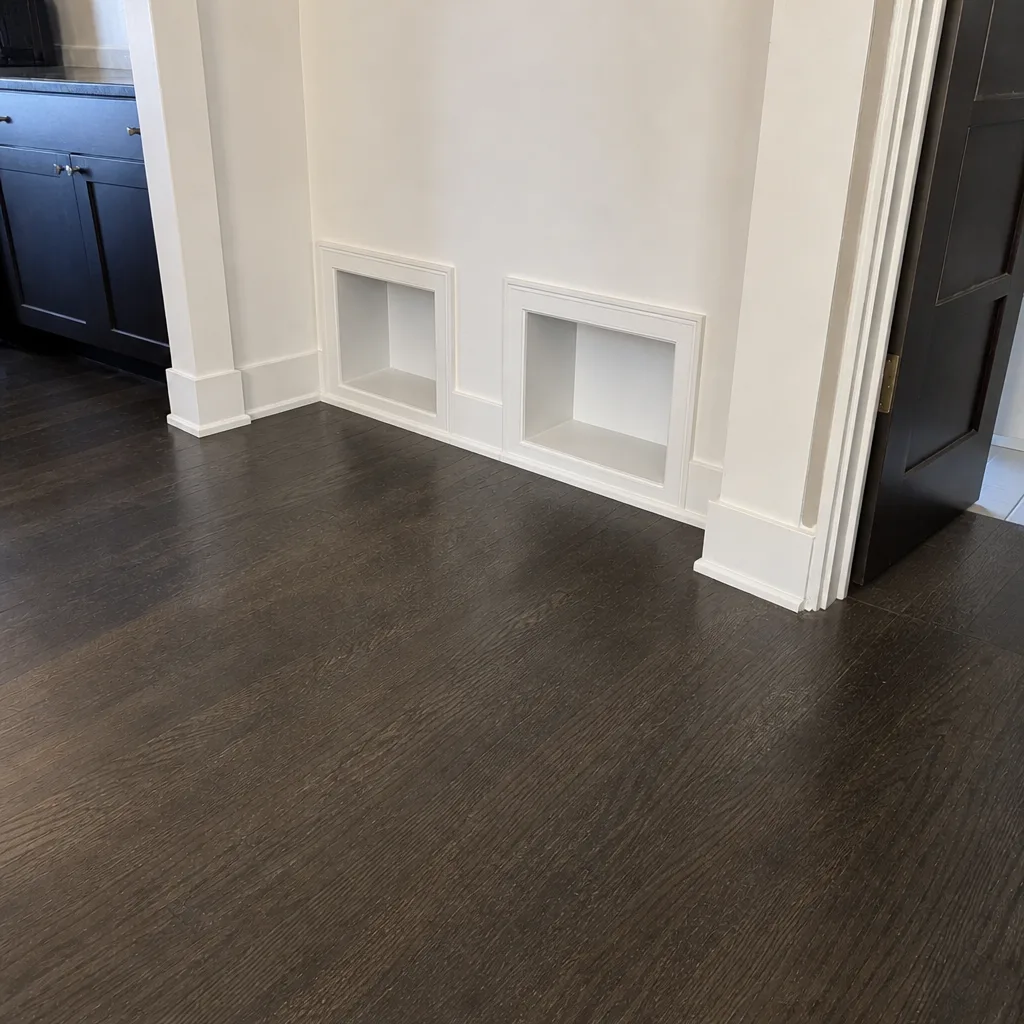 After
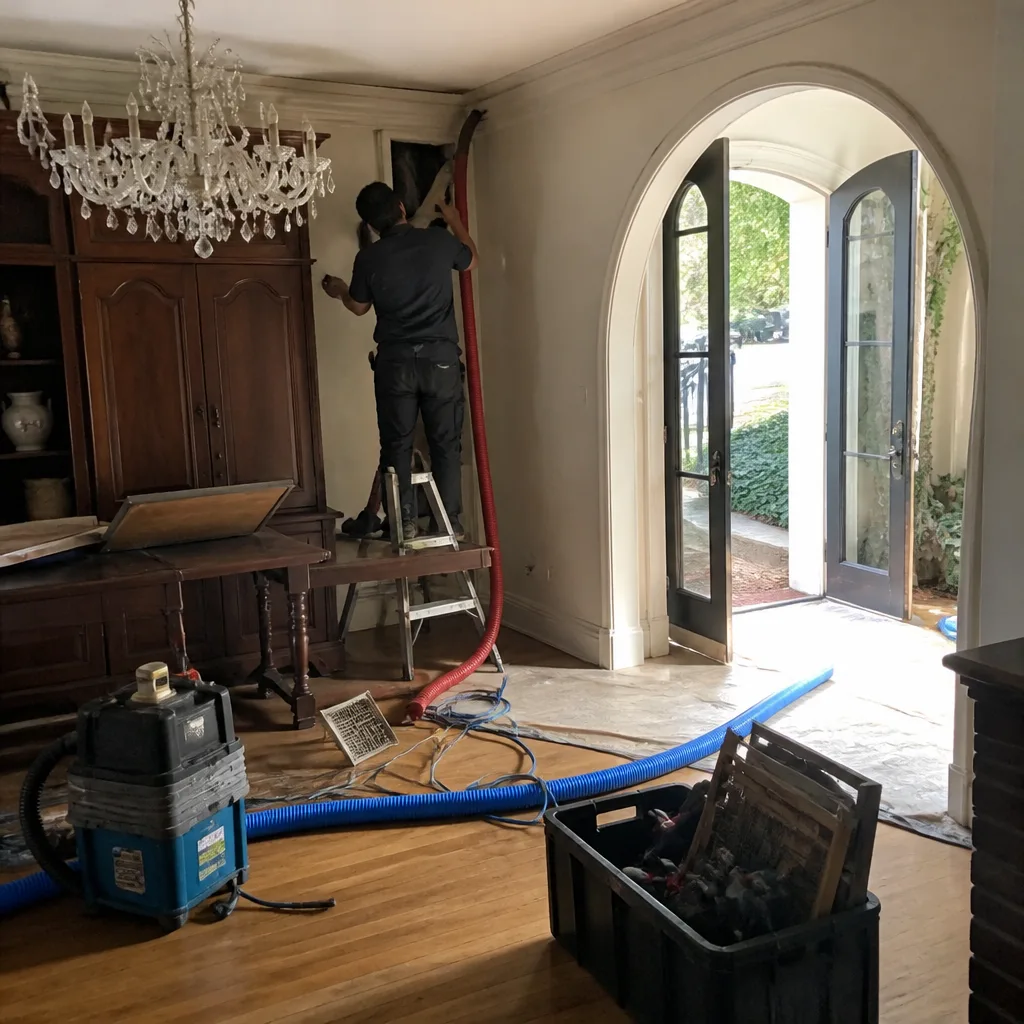 Before
 After
When to Call a Professional
Your checklist is designed to tell you when a homeowner job has become a professional one. Call when a register that was clean starts discoloring quickly, when your filter log shows the interval shrinking, when you catch a musty or dusty smell at the supply, or when a visible gap or loose connection appears at an accessible duct joint. Call after any renovation or moisture event. Call if you’ve moved into a home with no service history and want a documented starting point. And call if airflow is weak or uneven across rooms, because that usually points to a leak or a blockage you can’t see. Air Duct Cleaning Buckhead offers free estimates in Buckhead – call (844) 443-4682. We answer 24/7. Fast dispatch from 7am to 7pm, Sunday through Friday.
Frequently Asked Questions
There’s no fixed interval that fits every Buckhead home; the right timing depends on what your checklist shows, plus factors like pets, allergies, renovations, and any moisture event. A home with heavy shedding or allergy-aware occupants generally needs a closer watch and a sooner review, while a well-sealed system with good filtration can go longer. Let your filter log and register notes drive the schedule, and call (844) 443-4682 for a free estimate when your notes point to service.
We give a flat price per system based on a free written estimate rather than quoting a figure over the phone, because the scope depends on your home’s size, the number of runs, and whether repair and sealing are needed. We don’t price per vent and we don’t run low-coupon pricing that grows once a technician arrives. You get one flat price agreed before work starts, plus before-and-after photos of your own ducts. Call (844) 443-4682 for an exact quote – estimates are free.
Ask for before-and-after photos of your own ducts, taken during the visit – it’s the simplest way to verify real work rather than a promise. With commercial-grade equipment from Rotobrush and Nikro, the cleaning and containment are real and documentable, and you can compare the photos against the notes you kept beforehand. Call (844) 443-4682 to set up a visit where you’ll get that documentation.
No – a shop vacuum can’t reach what settles deep in the run, and it can stir debris into the air instead of containing it. Real duct cleaning uses equipment built to agitate and lift debris while containing it, which is why the Deep work belongs to a professional. Your monthly checks are the homeowner side; the interior work is the professional side. Call (844) 443-4682 for a free estimate.
Cleaning removes debris; sanitizing addresses microbial growth and airborne contaminants – they’re different jobs and most basic services skip the second. In Buckhead’s humid summers, a damp or musty condition in the system is the cue to ask about sanitizing rather than just a routine clean. We integrate air-quality equipment so treatment matches your system. Call (844) 443-4682 to review what your home needs.
A very low quote often reflects a partial job – a bit of surface work rather than a deep clean, with added charges appearing once the technician is on site. That’s the bait-and-switch reputation the whole industry carries, and the fix is one flat price per system agreed in writing before work starts, with before-and-after photos to back it up. Ask for a written estimate and skip the per-vent or coupon teaser. Call (844) 443-4682 for an honest, flat-price quote on your system.
The Bottom Line
Your air ducts aren’t a set-it-and-forget-it part of the house. They’re a system whose condition you can read – through register dust, filter discoloration, and smell – if you set up a checklist that pays attention. That’s the core of this guide: a monthly routine you can run yourself, a professional layer for the deep work, seasonal triggers built around Buckhead’s pollen, humidity, and leaf debris, and documentation that turns each visit into a real benchmark. The single most important habit is catching a change early and always sealing leaks so a clean stays clean. In our experience, modest observation done consistently beats a big remediation every time.
Ready to put the checklist to work? Call Air Duct Cleaning Buckhead at (844) 443-4682 for a free estimate. We answer 24/7. Fast dispatch from 7am to 7pm, Sunday through Friday. You’ll get a flat price per system agreed before work starts, and before-and-after photos of your own ducts.
Written by the team at Air Duct Cleaning Buckhead.