
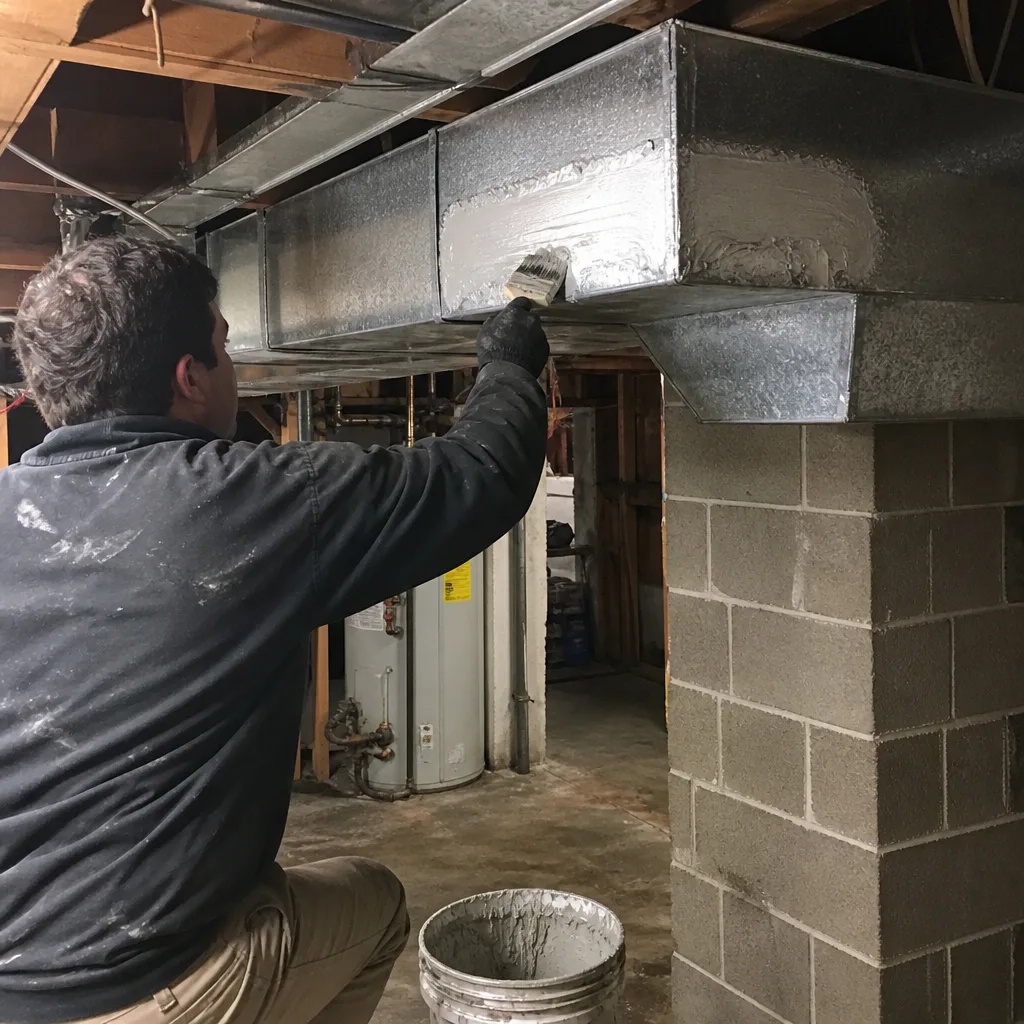
Last updated November 25, 2026
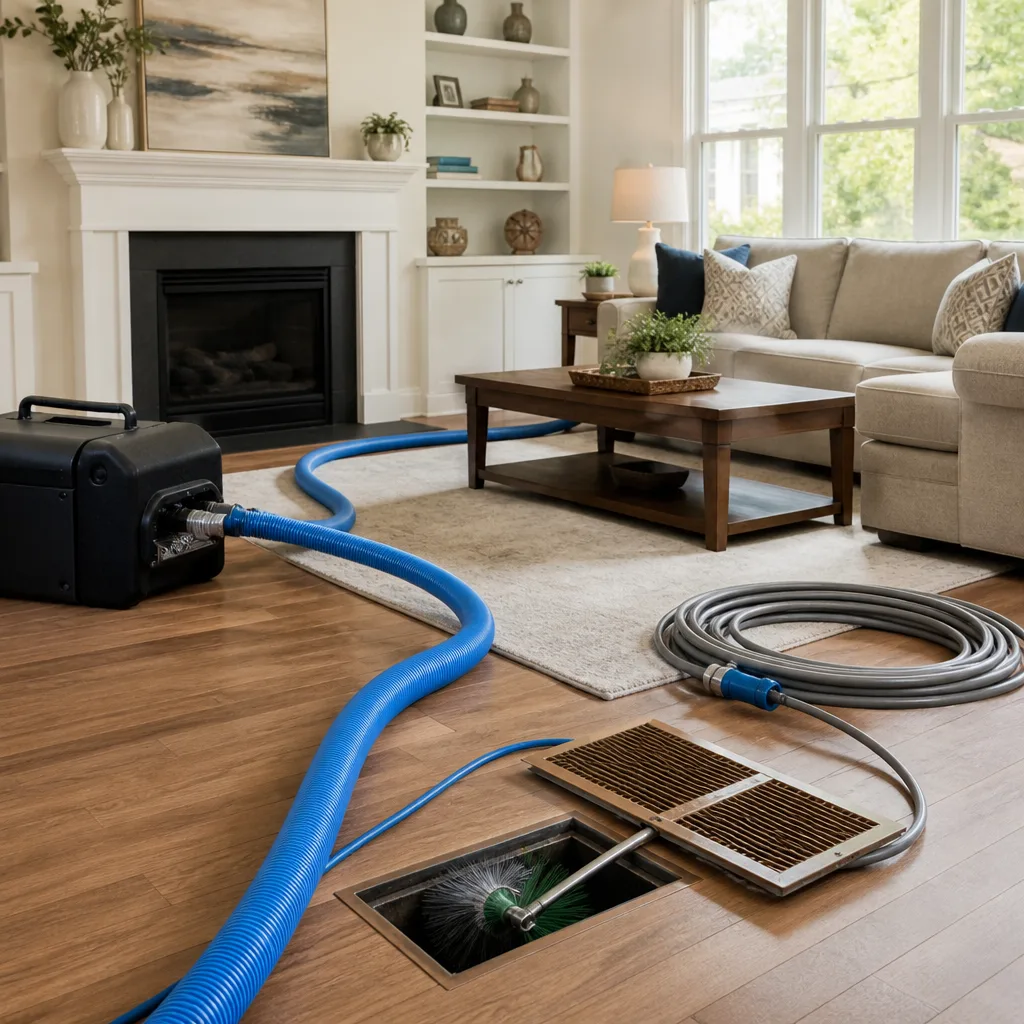 Whole-home duct cleaning
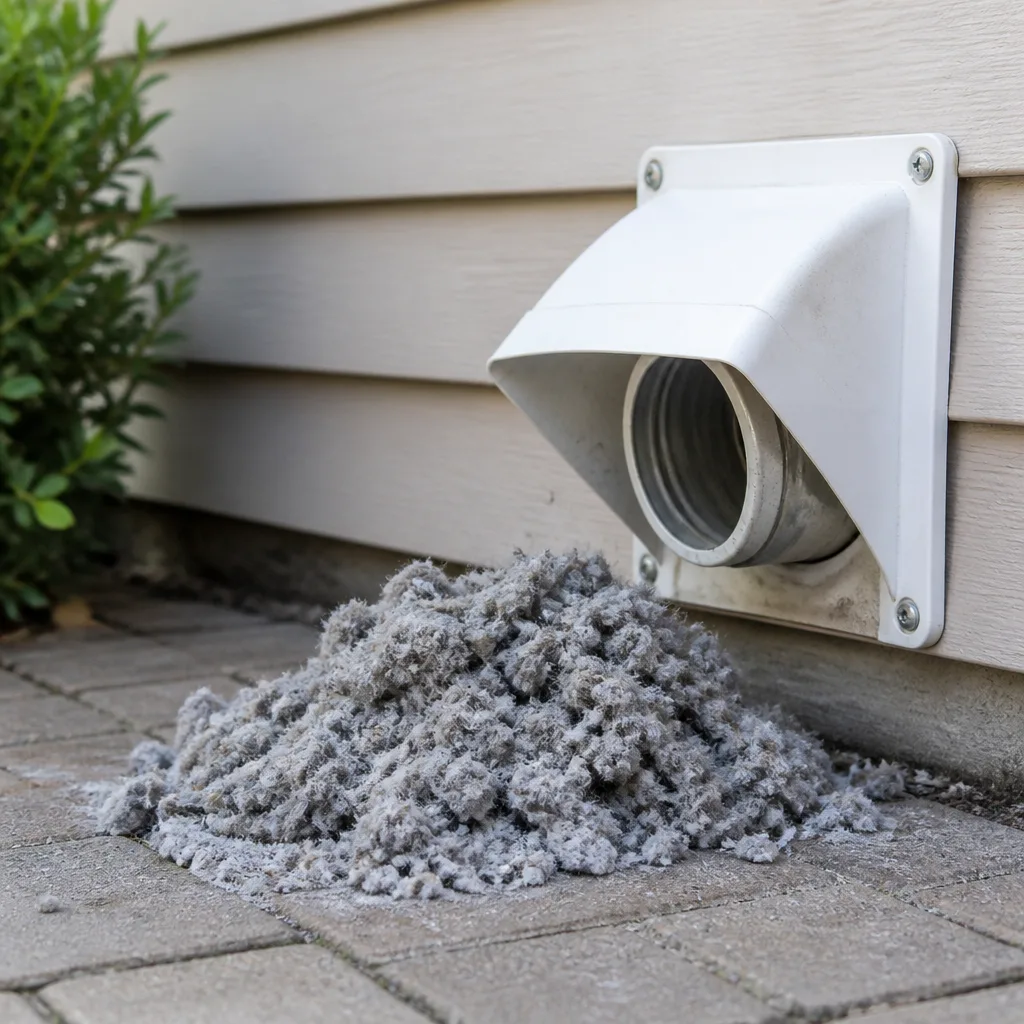 Dryer vent cleaning
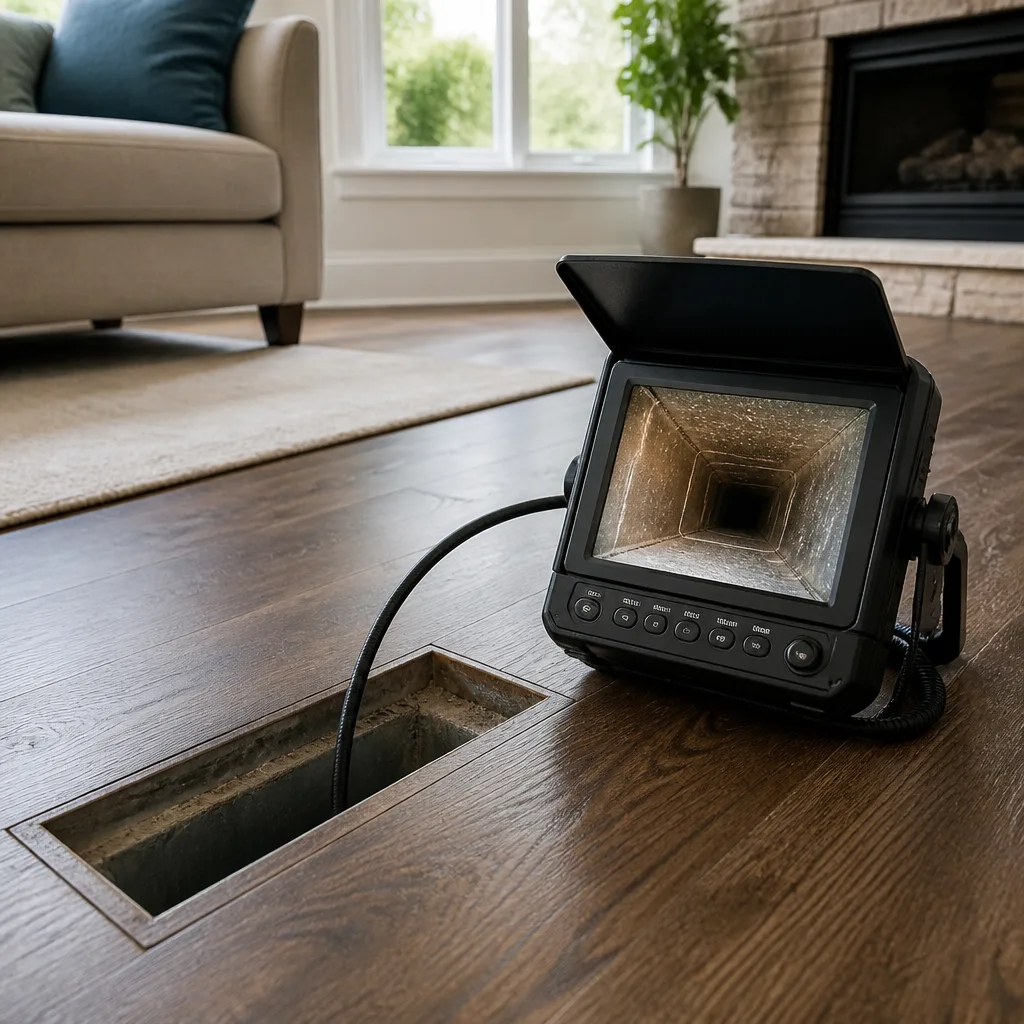 Camera inspection
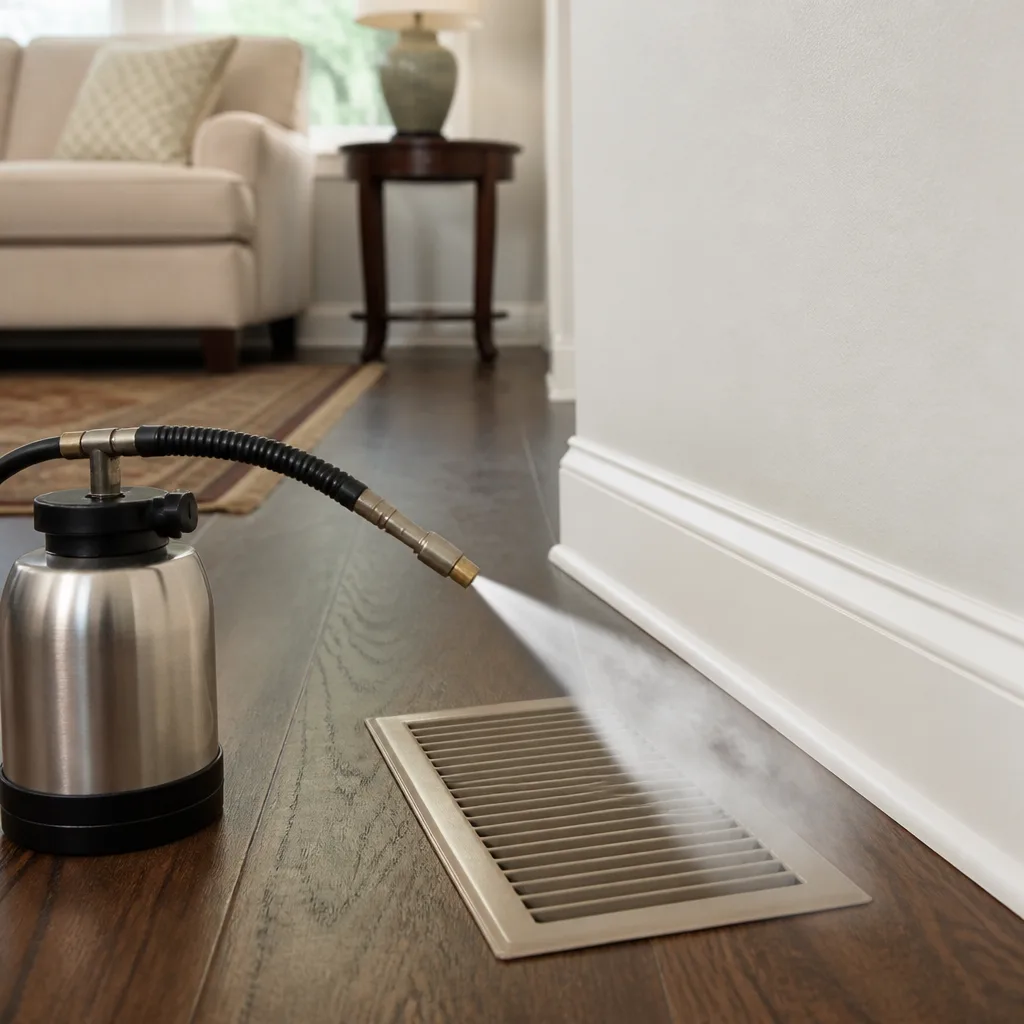 Sanitizing & deodorizing
Whole-system duct and dryer vent check with before-and-after photos - you see exactly what came out of your vents
That "$99 whole-house special" is a bait ad - the real number appears once they are in your hallway, or the "clean" is a shop-vac at the register. We photograph the inside of your ducts before and after instead.
Air Duct Cleaning Permits, Codes & Inspections in Buckhead, GA: What You Need to Know
Here’s the part most homeowners never hear: air duct cleaning itself is usually maintenance, but the moment a technician cuts an access hole, installs a new panel, or reseals a major run of ductwork, that work can cross into mechanical-permit territory under Fulton County rules. The two activities look nearly identical on a work order. They are treated very differently by a code official and a buyer’s home inspector. In Buckhead, where homes turn over at some of the strongest prices in metro Atlanta, unpermitted duct work can follow a seller to the closing table. This guide draws the line for you. You’ll learn what the Georgia State Minimum Standard Mechanical Code covers, what a Fulton County permit actually triggers, how duct work surfaces in a home inspection, and exactly what to ask a contractor to put in writing before anyone touches your system.
Quick Answer
Air duct cleaning in Buckhead generally does not require a permit because it’s classified as maintenance – removing debris from existing, intact ductwork. Duct repair, sealing, new access panels, and any modification that changes the duct system itself can require a Fulton County mechanical permit, and that work is governed by the Georgia State Minimum Standard Mechanical Code. The safe rule: if the job changes the ducts, ask whether a permit is required before work begins.
Styles & brands we work with
- Whole-home duct cleaning
- Dryer vent cleaning
- Camera inspection
- Sanitizing & deodorizing
Table of Contents
- Does Air Duct Cleaning Require a Permit in Buckhead?
- What the Georgia Mechanical Code Says About Duct Modification
- Fulton County Permit Thresholds: What Triggers a Permit
- How Unpermitted Duct Work Surfaces During a Home Inspection
- What Unpermitted Work Costs Buckhead Sellers
- What to Ask a Contractor to Document in Writing
- Sanitizing Chemicals, EPA Registration, and FIFRA Compliance
- What a Duct Inspection Looks Like on Site
Does Air Duct Cleaning Require a Permit in Buckhead?
No – routine air duct cleaning does not require a permit in Buckhead. Cleaning is defined as maintenance: a technician removes dust, debris, and biological buildup from ductwork that already exists in the same configuration it was installed in. No new geometry, no new openings in the structure, no change to the system’s rated performance. Maintenance of that kind falls outside the permit process.
The confusion starts because “cleaning” is a loose word. Some jobs that get sold as cleaning involve physical changes to the ducts. Here’s the practical split:
- No permit typically needed: vacuuming and agitating existing duct runs, cleaning registers and grilles, sanitizing the interior of ducts, cleaning the air handler cabinet, and cleaning a dryer vent.
- May require a permit: cutting a new access panel into a rigid trunk line, adding a new supply or return branch, replacing a damaged section of hard duct, and sealing significant portions of a duct system with mastic in a way that changes the system layout.
The distinction matters because Buckhead homes range from 1920s bungalows in Peachtree Heights to newer construction around the Buckhead Village area, and the older houses often have ductwork that’s been modified repeatedly. That patchwork is where permit questions arise. When we scope a job in a Buckhead home, we look for signs of prior modifications before we decide what the actual work will be. Cleaning is cleaning. Repair is repair. Whether a permit applies depends entirely on which one you’re buying.
What the Georgia Mechanical Code Says About Duct Modification
The Georgia State Minimum Standard Mechanical Code governs how duct systems in the state are built, altered, and repaired. It’s adopted at the state level and enforced through local inspection departments, which is why the same work can be interpreted the same way in Buckhead as in other parts of Fulton County. The code treats a duct system as a mechanical component of the home. When its configuration, capacity, or integrity is changed, that change falls under code review.
For homeowners, the working principle is simple: the code exists to make sure air moves the way the system was designed to move it. Cutting an unengineered hole into a trunk line can disrupt the pressure balance the original installer calculated. Removing a section without properly reconnecting it can introduce air leaks that waste energy and pull in unconditioned attic air. Those are the concerns code review is built to catch.
What this means in practice, and what we routinely tell Buckhead customers:
- Cleaning existing ducts with rotating brush and vacuum equipment does not alter the system, so it sits outside the mechanical code’s alteration provisions.
- Replacing a section of duct with new material counts as an alteration to the mechanical system.
- Adding an access panel to a sealed hard-duct run is a modification of the system, even though it may look like a minor convenience to the installer.
- Sealing leaks with mastic or tape is generally treated as repair, but large-scale re-sealing can cross into alteration depending on what’s being sealed and how.
The exact line between repair and alteration is decided locally by the authority having jurisdiction – in Buckhead, that’s the applicable Fulton County inspection office. Ask before you assume, because the answer changes with the specific job.
Fulton County Permit Thresholds: What Triggers a Permit
Fulton County administers mechanical permits for work in Buckhead, and the threshold comes down to one word: alteration. If the work alters the mechanical system, a permit is typically required and the work is inspected. If it’s a straight mechanical maintenance or repair action that leaves the system in its original configuration, it generally isn’t. The county’s inspection department makes the final call on borderline cases, not the contractor and not the homeowner.
Here’s how we classify the jobs we see, from the inside:
Typically no permit
- Full-source air duct cleaning in an existing system
- Register and grille cleaning
- Sanitizing the interior of existing ductwork with products applied per label
- Dryer vent cleaning
- Cleaning the air handler and coil surfaces
Usually permit territory
- Installing new access panels in hard ductwork where none existed
- Adding, extending, or relocating a supply or return branch
- Replacing sections of duct that are damaged beyond repair
- Any change that shifts the airflow design of the system
A HVAC cleaning visit rarely crosses the line, but duct repair and sealing in a Buckhead home sometimes does. When it does, the right move is a permit pulled by the contractor before the work starts, plus a final inspection. That’s not a delay – it’s the record that protects your home if you ever sell or refinance. If you get a written scope of work that includes repair or sealing, ask directly: “Is a permit required for this part of the job?” The answer should be clear and specific, not a shrug.
How Unpermitted Duct Work Surfaces During a Home Inspection
Here’s where the permits question stops being abstract. Home inspectors in Buckhead are thorough about mechanical systems because buyers care about them. What they’re looking for on a duct system is evidence: a new access panel that doesn’t match surrounding construction, seams sealed with tape where the rest of the system uses mastic, supply branches that appear added without documentation, or duct runs that show no obvious reason for their current configuration.
When an inspector flags unpermitted mechanical work, the finding typically appears in the report with a recommendation for a licensed contractor to review and possibly obtain a retroactive permit. Retroactive permitting is possible in many cases, but it’s not a formality. The inspector has to be able to see the work, which sometimes means opening walls or ceilings. In a finished basement or behind a kitchen soffit – common in Buckhead’s larger homes – that’s not cheap or convenient.
The sequence usually looks something like this:
- The inspector notes the duct modification and questions whether a permit was pulled.
- The seller, who may not have known about the modification, can’t produce a permit record.
- The buyer’s agent asks for documentation before closing.
- The seller scrambles to get either a permit or an engineer’s letter, often at their own cost.
- The negotiation leverage shifts, and the timeline stretches.
None of that is a disaster. But it’s an avoidable complication if the original contractor had simply pulled the permit, which is the answer to why it pays to ask first.
What Unpermitted Work Costs Buckhead Sellers at Closing
We don’t quote dollar figures we can’t verify, but we can tell you what the mechanism costs. Buckhead’s home market is competitive, and buyers here bring serious inspection scrutiny. When unpermitted mechanical work turns up, the cost shows up in three places: the price of retroactive permitting and any corrective work, the delay while it gets sorted, and the negotiation pressure that comes with a buyer who now wants a credit for every doubt.
The pressure compounds because the seller almost never knows the work was unpermitted. They hired someone who called it cleaning, paid for cleaning, and got something else. That gap between the invoice and the actual scope is the whole problem. It’s why we recommend that any duct work in a Buckhead home – cleaning, repair, or sealing – be scoped in writing with clear language about what will happen and whether a permit is required for any part of it.
There’s also a health-and-function side to this that has nothing to do with resale. A duct system that leaks because repair work was done without proper sealing lets conditioned air escape into attics and crawl spaces. Buckhead’s summers put real load on HVAC systems, and leaking ducts make that load worse every month. The permit is not the point; the sealed, verified system is. The permit is just the paper trail that proves the system was done right.
What to Ask a Contractor to Document in Writing
Ask for a written scope of work that separates cleaning from repair and sealing, and says plainly whether a permit is required and who will pull it. That single document is what makes a homeowner’s record defensible years later. If a contractor won’t put it in writing, that’s the answer you need – before you sign anything.
Here’s what to require in the documentation:
- Scope breakdown. Clean, repair, and seal listed as separate line items, each with a description of what’s included. This prevents “cleaning” from quietly becoming “repair” once the technician is inside.
- Equipment named. The specific platform being used – a Rotobrush or Nikro system, for example, both of which we use because they’re the platforms commercial HVAC contractors specify. Naming equipment shows you’re dealing with a professional-grade process, not a homeowner-grade shop vac.
- Permit statement. A clear sentence stating whether a permit is required for any portion of the work, and if so, that the contractor will obtain it and coordinate the inspection.
- Before-and-after photos. Specify in writing that photographic documentation of the ducts will be provided. This is the simplest defense you have against a dispute about whether the work was performed.
- Product documentation. Any sanitizing product, filter, or air-quality device to be installed should be listed by name and manufacturer so you can verify registration and specifications.
- A statement of what wasn’t done. If the technician found something and recommended against addressing it, note that too. The absence of a known issue is worth documenting.
When we provide these documents for a Buckhead job, the goal is simple: after we leave, the homeowner has a record that holds up whether they sell the house next year or ten years from now. Products we install – Aprilaire filtration, Abatement Technologies containment, Guardsman components – come with manufacturer documentation, and we pass it to the homeowner. The paper trail is part of the work.
Sanitizing Chemicals, EPA Registration, and FIFRA Compliance
Any sanitizing product applied to air ducts in Buckhead must be EPA-registered and must be applied strictly according to its label. That’s a federal requirement under the Federal Insecticide, Fungicide, and Rodenticide Act, known as FIFRA. It applies regardless of state or county rules, and it governs every product a technician uses to treat microbial growth inside a duct system.
FIFRA is why “sanitizing” is not the same as “spray something in the ducts and hope.” The law requires that:
- The product is registered with the EPA for the specific use – duct surfaces, not countertops or general surfaces.
- The application rate, dwell time, and required personal protective equipment match the product label exactly.
- The applicator follows labeling requirements for containment, ventilation, and cleanup.
- The product is applied only in the context the registration allows.
What to verify as a homeowner: ask for the product name and its EPA registration number, and check that the product’s label covers duct surface use. If a contractor can’t name the product or produce the label, that’s a red flag. The application itself is not something we suggest homeowners attempt – it involves chemical exposure in a confined space and equipment that handles fine particulates safely. A trained technician using controlled application and containment equipment is the right answer. Our Air Quality & Sanitizing service exists precisely because this step is often skipped or done sloppily by crews that treat cleaning as a one-hour vacuum pass. Sanitizing, not just cleaning, is the point.
What a Duct Inspection Looks Like on Site
An inspection at a Buckhead home is a review of the system as it stands, either before a cleaning or as part of a repair scope. It’s not an official code inspection unless a permit was pulled and a county inspector is scheduled – those are two different events, and it’s worth knowing which one you’re getting.
Here’s how a professional on-site review typically proceeds:
- Access check. The technician locates the air handler, existing access panels, and any duct runs that can’t be reached with current access. This is where permit questions often start, because adding a panel is a modification.
- Visual and camera review. Duct interiors are examined with a camera. The purpose is to document debris levels, microbial growth, and damage before any cleaning begins.
- Seam and connection inspection. Every joint in the accessible ductwork is checked for leaks. This is where duct repair and sealing typically gets scoped.
- Filtration and air quality review. Filter cabinets, media filters, and any whole-home air quality equipment are checked for condition and fit. Aprilaire and Honeywell products are common in Buckhead homes, and the filter fit often tells you more about duct integrity than anything else.
- Written scope and before photos. The review ends with a documented scope and the first half of the before-and-after photo set.
What it’s not: it isn’t a step-by-step set of instructions you should try at home. Climbing into attic ductwork, disconnecting plenums, and working around an air handler with live electrical components are genuinely dangerous. A trained technician with the right equipment should do the inspection, and that’s not a sales tactic – it’s how the work gets done without someone getting hurt or damaging the system.
Common Mistakes to Avoid
- Assuming every duct cleaner means the same thing by “repair.” Some companies call it cleaning, then install an access panel and reseal joints – both of which can require a Buckhead permit – without ever discussing it with you. Ask before the truck pulls up.
- Skipping the written scope because the job feels small. A one-page scope with clear line items is your only defense if a buyer’s inspector questions the work three years later. Small jobs still need paper.
- Hiring a cleaner who can’t name the sanitizing product. FIFRA compliance starts with a named EPA-registered product and a label that matches the application. If you can’t get the product name in writing, that’s a sign to keep looking.
- Replacing cleaning with repair, or repair with cleaning. In a Buckhead home with older ductwork, the honest scope usually involves both. A quote that covers only one side of that equation is often incomplete.
- Not checking whether previous modifications were permitted. If you’re buying a Buckhead home or have owned it for years without examining the ducts, a review will tell you whether prior work left any permit questions unaddressed.
- Letting a contractor skip photographic documentation. Before-and-after photos of your own ducts are the simplest verification that the work actually happened and was done where you can see it.
- Assuming a cheap quote covers what a thorough quote does. When quotes vary widely, the gap is almost always scope – repair and sealing, containment, sanitizing, and documentation are what get cut, not the price of the vacuum.
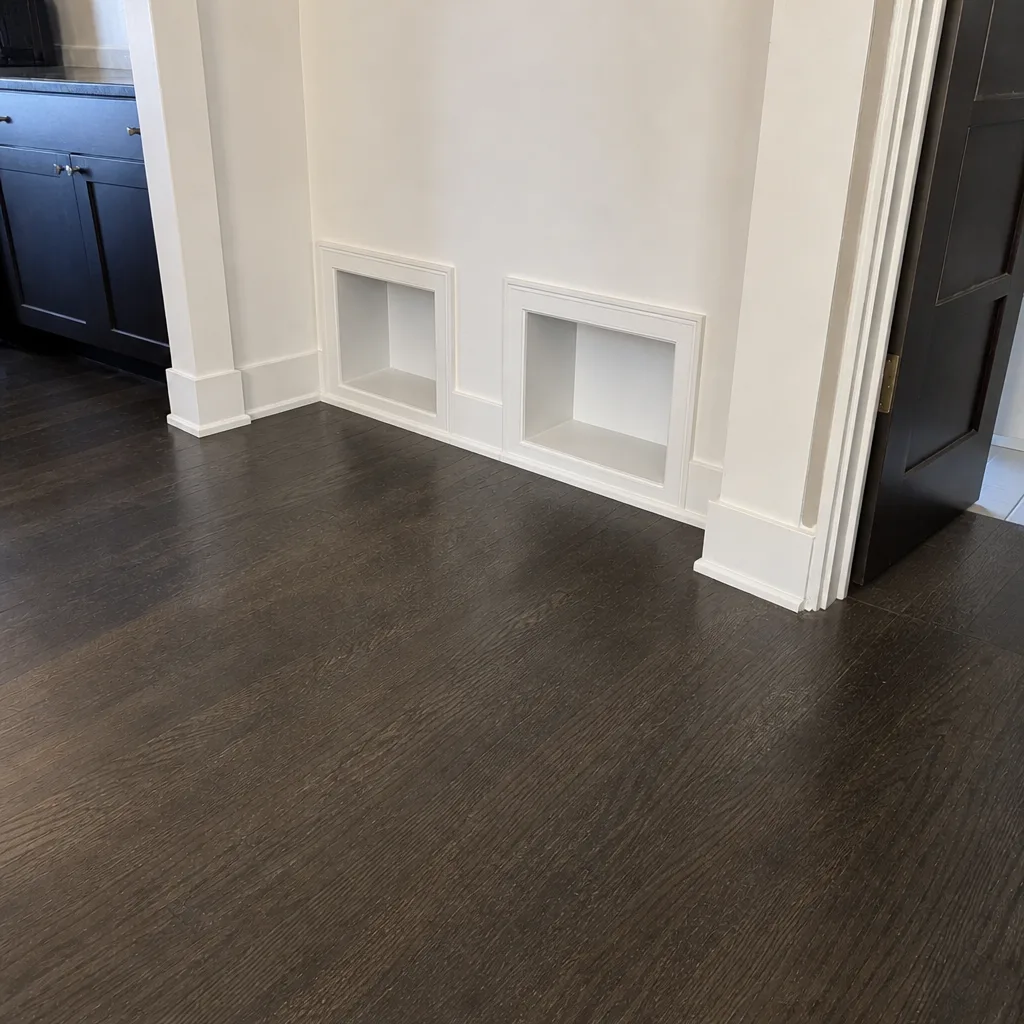
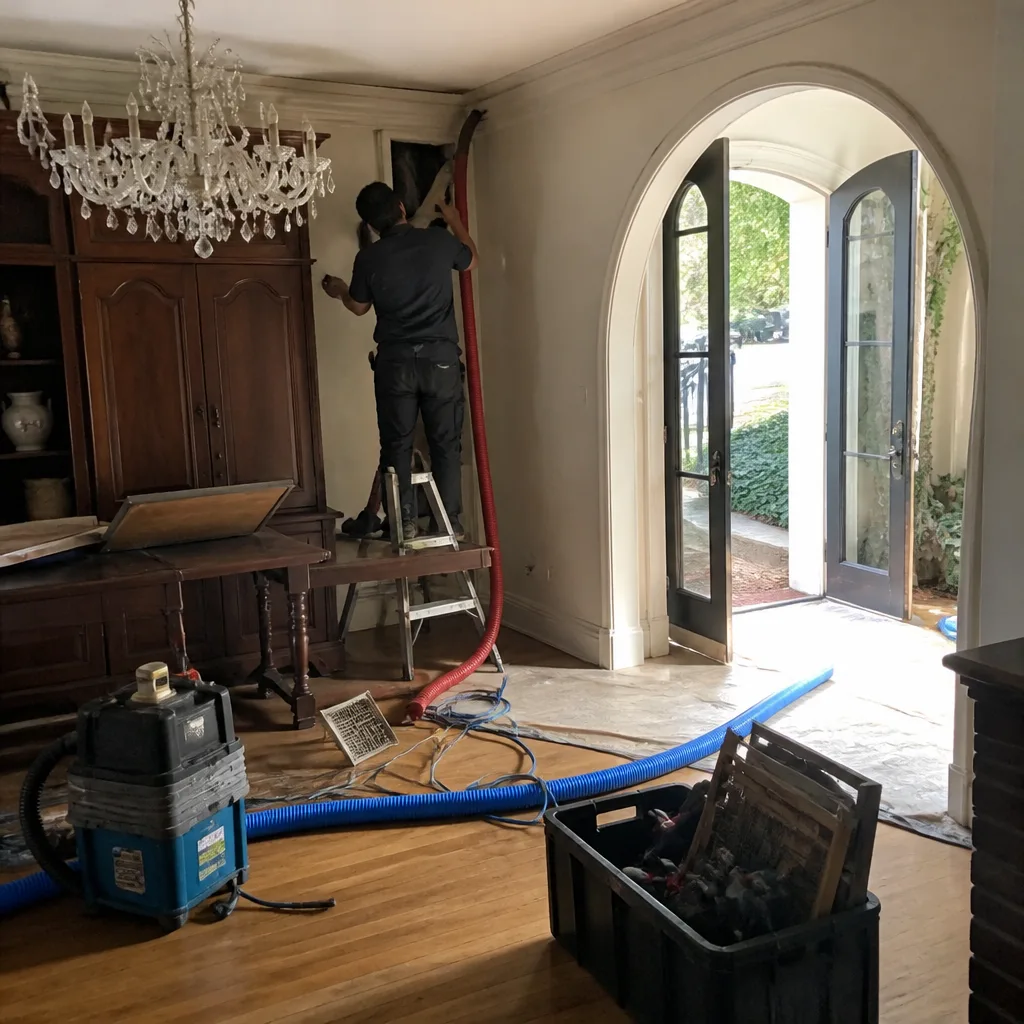
See the difference
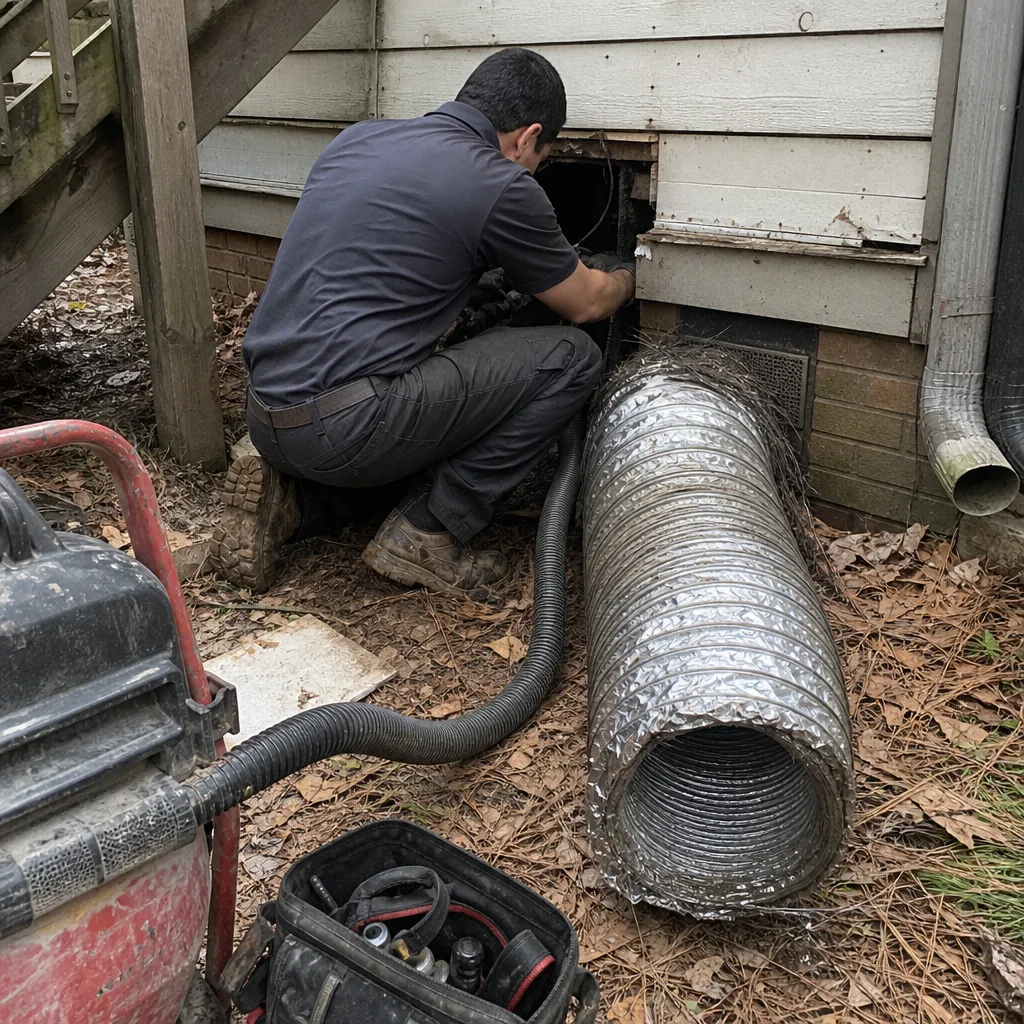 Before
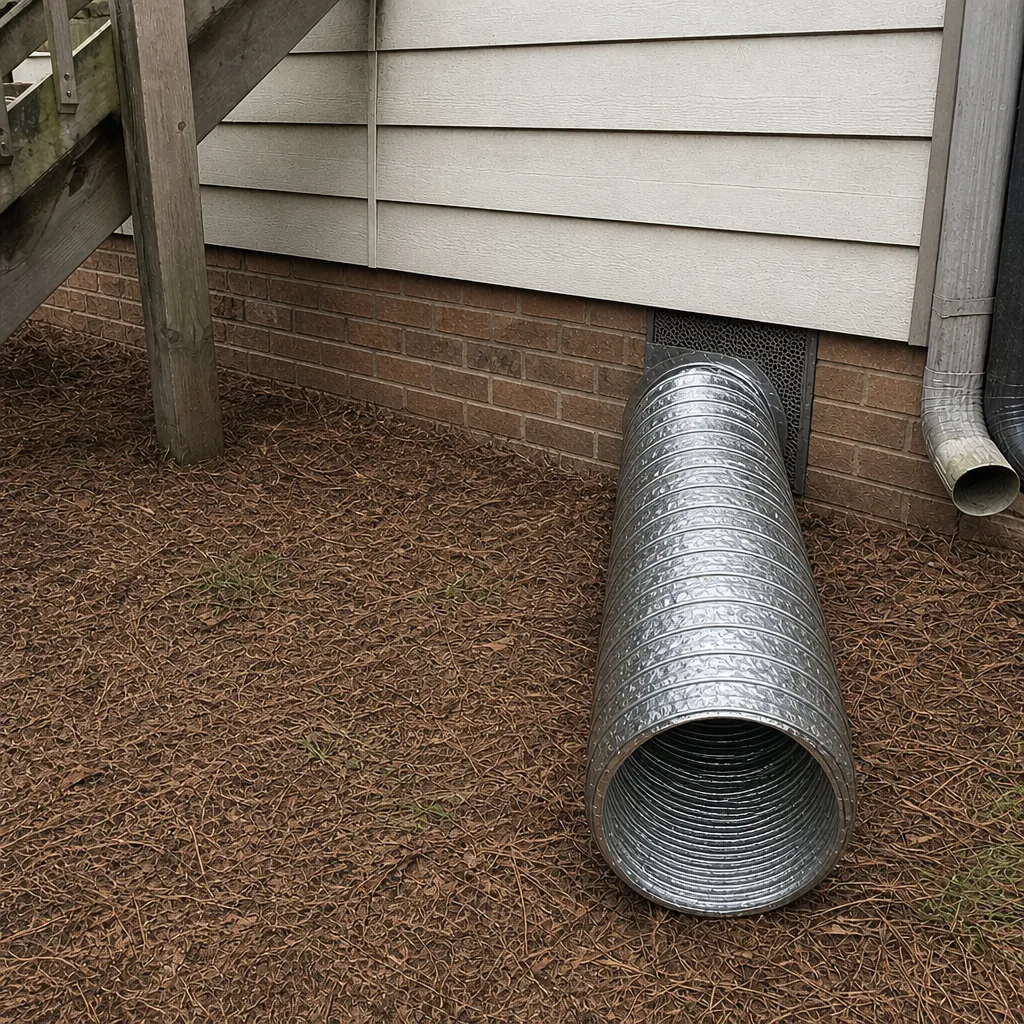 After
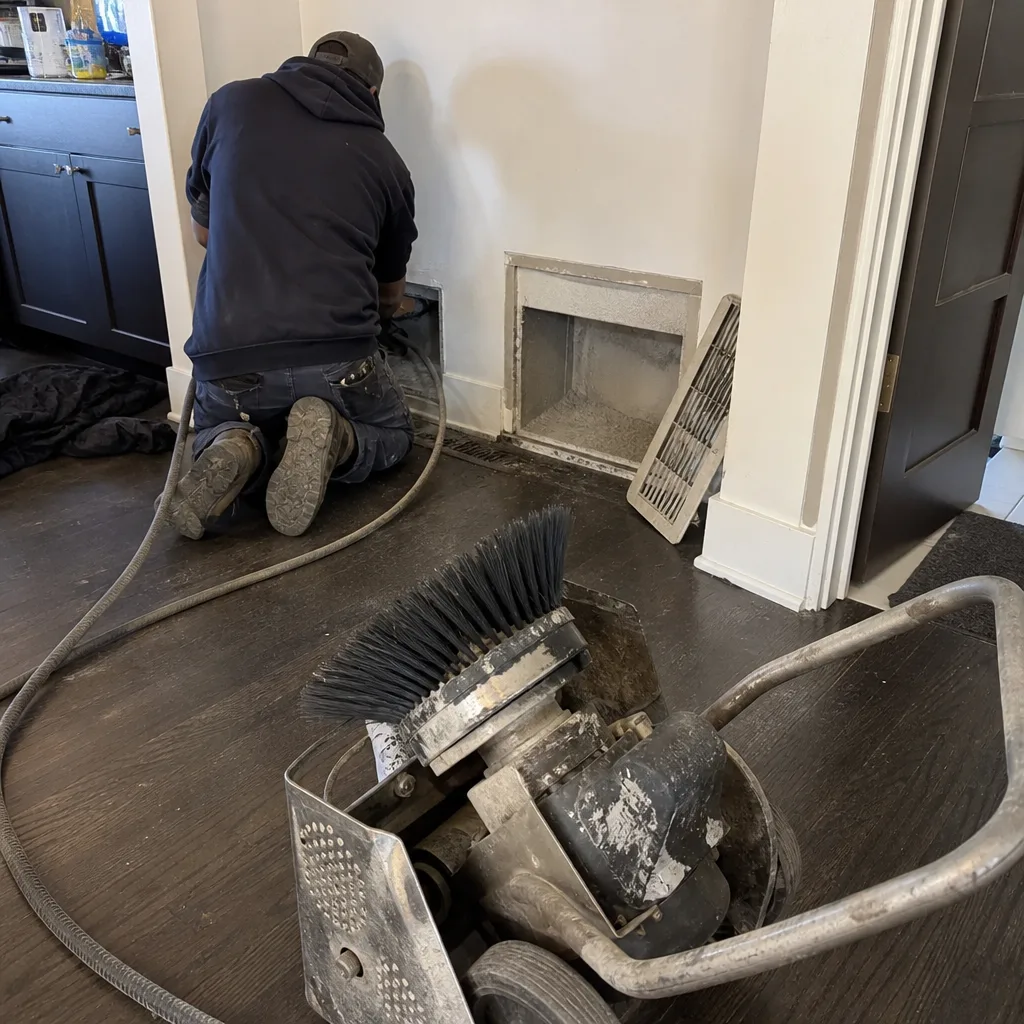 Before
 After
 Before
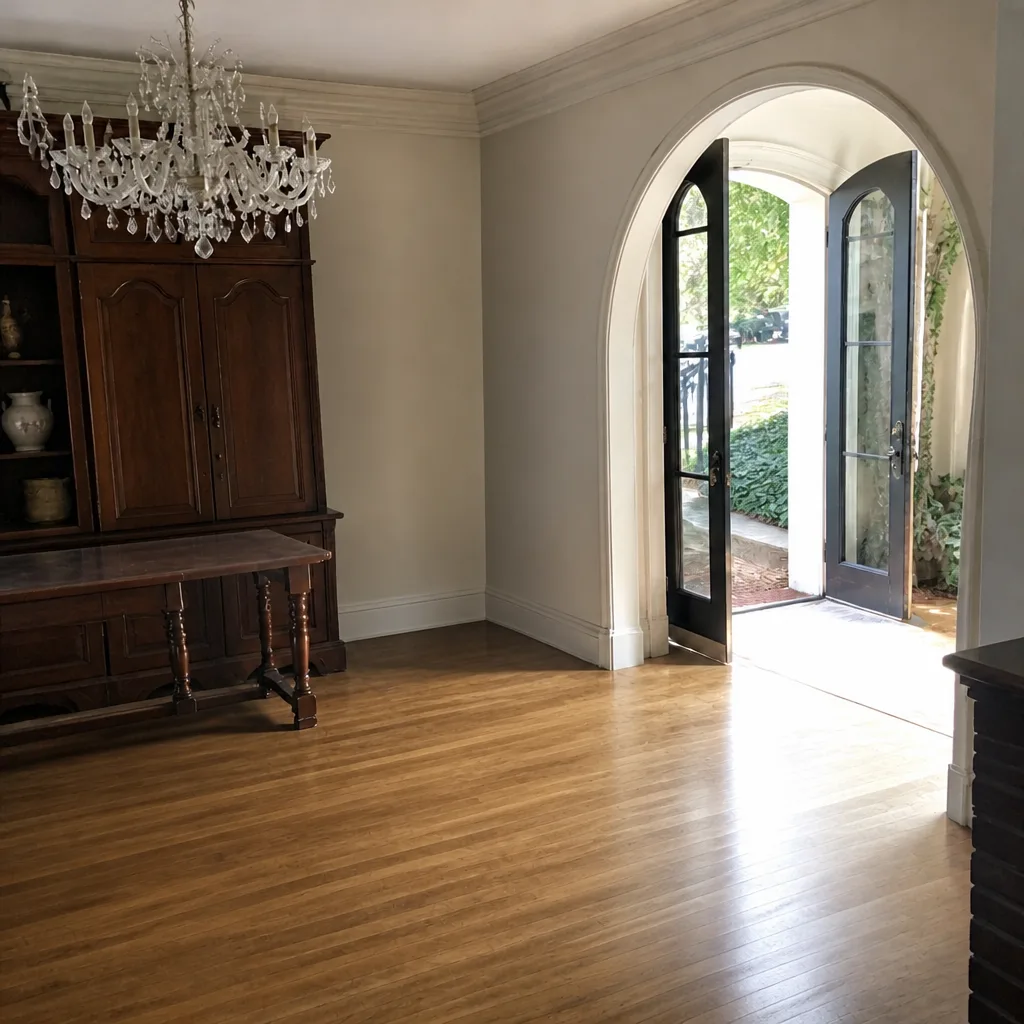 After
When to Call a Professional
Call a professional before any duct repair or sealing work begins in Buckhead, because that’s the work most likely to require a permit and it’s the work most likely to be done without one. Call if you’re buying or selling a home and need a documented assessment of the duct system. Call if you notice visible damage, disconnected runs, or heavy debris near the air handler. Call if you’re dealing with allergies or respiratory concerns and want to understand what sanitizing actually involves under FIFRA-compliant application. Our technicians have up to 8 years of experience and use commercial-grade equipment – Rotobrush and Nikro platforms, Abatement Technologies containment, Honeywell and Aprilaire filtration products – because that’s the standard the work deserves. Air Duct Cleaning Buckhead offers free estimates in Buckhead. Call (844) 443-4682. We answer 24/7. Fast dispatch from 7am to 7pm, Sunday through Friday.
Frequently Asked Questions
No – routine air duct cleaning in Buckhead is maintenance and generally does not require a permit. Duct repair, sealing, new access panels, or any change to the system’s configuration can require a Fulton County mechanical permit. Ask whether the scope includes any of those before work begins. Call (844) 443-4682 for an exact quote – estimates are free.
Cleaning costs depend on the size of the system, the number of runs, and whether repair or sealing is included. Quotes vary widely because the cheapest quote usually covers only a surface vacuum pass – it leaves out repair, containment, sanitizing, and documentation. That’s the scope gap, not a price trick. Call (844) 443-4682 for a written estimate before you compare numbers.
It shows up in the inspection report as a mechanical finding, which typically triggers a request for documentation from the buyer’s agent. The seller may need to pursue a retroactive permit or a contractor’s review. That’s why asking for a written scope and permit statement at the time of the original work is the best protection. Call (844) 443-4682 if you need a documented assessment.
Ask for the product name and its EPA registration number, then confirm the label covers duct surface application. FIFRA compliance requires the product to be applied exactly as its label specifies, including dwell time and containment. A contractor who can’t name the product is not providing a verifiable sanitizing service. Call (844) 443-4682 to talk through what your system needs.
Does dryer vent cleaning have its own code or permit requirements?
Dryer vent cleaning is treated as maintenance and does not require a mechanical permit in Fulton County. The safety concern is different – reduced dryer vent airflow is a known fire risk, and we consider it a standalone safety service rather than a cleaning add-on. If you’re not sure when the vent was last cleaned, have it checked. Call (844) 443-4682 for a free estimate.
The work crosses into permit territory the moment the technician modifies the duct system rather than cleaning it – cutting an access hole, replacing a section, or adding or relocating a supply branch. A written scope should separate cleaning from repair so you can see exactly which part might need a permit. Call (844) 443-4682 and we’ll walk through the scope with you.
The Bottom Line
Air duct cleaning itself is maintenance and generally doesn’t require a permit in Buckhead. Duct repair, sealing, and any change to the system’s configuration usually does, and the governing framework is the Georgia State Minimum Standard Mechanical Code, enforced through Fulton County’s inspection process. Understanding that line protects two things: your home’s mechanical integrity and your position if you ever sell. Ask for a written scope that separates cleaning from repair. Ask the permit question in writing. Ask for the sanitizing product’s EPA registration number. Those three questions will tell you more about the contractor than any pitch will. And when a scope involves repair or sealing, get it done right – commercial-grade equipment, verified containment, and a documented result you can hold onto.
Call (844) 443-4682 for a free estimate. We answer 24/7. Fast dispatch from 7am to 7pm, Sunday through Friday.
Written by the team at Air Duct Cleaning Buckhead.