
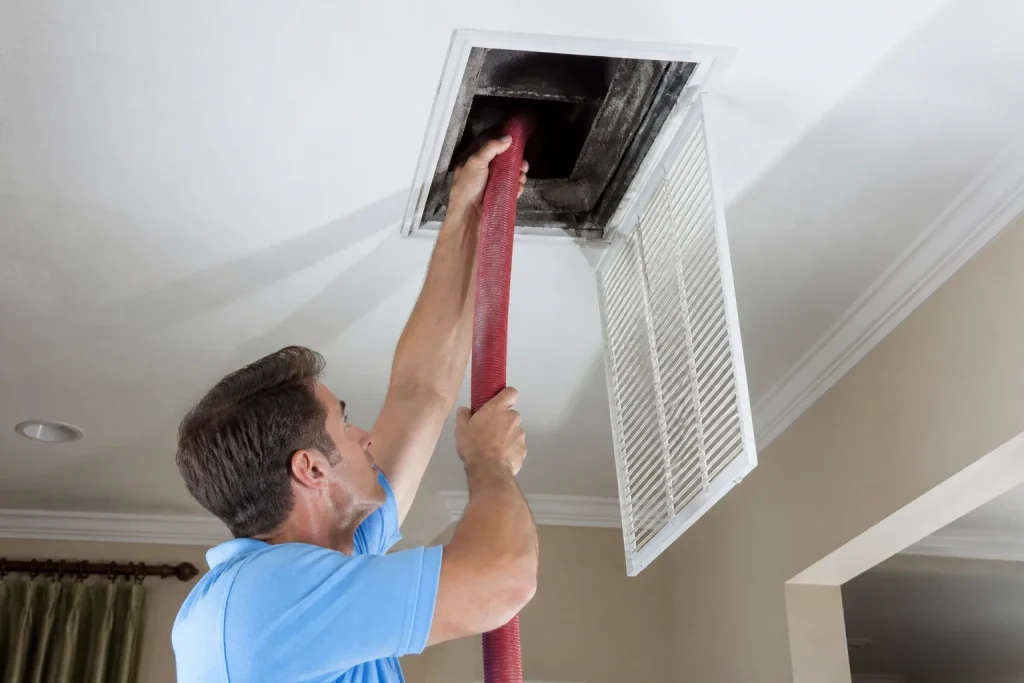
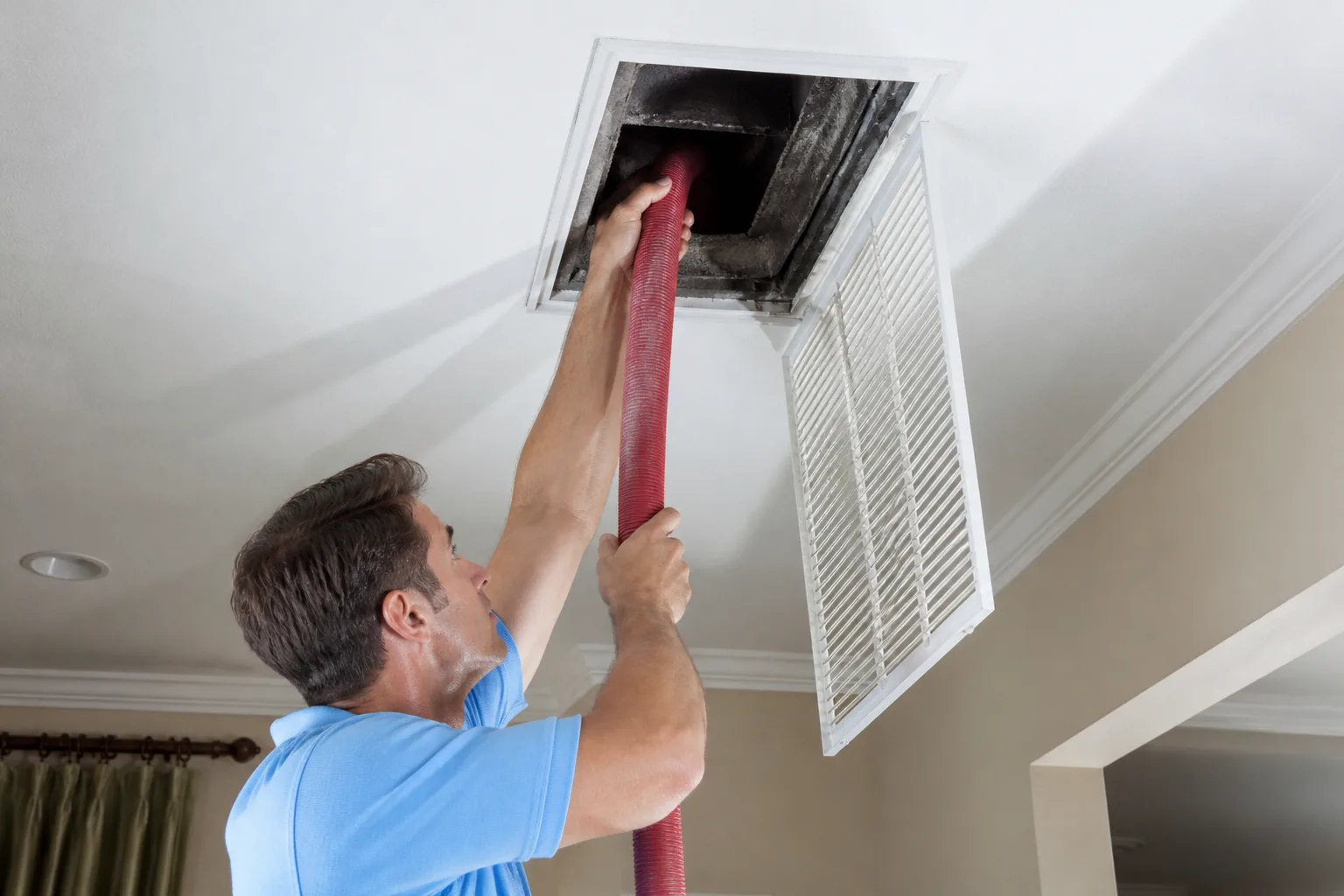
Top Signs You Need Air Duct Cleaning Service – Don’t Ignore These
The timing question homeowners in Buckhead ask most often is some version of “how do I know it’s actually time?” Fair question. The answer isn’t calendar-based, and it isn’t a single dramatic symptom either. You need air duct cleaning when your system starts showing repeatable mechanical and behavioral signals, like a filter loading faster than its recommended interval, rooms that drift apart in temperature, or a tech noting coil fouling on annual service visits. If you’d rather not sort that out alone, call (844) 443-4682 and we’ll walk you through it.
Here’s the part most guides skip. Dust and allergy symptoms, the signals everyone lists, show up years after the buildup starts. The earlier evidence is quieter, more mechanical, and homeowners walk past it every day.
Key Takeaways
- Filter loading fast points to duct buildup, not a bad filter.
- Gray dust halos are surface accumulation; black streaks mean moisture; an oily film means combustion byproducts.
- Pets and renovation work are time-based triggers, not symptom-based ones.
- Listen at your registers: rattles mean loose joints, whistles mean restriction, and weak airflow that varies with usage points upstream.
- Your service records tell you plenty. A tech noting reduced airflow and coil fouling is describing dirty ducts from the other end.
Why a Filter That Clogs Early Is the First Real Sign
A filter clogging faster than the manufacturer’s recommended interval isn’t a filter problem. It’s your ducts telling you they’re offloading their buildup load onto the nearest collection point downstream. The filter catches what reaches it; everything upstream stays put until cleaning moves it.
Here’s how to read the pattern without guessing:
- Filter loads on schedule, dust still builds: normal. The system is ventilating like it should.
- Filter loads early once, after renovation or a move: usually a one-time spike. Swap, watch, and wait a cycle before you worry.
- Filter loads early two or three intervals running, in the same season: that’s a pattern. Buildup is being pulled through the ductwork and caught at the filter instead of staying where it started.
We install Honeywell filtration products when a system needs better media than a basic pleated filter can offer, but upgraded filtration is a fit issue, not a fix for dirty ducts. Clean the supply side first. Then decide what filter the system should be running.
Temperature Swings Between Rooms Are a Duct Story, Not a Thermostat Story
When one room runs warm and another runs cold, most homeowners adjust the thermostat and call it normal. It usually isn’t. Uneven temperatures across a home point to ductwork that’s losing air where it shouldn’t or delivering less than it should to a specific branch.
Three things cause that in Buckhead homes, and all three show up as temperature drift:
- Leaks at joints and seams. Sealed ducts deliver the air the system produces. Leaky ducts lose it into a crawlspace or attic.
- Restriction from buildup. A branch carrying debris delivers less volume, and the room it serves runs cool or warm depending on the season.
- Disconnected or crushed runs. Less common, but it happens in older houses where ductwork has shifted, settled, or been rerouted around renovations.
That’s why we treat cleaning and sealing as one job. Clean ducts stay clean when leaks are sealed, and a sealed system delivers the air you’re paying to heat and cool. If your Buckhead home shows temperature drift in two or more rooms, that’s a system-level signal, not a thermostat quirk.
Read Your Registers Correctly: Gray, Black, or Oily
The residue around your supply and return registers is a diagnostic, and most people misread it. The color and texture tell you what’s happening inside the system:
- Gray dust halos: surface accumulation. This is ordinary household dust collecting at the edges of the register. Common, easy to wipe, and usually not alarming on its own.
- Black streaks or dark staining: moisture. Dark streaking around a register suggests condensation or a damp source inside the duct. Moisture is the condition microbial growth needs, and it’s the one indicator worth a professional look rather than a wipe-down.
- Oily film: combustion byproducts. A slick, film-like residue around registers in a home with a fueled appliance points to combustion gases reaching the ductwork. That’s a safety question first, and an air-quality question second.
We bring Abatement Technologies equipment into jobs that need true contaminant containment, because surface cleaning without containment just redistributes what you’re trying to remove. If you’re seeing black streaks specifically, have the moisture source found before a cleaning is scheduled. Cleaning alone doesn’t fix a damp duct.
The Noise Diagnostic: What Your Registers Are Telling You
Sound at the register is one of the most reliable and most ignored signals in a home. Before you assume the equipment is the problem, listen at the duct:
- Rattling at a register or grille: usually a loose joint, a vibrating boot, or a register that’s not seated. A mechanical issue the duct can tell you about.
- Whistling: restriction. Air squeezing through a narrowed passage from buildup or a crushed run makes that sound. Whistling at one register while others run quiet is a strong restriction signal.
- Airflow that changes from one cycle to the next without a thermostat change: the system is working against something variable. Blockage that shifts, a partially closed damper, or buildup that’s migrated.
- Airflow that starts strong and fades: that pattern points to a loaded filter or a coil that’s fouled, which often traces back to what’s been feeding the system from the ducts.
The question worth asking: is the sound coming from the equipment or the ductwork? If you can localize it to a register or a specific run, it’s duct-side. A technician can tell you the difference in about a minute, but you’ll hear it first if you know what to listen for.
Pets and Renovation Are Time Triggers, Not Symptom Triggers
Most duct cleaning advice waits for symptoms. That’s backwards. Pets and renovation work are time-based triggers, and the debris each leaves behind has a distinct profile:
- Pets: pet hair and dander are fine, adhesive debris. They weave into dust and form clumps that settle at low points and coat surfaces rather than passing through the filter. Homes with multiple pets, or indoor pets that shed heavily, load the system faster than any symptom-based rule would suggest.
- Renovation work: drywall dust and construction debris are different. Drywall dust is fine, alkaline, and travels easily. It coats the interior of ducts and settles in places a filter never sees. A renovation, even a modest one, is one of the clearest reasons to schedule duct cleaning on a timeline rather than on a complaint.
The takeaway: mark your calendar after a major renovation or when you add a pet to a household that already had one. Don’t wait for a symptom. By the time a homeowner in Buckhead notices allergy irritation, the buildup has usually been in place for a stretch. If your renovation is behind you and you’re still finding drywall dust at the registers, that’s the follow-up signal.
Check Your Service Records (This One Is Free)
Your annual HVAC service visits are a cleaning indicator you already own. If the tech is noting reduced airflow, coil fouling, or a system “working harder than it should” on multiple visits, the upstream cause is usually the ducts. The coil gets the blame because it’s the surface that collects the evidence.
Pull the last two or three service reports and look for:
- Repeated notes about reduced airflow or static pressure at the unit.
- Coil cleaning done at more than one visit.
- Mention of the evaporator coil being fouled again on a recent visit.
When our technicians see that pattern, we treat it as a duct story before we recommend another coil cleaning. It’s the same reason we run Rotobrush and Nikro equipment, commercial platforms built for real duct interiors rather than a shop vac you’d use on the garage floor. And because we handle repair and sealing alongside cleaning, a system with fouling evidence gets both problems addressed in one visit rather than left for a second contractor. Cleaning without repair just refouls the coil on the next cycle.
When to Call a Pro
If you’re hearing whistling at one register while others run quiet, seeing black streaks around a register, or your service records show fouling twice, those are signals worth a professional assessment. Same if you’ve had a renovation or added a pet and haven’t had the ducts looked at since. A cleanup is a scheduled job and the estimate is free, so the cost of asking is a phone call. It’s the cost of guessing that adds up.
Our technicians have up to 8 years of experience with the specific signals on this page. We answer 24/7, and we offer fast dispatch from 7am to 7pm, Sunday through Friday.
Related services in Buckhead
This post focuses on the signs. When you want the work done, our air duct cleaning service covers deep cleaning and sanitizing, and the same team can handle HVAC cleaning if your service records are already pointing at the coil. Homeowners who notice lint or reduced flow at a laundry room should also look at dryer vent cleaning, which many people miss because it’s a separate system entirely.
The Bottom Line
The obvious signs are the late ones. The earlier, more reliable signals are mechanical and behavioral: a filter that loads early two intervals in a row, rooms that drift in temperature, residue at registers you can color-code, sounds that localize to the ductwork, and service records that keep circling back to airflow and fouling. If any of those sound familiar in your Buckhead home, that’s the answer to “when.” Cleaning and sealing together is the step that makes it stick.
If you’re in Buckhead and need help, Air Duct Cleaning Buckhead offers free estimates – call (844) 443-4682. We answer 24/7, with fast dispatch from 7am to 7pm, Sunday through Friday. The price is set per job by a written estimate, agreed before work starts, and you’ll get before-and-after photos of your own ducts.
Frequently Asked Questions
Most homes in Buckhead do well on a multi-year interval, but the timing depends on your triggers rather than the calendar. A home with heavy pet shedding, a recent renovation, or a filter that keeps loading early will need it sooner than a low-traffic home with clean service records. Base the decision on filter behavior and service notes, not on a fixed year count. Call (844) 443-4682 for an exact quote – estimates are free.
Gray dust halos are surface accumulation and usually ordinary household dust collecting at the register edge. Black streaks point to moisture. A dark, streaked stain around a register suggests condensation or a damp source inside the duct, and moisture is what microbial growth needs to take hold. Oily film is a third and different signal: it points to combustion byproducts reaching the ductwork. Call (844) 443-4682 if you’re seeing black streaks; that’s the one worth a professional look first.
Yes, and the way to spot it is a bill that rises in a month when usage hasn’t changed. Restriction and leakage make the system run longer to deliver the same comfort, and uneven room temperatures compound it as homeowners adjust the thermostat to compensate. Filter loading and temperature drift are the signs to check first. Call (844) 443-4682 for an exact quote – estimates are free.
Usually because the scope is smaller. A low figure often reflects a lightly-equipped visit, a per-vent price that grows on-site, or cleanup without sealing, which means the leaks that caused the buildup are still there. Ask what equipment the company uses. Rotobrush and Nikro platforms are built for commercial and residential duct interiors, and Abatement Technologies equipment means true containment rather than redistribution. We set one flat price per system by written estimate, agreed before work starts. Call (844) 443-4682 for an exact quote – estimates are free.
Written by the team at Air Duct Cleaning Buckhead.
Need Air Duct Cleaning Help?
Call Air Duct Cleaning Buckhead - the local pro we connect you with is licensed and insured, here with fast help in Buckhead.
(844) 443-4682