
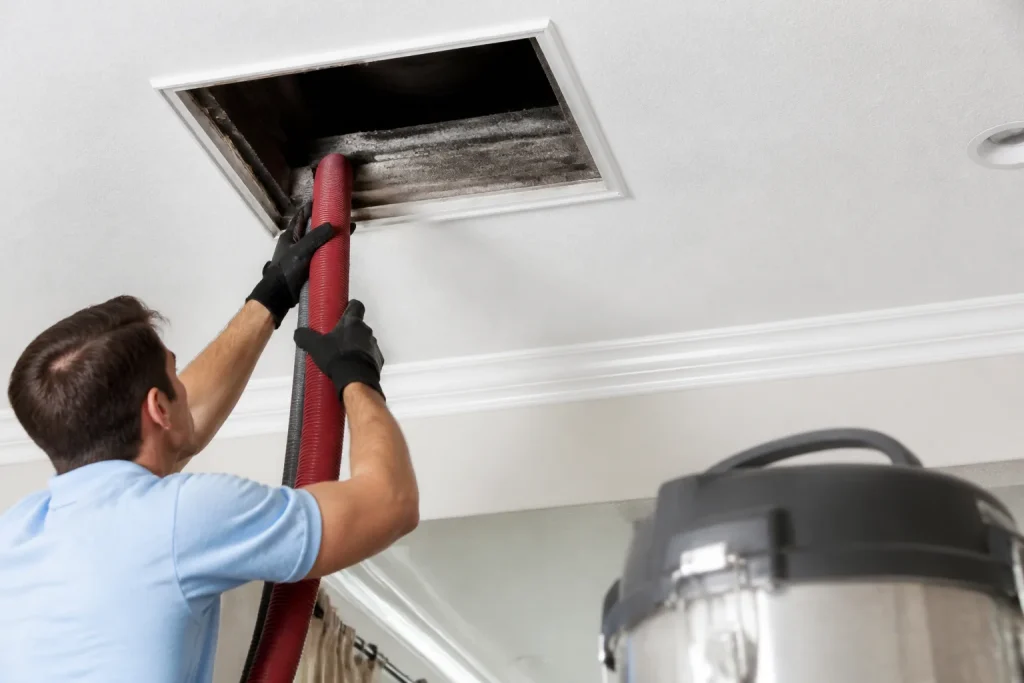
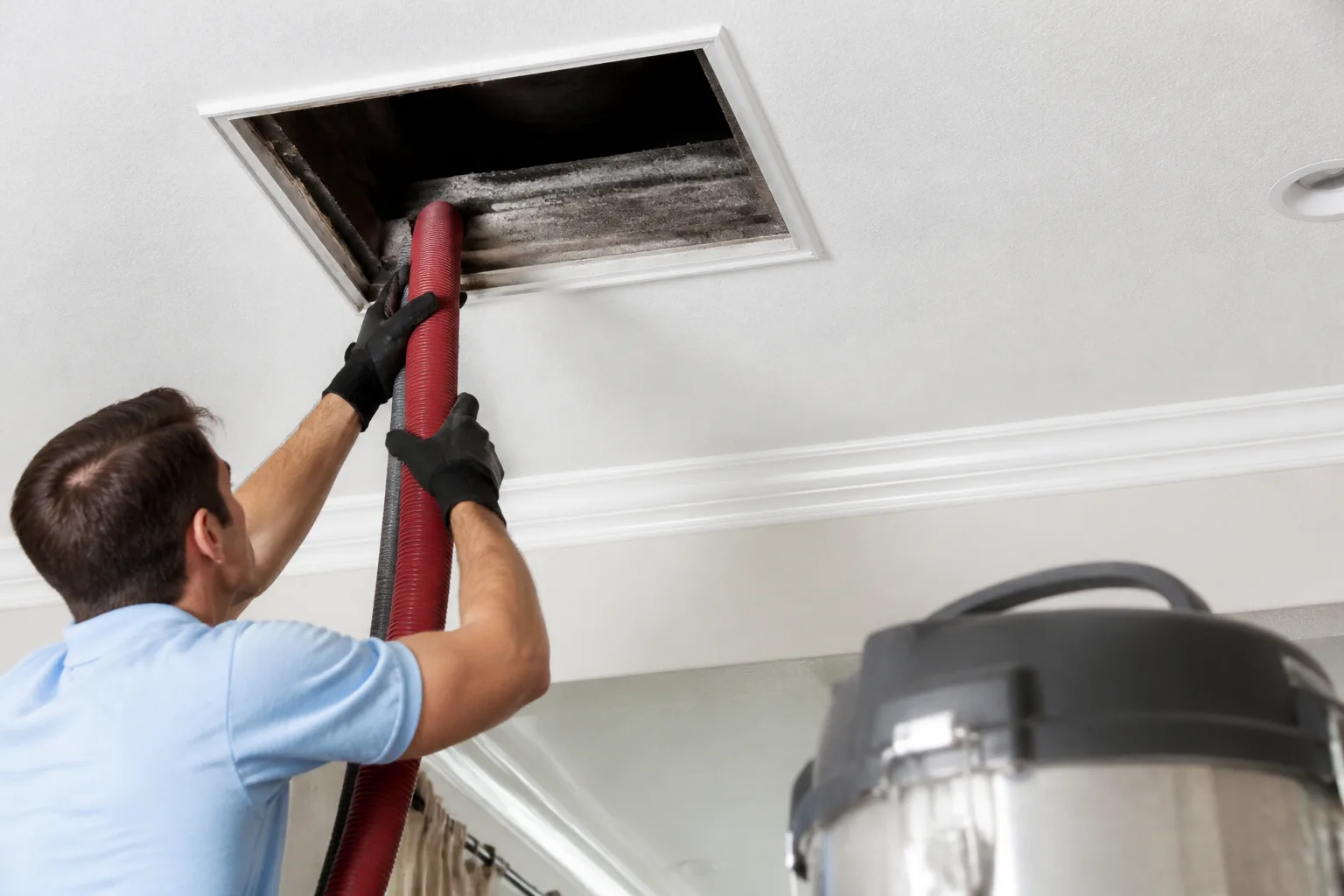
Air Duct Cleaning: Repair or Replace? How Buckhead Homeowners Decide
Most homeowners call us expecting one answer: yes, the ducts need cleaning. Sometimes that’s true. But in plenty of Buckhead homes, cleaning is the wrong recommendation, and the honest one is “this ductwork has reached the end of its life.” A system that’s been leaking conditioned air into an attic or crawlspace hasn’t been fixed by a cleaning – it’s just been made cleaner while it keeps wasting your money. Here’s how to tell the difference before you spend a dollar.
If you’d rather have a trained eye look at your system than guess from the hallway vent, call (844) 443-4682. Estimates are free.
What’s the direct answer on repair vs. replace for Buckhead air ducts?
Cleaning extends a system’s life when the ductwork is intact but dirty. You repair when there’s damage – leaks, disconnected joints, crushed sections – and the duct layout is otherwise sound. You replace only when the ductwork itself is structurally compromised: collapsed flex runs, saturated fiberglass board, or a layout too small or too convoluted to deliver airflow properly. That’s the three-way decision. Most Buckhead homes fall into the clean-or-repair buckets. A smaller number genuinely need replacement, and it’s usually older construction with original ductwork.
We’ve seen plenty of systems that just needed a deep clean and a few sealed joints, and we’ve seen systems where cleaning would have been money thrown at a slow-motion problem. The camera inspection tells you which one you own.
The three conditions that make cleaning irrelevant
Before anyone quotes a cleaning, ask what the ductwork actually looks like from inside. These three situations mean cleaning won’t solve the underlying issue:
- Collapsed flex duct. Flexible ductwork that has sagged or crushed down to more than 25% of its original diameter can’t deliver design airflow. Cleaning the inside of a pinched run doesn’t un-pinch it. Air volume is lost upstream of the dirt.
- Saturated fiberglass duct board. When duct board insulation takes on moisture – from a leaking coil, poor attic conditions, or condensation – the material loses its insulating value and becomes a surface for biological growth. Cleaning can’t dry out saturated board. The section gets replaced.
- Disconnected joints pulling in unconditioned air. If a trunk connection has separated in the attic or a flex collar has slipped off a boot, the system is drawing in hot, humid attic air and dumping conditioned air into the attic at the same time. That’s a repair problem, and no amount of cleaning closes the gap.
In all three cases, cleaning makes the ductwork cleaner but not better. You feel a difference in dust and airflow only after the underlying physical problem is fixed. That’s why we won’t recommend cleaning on a system showing these conditions without telling you about them first.
How to read a camera inspection report
Most homeowners have never seen inside their ducts and have no idea whether the report they’re handed is honest. Here’s the useful distinction: a camera report is describing one of two things – debris accumulation or structural compromise – and the response to each is different.
Debris accumulation means dirt, dust, pet hair, and loose material are sitting on the duct surfaces. The duct is intact. Cleaning handles it. You should see photos of the “before” condition taken from inside the actual run, not generic stock images.
Structural compromise means the duct material itself has failed in some way: crushed sections, moisture staining, delaminated board, foreign objects inside the run, torn flex liner. Cleaning may not be the answer, or may only be part of the answer once the damaged section is repaired.
Ask for the camera footage to be shown to you, in your home, during the inspection. Any trustworthy operator will do this without a fight. If they can’t or won’t, that’s the answer you need. It’s also why our own inspections use the same Rotobrush and Nikro camera-and-vacuum platforms you’ll see referenced on commercial HVAC jobs – not a phone camera pushed through a vent.
Buckhead’s housing stock and the clean-repair-replace timeline
Buckhead is not one uniform set of homes. The housing stock ranges from older construction in neighborhoods like Garden Hills and Peachtree Hills to newer builds and renovated homes near Buckhead Village and Peachtree Battle. That range matters, because the decision point is different depending on when the ductwork went in.
- Pre-2000 original ductwork. A system of this age has likely seen at least one HVAC replacement without the duct system being updated. It’s often at the point where cleaning and repair are both still viable – if the inspection comes back with intact but dirty ducts.
- Homes with a recent system replacement on old ductwork. This is the classic mismatch. The new air handler was sized for a properly sealed, correctly sized duct system. If the old duct layout wasn’t touched, airflow and efficiency are still limited by the ductwork, not the equipment.
- Newer construction and gut renovations. Ductwork is typically in good condition and the decision is simple: clean or leave it. Choosing “air duct cleaning” here is a maintenance choice, not a repair choice.
The inspection is what separates the groups. It’s not the age alone.
When duct sealing is the right middle path
Duct sealing is underused. In a lot of Buckhead homes it’s the answer that saves a full replacement while fixing the actual problem: leakage. Two techniques are common – brushed-on mastic for accessible joints, and injected sealing systems like Aeroseal for the joints you can’t reach. Both work. Which one makes sense depends on access.
Sealing is worth doing when the ductwork itself is intact but the leakage rate is high enough to be costing you real money. If the system is losing enough conditioned air that your energy bill is noticeably higher than it should be, and the ducts aren’t structurally compromised, sealing delivers return long before replacement does. It’s also the step that makes cleaning last – clean ducts stay clean when the leaks that pull in new dust are sealed.
We include duct repair and sealing in the same visit as cleaning when the inspection shows it’s needed. That’s intentional. Splitting the job across two contractors is how a duct system ends up half-solved. Our HVAC cleaning and the duct work together treat the whole air system, not just the visible vents.
Running the numbers: cleaning cycles vs. replacement
Here’s the math homeowners actually want to do but rarely get the framework for. Over ten years, a system that gets cleaned every few years racks up several visits. Add up the cleaning cost, add up the energy waste from the leaks that weren’t sealed, and compare it to the one-time cost of replacing a compromised duct system and getting proper airflow afterward.
If the ductwork is sound, cleaning is cheaper every time. If it’s compromised, the cleaning costs keep coming and the energy penalty keeps running in the background. That’s the calculation. What shifts it decisively toward replacement is:
- Structural damage to a significant portion of the runs (not one misbehaving branch)
- Duct layout too small for the equipment, causing comfort issues that sealing can’t fix
- Saturated board or flex that can’t be dried and sealed reliably
Do a camera inspection first. Without it, the comparison is guesswork. With it, you can make the call in an afternoon.
When to call a pro
Some of this you can check yourself. Vent airflow you can feel. Dust settling faster than the filters can catch it, you can notice. But the answer to repair-vs-replace lives inside the ductwork, and that’s where you need a camera and a trained eye. If your ducts are pulling from an attic or crawlspace you can’t comfortably reach, that’s a pro job – one that involves confined spaces and unconditioned air and is not a weekend DIY project worth trying.
Our technicians have up to 8 years of experience reading these inspections, and they don’t recommend cleaning when cleaning isn’t the answer. What they’ll do is show you what they see, in your home, and tell you which of the three categories your system falls into.
Related services in Buckhead: after the ducts, dryer vent cleaning is the other vent system worth checking annually – lint buildup is one of the leading causes of home fires, and it’s a problem you can’t see from the outside.
The Bottom Line
The honest answer on repair vs. replace comes down to one thing: what’s actually inside your ductwork. If the system is dirty but structurally sound, clean it. If it’s leaking or damaged but the layout works, repair and seal it – a mastic or Aeroseal pass on the joints is the step that makes cleaning last. If it’s collapsed, saturated, or undersized, replacement is the answer, and cleaning is a delay tactic. Camera inspection is not optional in this decision. It’s the entire decision.
If you’re in Buckhead and need help, Air Duct Cleaning Buckhead offers free estimates – call (844) 443-4682. We answer 24/7. Fast dispatch from 7am to 7pm, Sunday through Friday. We serve the full air system: air duct cleaning Buckhead as the starting point, plus HVAC cleaning, duct repair and sealing, air quality and sanitizing with Honeywell and Aprilaire filtration integration, and dryer vent cleaning.
Frequently Asked Questions
Sometimes, but only if debris buildup is the cause. If the airflow problem comes from crushed flex duct, disconnected joints, or an undersized layout, cleaning won’t fix it – repair or replacement will. A camera inspection tells you which cause you’re dealing with, and the fix follows from there.
Repair is the answer when the damage is localized – one crushed run, a few disconnected joints, a section of saturated board. Replacement is the answer when significant portions of the system are structurally compromised or the layout can’t deliver proper airflow even after sealing. The dividing line is a camera report showing where the damage is and how much of the system is affected.
Yes, if the ductwork is structurally intact but leaking. Sealing – mastic on accessible joints, injection systems for the rest – recovers a meaningful amount of lost conditioned air, and it makes cleaning last longer because new dust isn’t being pulled in through unsealed gaps. If the ducts are collapsed or saturated, sealing won’t produce results, and replacement is the honest recommendation.
Start with a camera inspection on any system that hasn’t been looked at, then let the condition drive the schedule. A clean, well-sealed system can go years between cleanings. A clean but leaky system should be sealed and re-inspected. A compromised system should be repaired or replaced rather than scheduled for a recurring cleaning cycle – that’s the pattern that costs the most over ten years.
Call (844) 443-4682 for an exact quote on your Buckhead home. Estimates are free. We answer 24/7. Fast dispatch from 7am to 7pm, Sunday through Friday; we’re closed Saturday.
Written by the team at Air Duct Cleaning Buckhead.
Need Air Duct Cleaning Help?
Call Air Duct Cleaning Buckhead - the local pro we connect you with is licensed and insured, here with fast help in Buckhead.
(844) 443-4682