
Emergency Air Duct Cleaning Near Me: What Buckhead Homeowners Should Do First
After a sewage backup, a small fire, or the discovery of a mold colony behind a register, the instinct is to call a duct cleaner right away. But if your HVAC is still running, it’s actively pushing whatever is inside those ducts into every room of the house while you dial. The first move isn’t finding a company. It’s shutting the system down and stopping the spread. Here’s the right sequence for a Buckhead home, in order, before anyone shows up.
What should you do in the first 30 minutes of a duct emergency?
Turn the HVAC system off at the thermostat, then at the breaker. That is the single most important step, and it takes about a minute. A running air handler pulls air from the return ducts and distributes it through every supply register, so smoke, sewer gas, or moisture that starts in one zone gets carried to rooms that were never affected. Shutting the system down at the breaker, not just the thermostat, matters because some systems still run the fan on a schedule or a smart thermostat setting.
Once the system is off:
- Close the registers in rooms that aren’t affected to limit any residual drift.
- Open windows only if outdoor air is genuinely cleaner than indoor air. On a smoke day or during a heavy pollen stretch in Buckhead, that’s often not the case.
- Keep people and pets out of the most affected rooms until the source is confirmed.
- Don’t run ceiling fans or portable fans in the affected area. They move the same contaminants the HVAC would have.
- Start taking photos before you touch anything. More on that below.
If you’d rather not work through this yourself, call us at (844) 443-4682 and we’ll walk you through the shutdown while help is on the way. We answer 24/7, with fast dispatch from 7am to 7pm, Sunday through Friday.
What are the four most common duct emergencies in Buckhead homes?
The word “emergency” gets used loosely in this trade. In our experience, most urgent calls in Buckhead fall into one of four categories, and each one calls for a slightly different response.
- Post-flood or water intrusion. A burst supply line, an overflowing tub, or a roof leak that reaches the attic can soak duct insulation and create a damp interior that supports microbial growth within days. Shut the system off, get the standing water out, and don’t run the air until the ducts have been inspected.
- Fire and smoke damage. Even a small kitchen fire leaves smoke residue inside the ductwork that continues to off-gas after the visible soot is gone. The smell can linger for months if the ducts aren’t properly cleaned. Keep the system off until a technician confirms the interior is clean.
- Sewage odor infiltration. A dry trap, a cracked vent stack, or a backup near the mechanical closet can push sewer gas into the return side of the system. This is a genuine health concern, not just a smell. Shut the system down and call.
- A sudden, unexplained illness pattern. If several people in the home develop the same respiratory symptoms, allergies, or headaches in a short window, contaminated ductwork is one possibility worth ruling out. This is the one case where we’d say don’t panic, but do get an inspection.
Notice a theme? In every case, the first step is the same: stop the air from moving. That single habit prevents contamination from reaching rooms that were never part of the problem.
What does “emergency” duct cleaning actually involve compared with a standard visit?
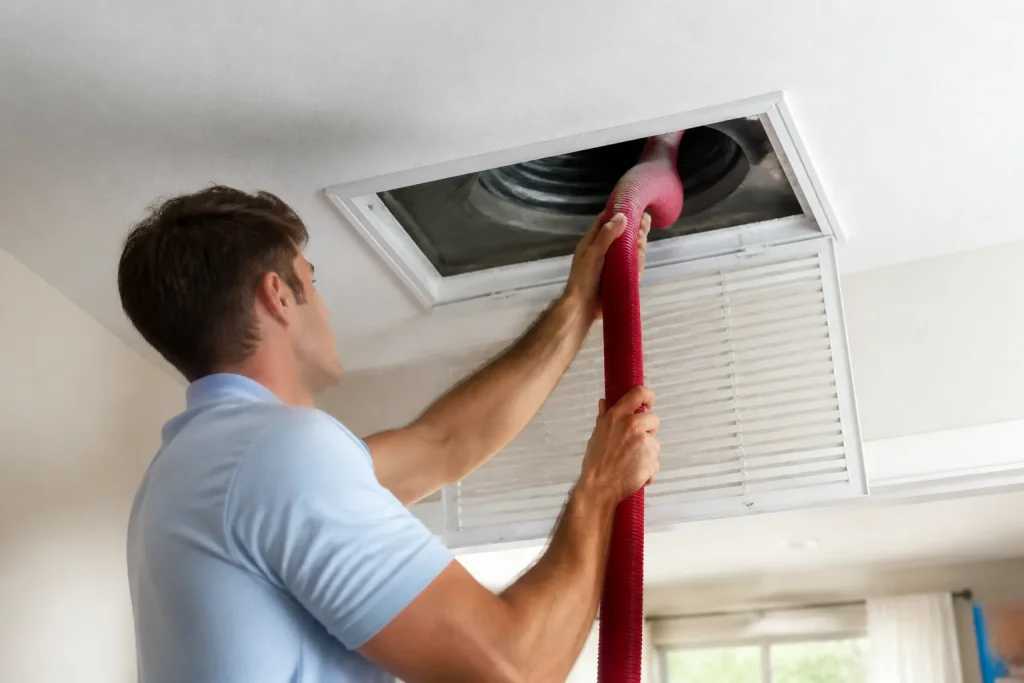
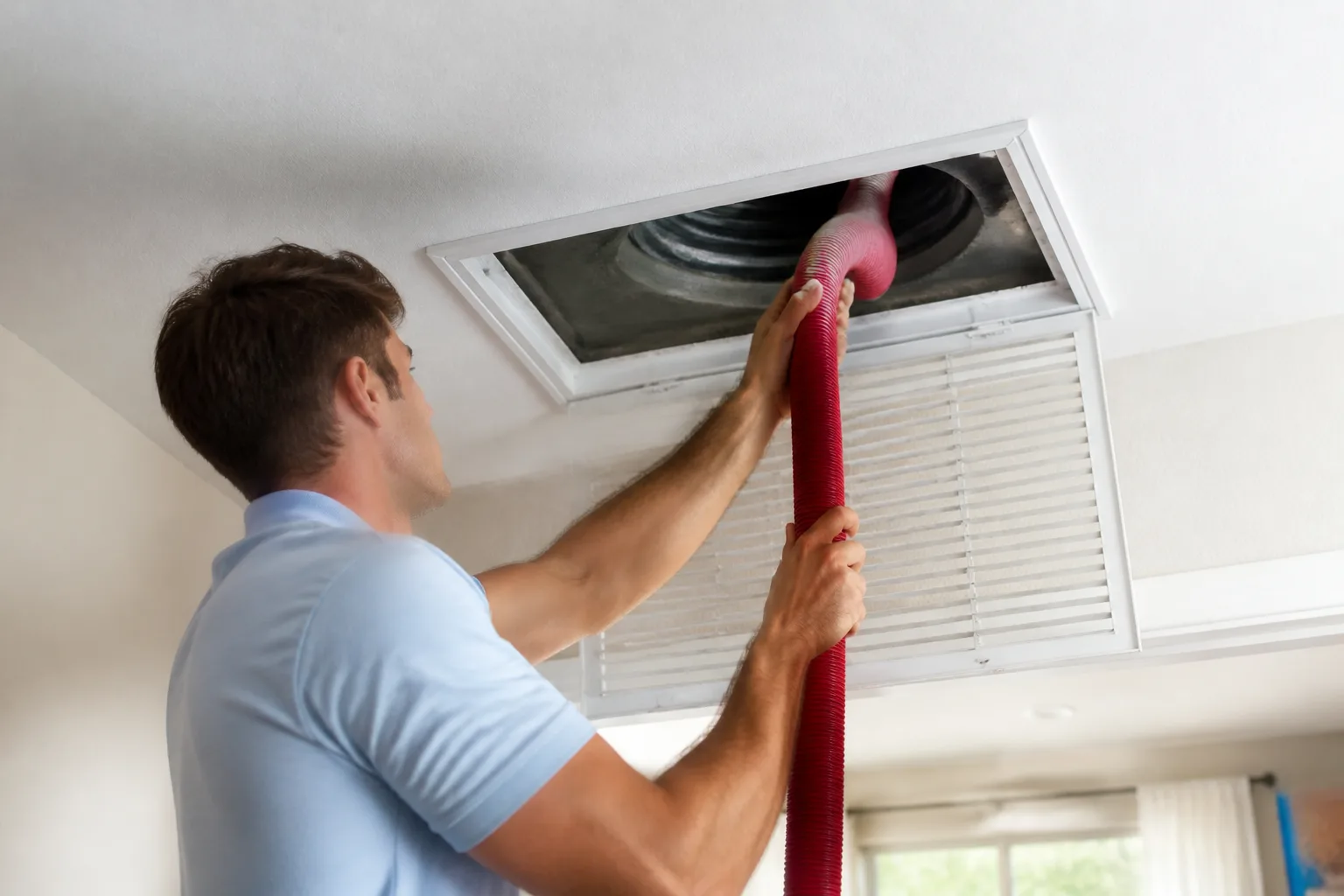
A standard air duct cleaning visit removes accumulated dust, debris, and surface buildup from a functioning system. An emergency response is different in one key way: it starts with containment. Before any cleaning begins, the technician sets up negative pressure and HEPA filtration at the work area so that disturbing the contaminants doesn’t push them back into the living space.
That’s where equipment matters. Rotobrush and Nikro are the platforms commercial HVAC and remediation contractors specify for source removal, and Abatement Technologies equipment is built for true contaminant containment rather than surface cleaning. When we respond to a smoke or sewage call in Buckhead, containment comes first, mechanical removal second, and sanitizing third. Fogging alone doesn’t fix a contaminated system, because it treats the air without removing the source material coating the duct walls.
A genuine emergency visit also includes:
- An inspection of the return and supply sides before any equipment runs
- Containment setup at the air handler and at open registers
- Mechanical agitation and source removal, not just vacuuming the visible openings
- A sanitizing step using products integrated with Honeywell and Aprilaire platforms where microbial growth is a concern
- A check for leaks or disconnected joints, since a compromised duct will re-contaminate within weeks
If the inspection turns up damaged or disconnected ductwork, we handle the repair and sealing in the same visit. Clean ducts stay clean when leaks are sealed, and that’s a step most single-service cleaners leave for a separate contractor.
How should you document a duct emergency for an insurance claim?
Photos taken before any cleaning begins are the most valuable thing you can do for an insurance claim. Once a technician starts work, the evidence is gone, and adjusters work from what’s on record. Photograph the source of the damage, the affected registers, any visible staining or debris, and the thermostat or breaker panel showing the system was shut off. Include a dated note or a timestamp if your phone offers one.
Most homeowner policies address duct remediation under the water damage or sudden-and-accidental-discharge sections, not under general maintenance. That distinction matters. Gradual buildup from years of dust is usually excluded, while contamination caused by a covered event like a burst pipe or a fire is more likely to be considered. Read your policy’s water damage and “sudden and accidental” language before you call the insurer, and ask specifically whether duct cleaning and remediation are covered as part of the loss. We can provide written documentation of the work performed to support a claim, and we’re glad to work with your insurer on the paperwork.
What are the red flags in emergency duct cleaning offers?
This industry has a bait-and-switch reputation for a reason, and emergencies are when it gets worst. A homeowner in a panic is easy to upsell. Here’s what to watch for in Buckhead:
- A firm quote over the phone without an inspection. Nobody can price a contaminated system they haven’t seen. A range is fine; a guaranteed final number before anyone looks is not.
- Skipping containment. If the crew arrives and starts vacuuming without setting up negative pressure, they’re spreading the problem, not solving it.
- Fogging as the first step. A fogger makes the air smell better and does nothing about the material on the duct walls. Mechanical removal comes first, always.
- Per-vent pricing that balloons. One flat price per system, agreed before work starts, is the honest way to quote it. Ask for before-and-after photos of your own ducts, not a stock image.
- A discount crew with a shop vac. Consumer-grade vacuums don’t move enough air to clean a residential system, and the equipment is the clearest sign of how seriously a company takes the job.
When should you call a pro, and what else should you check?
If you’ve shut the system down after a flood, fire, sewage event, or a suspicious illness pattern, that’s your cue. We’ve seen homeowners try to handle smoke residue with a shop vac and an open window, and it rarely ends well. The trained professionals we connect you with use commercial-grade equipment and can tell you within an inspection whether you’re looking at a cleaning, a repair, or a full remediation. Our technicians have up to 8 years of experience, and it shows most in the diagnostic step.
While the system is down, it’s also worth thinking about the rest of your air infrastructure. If your HVAC cleaning has been put off, a smoke or moisture event is a good reason to address both at once. And if a dryer vent cleaning has been on your list, a damaged vent is one of the leading causes of residential fires, so it’s worth handling while a technician is already on site. With five services under one company, the full system gets handled in one coordinated visit instead of three separate contractors.
Related services in Buckhead:
- Air duct cleaning in Buckhead
- Air duct cleaning for standard and deep-cleaning visits
- Dryer vent cleaning as a standalone safety service
- HVAC cleaning for the full air handler and coil system
The Bottom Line
In a duct emergency, the sequence matters more than the phone call. Shut the system off at the breaker first, keep the air from moving, document everything with photos, then call. That order protects the rest of the house from contamination and gives you a clean record for insurance. When you do call, look for a company that sets up containment before cleaning, gives you one flat price per system agreed in writing, and shows you before-and-after photos of your own ducts. Anything short of that is a guess dressed up as a service.
If you’re in Buckhead and need help, Air Duct Cleaning Buckhead offers free estimates. Call (844) 443-4682. We answer 24/7, with fast dispatch from 7am to 7pm, Sunday through Friday.
Frequently Asked Questions
It depends on the system and the extent of contamination, so we quote per job by written estimate rather than per vent or with a teaser figure. A standard cleaning on a typical home costs less than a full remediation with containment, which involves more equipment and more time. The honest answer is that no one can price your system accurately without an inspection. Call (844) 443-4682 for a free estimate, and you’ll have a flat price before any work starts.
Yes. Shut it off at the thermostat and the breaker. A running system distributes contaminants from the affected area to every room in the house, so stopping the airflow is the single step that prevents the problem from spreading. Leave it off until a technician has inspected the ducts and confirmed it’s safe to run.
Ask for before-and-after photos of your own ducts, not stock images, and ask what containment was set up before any cleaning began. A crew that skips containment or foggs the system without mechanical removal hasn’t done the work. We document every job and walk you through what we found and what we removed. Call (844) 443-4682 to schedule an inspection.
They usually quote a teaser price for a partial service, then add the real work once the technician is on site. Containment, source removal, and sanitizing take equipment and time, and a price that reflects none of that is a number, not an estimate. One flat price per system, agreed in writing before work starts, is the only way to compare fairly. Call (844) 443-4682 for a straight answer and a free estimate.
Written by the team at Air Duct Cleaning Buckhead.
Need Air Duct Cleaning Help?
Call Air Duct Cleaning Buckhead - the local pro we connect you with is licensed and insured, here with fast help in Buckhead.
(844) 443-4682