
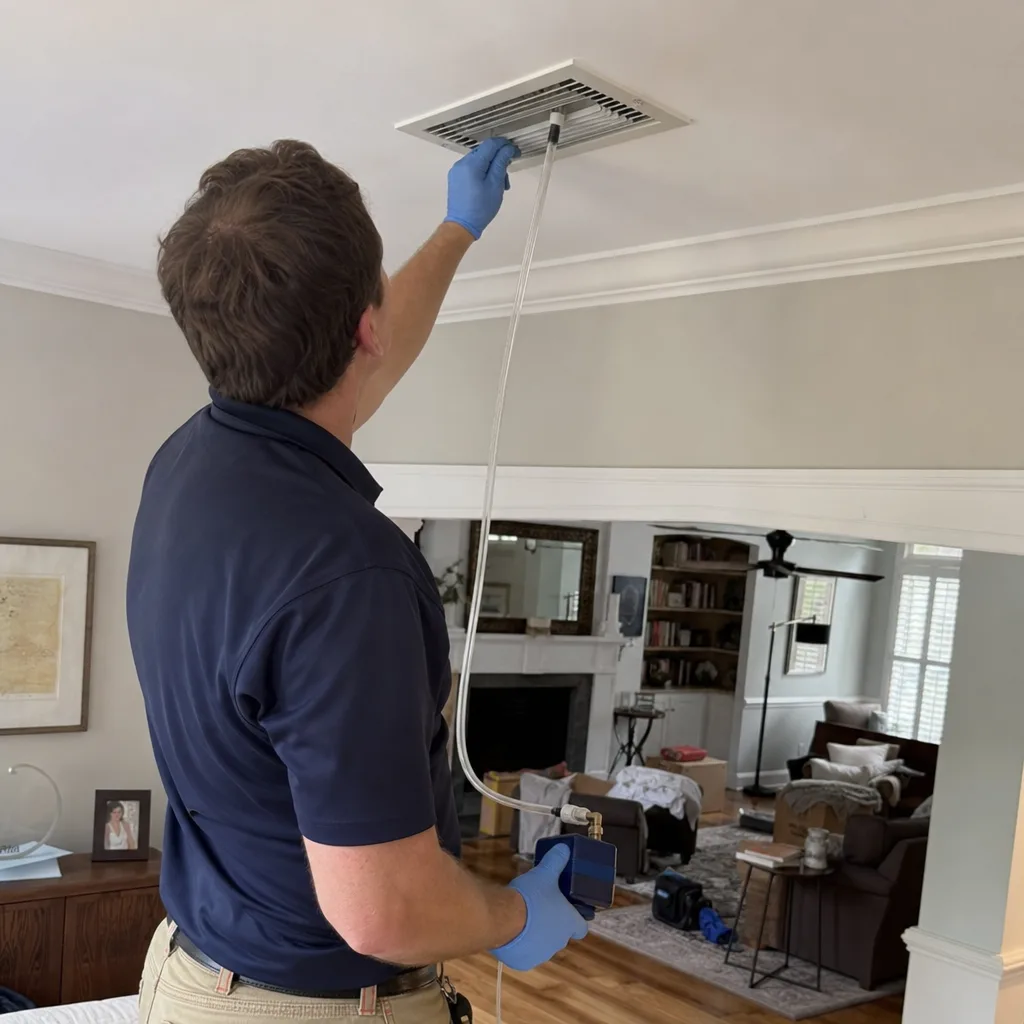
Last updated November 25, 2026
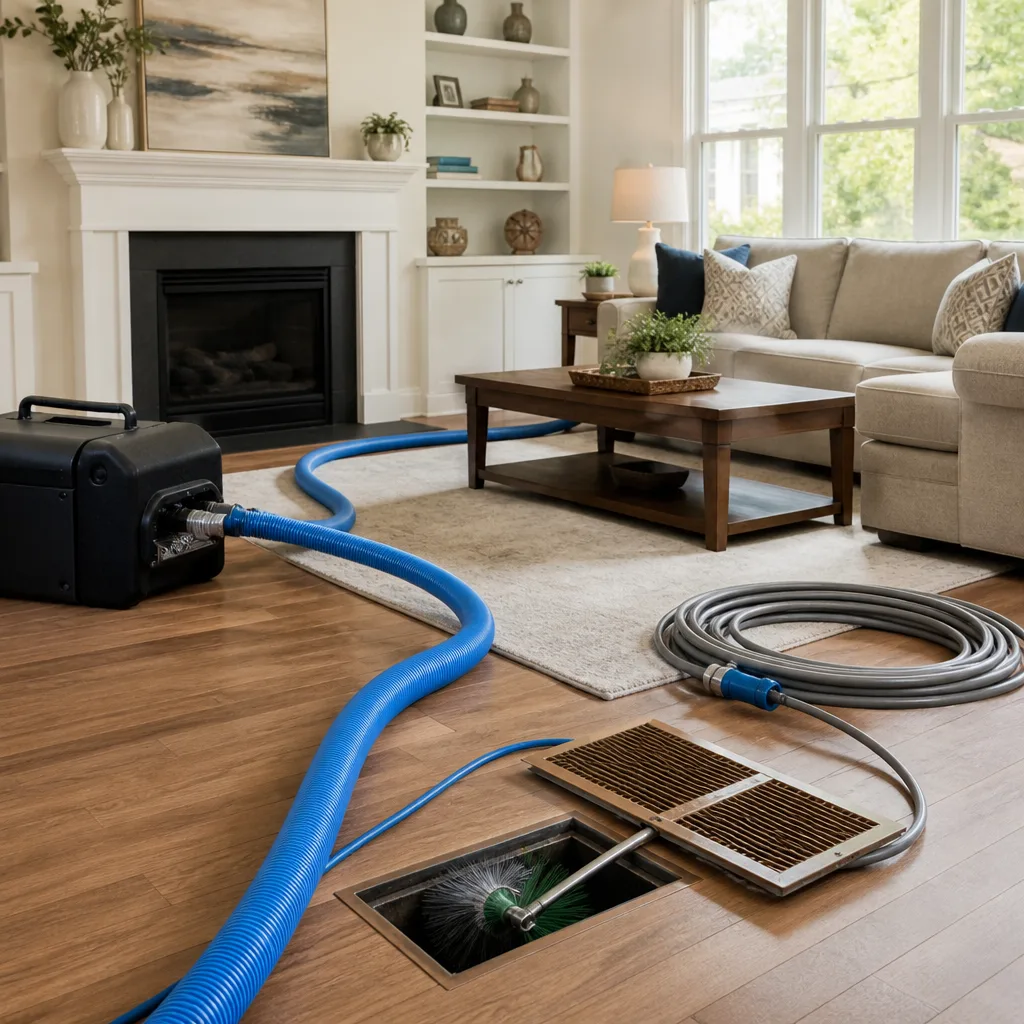 Whole-home duct cleaning
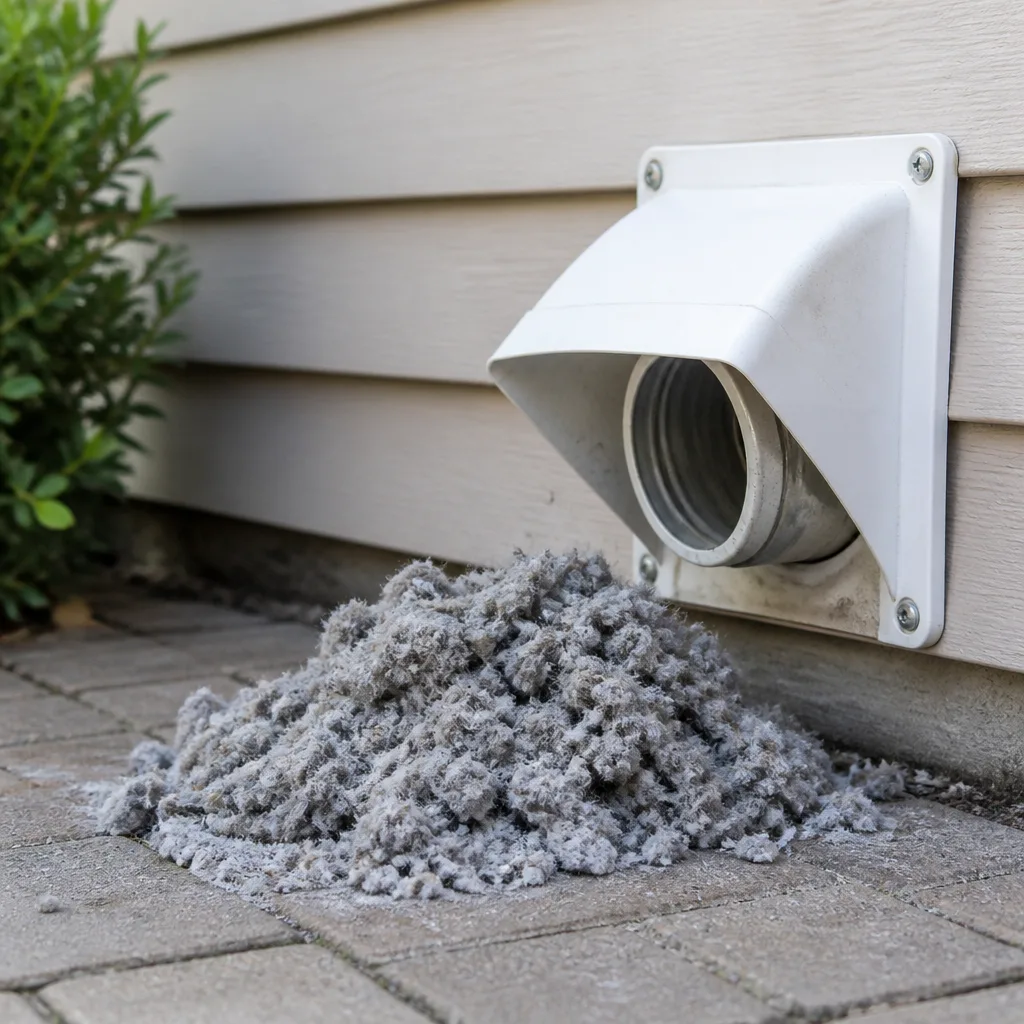 Dryer vent cleaning
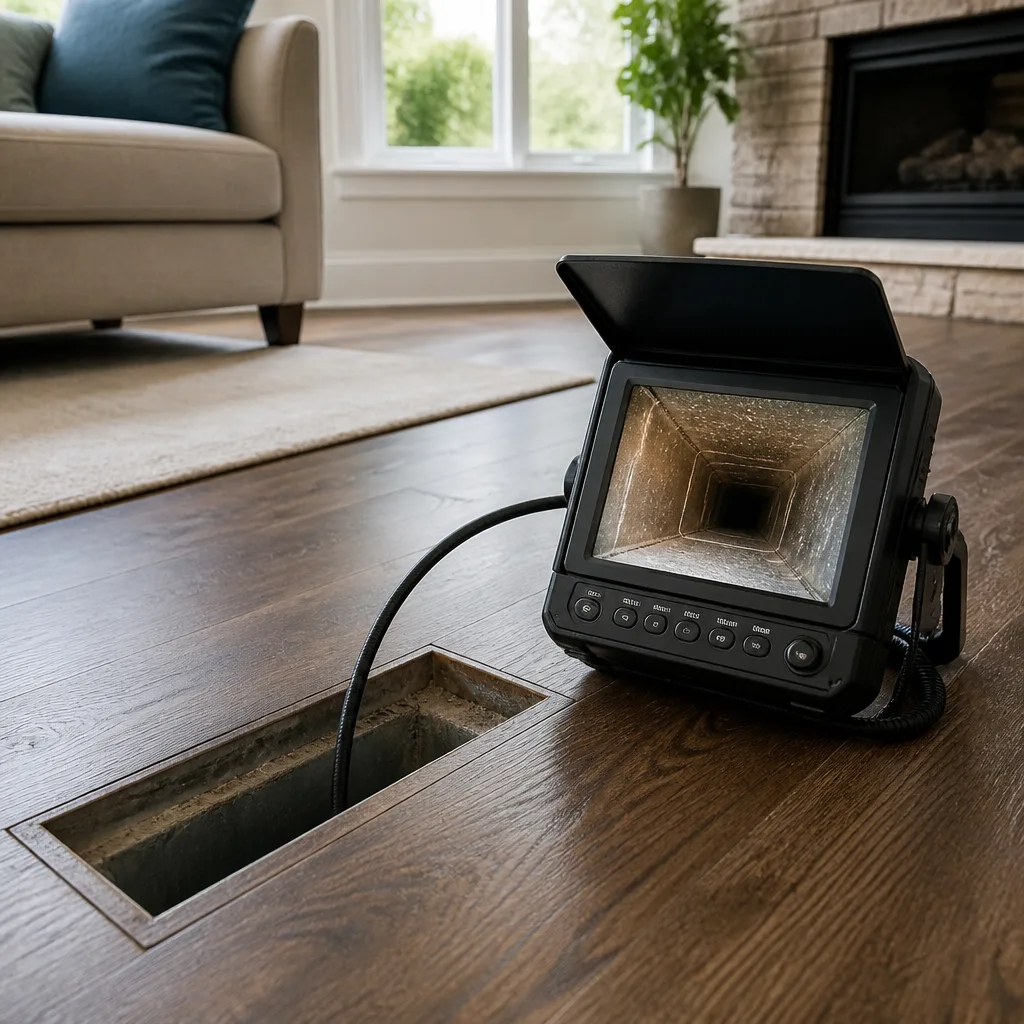 Camera inspection
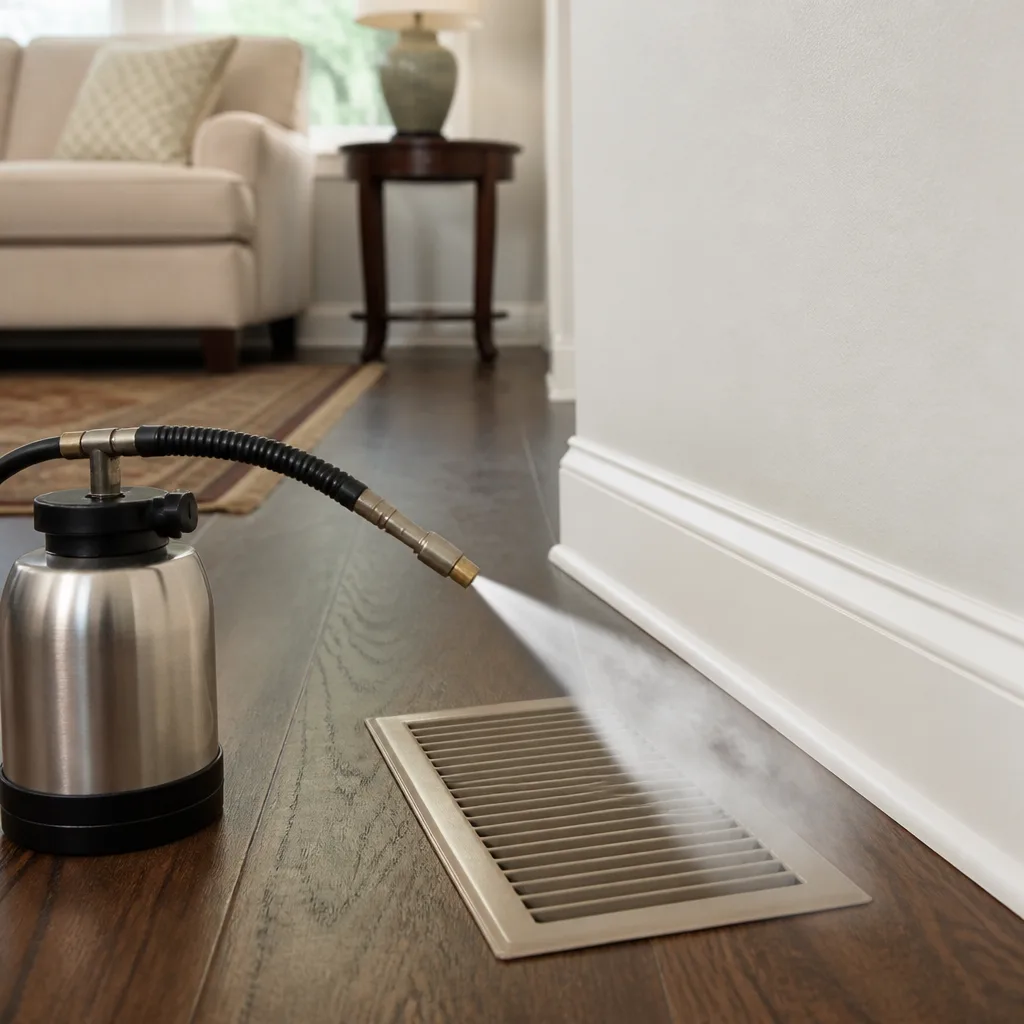 Sanitizing & deodorizing
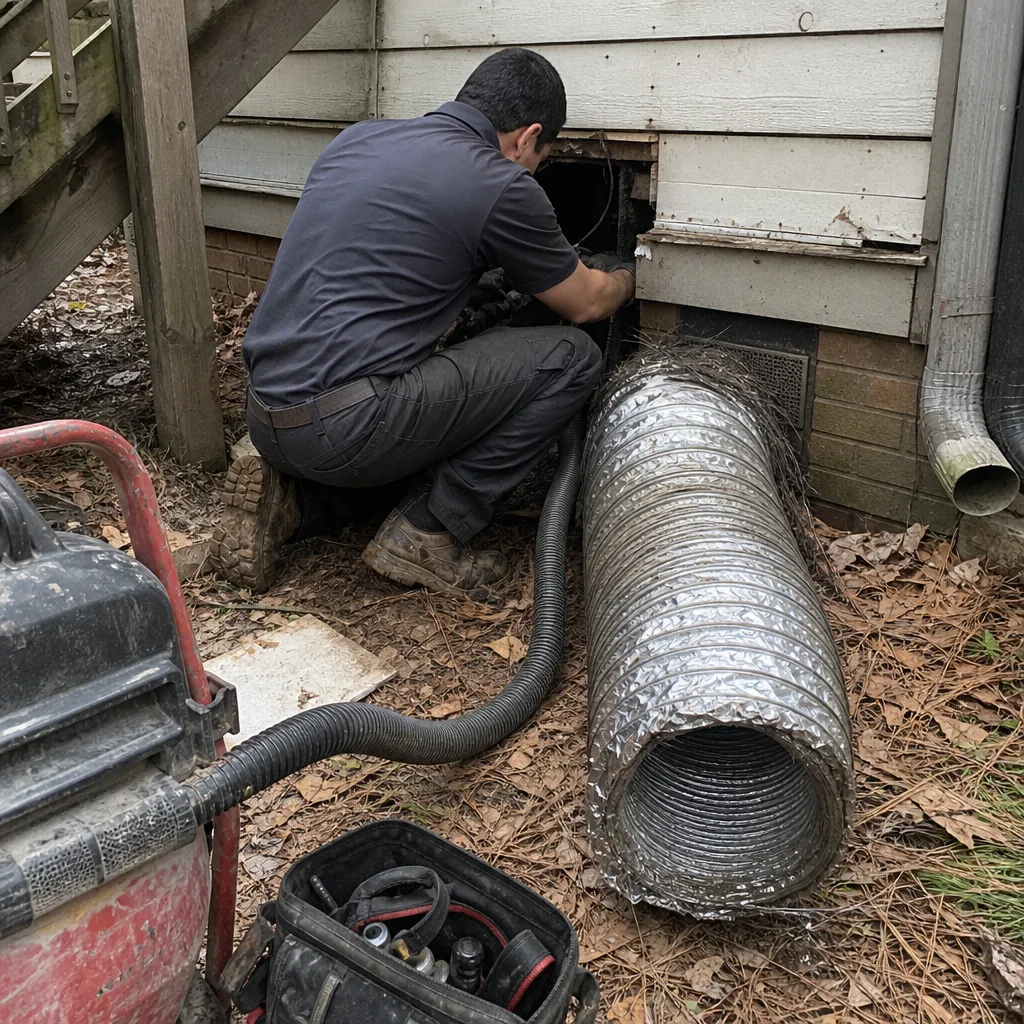
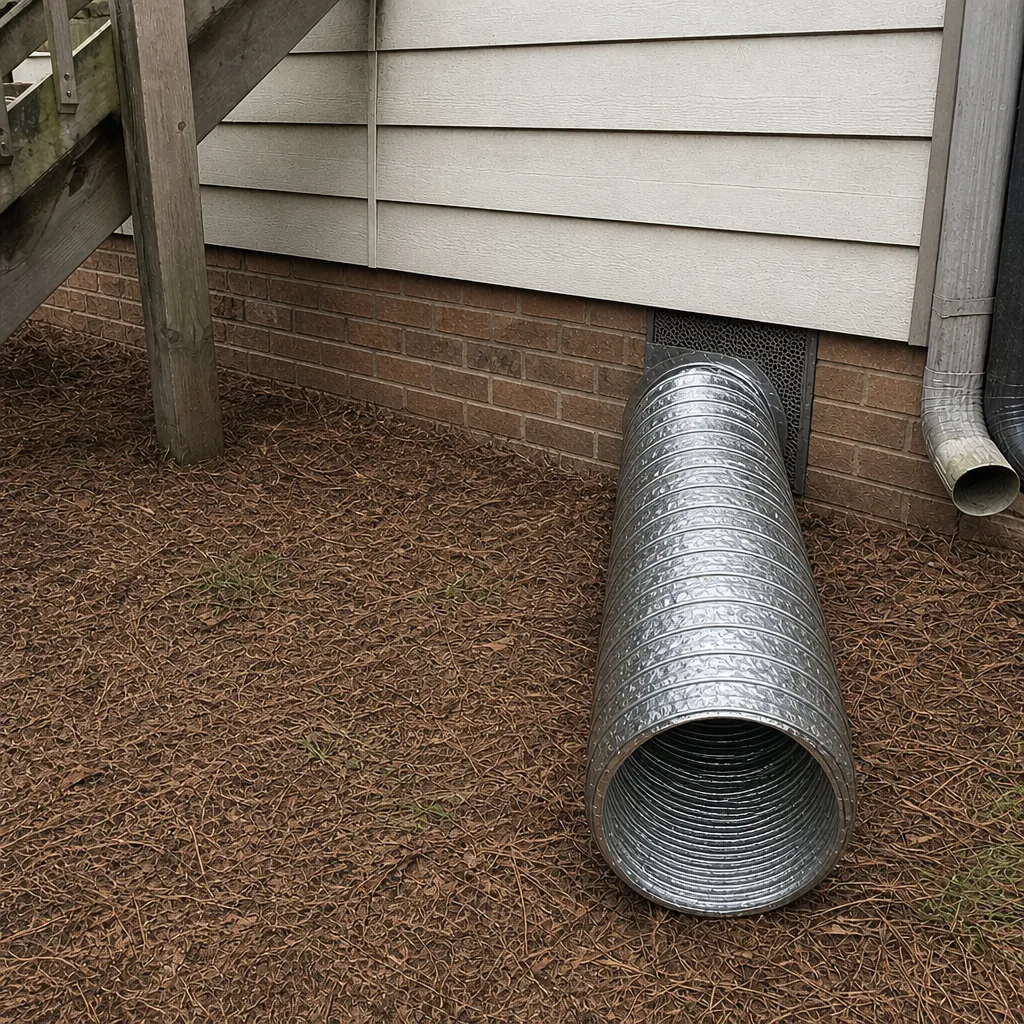
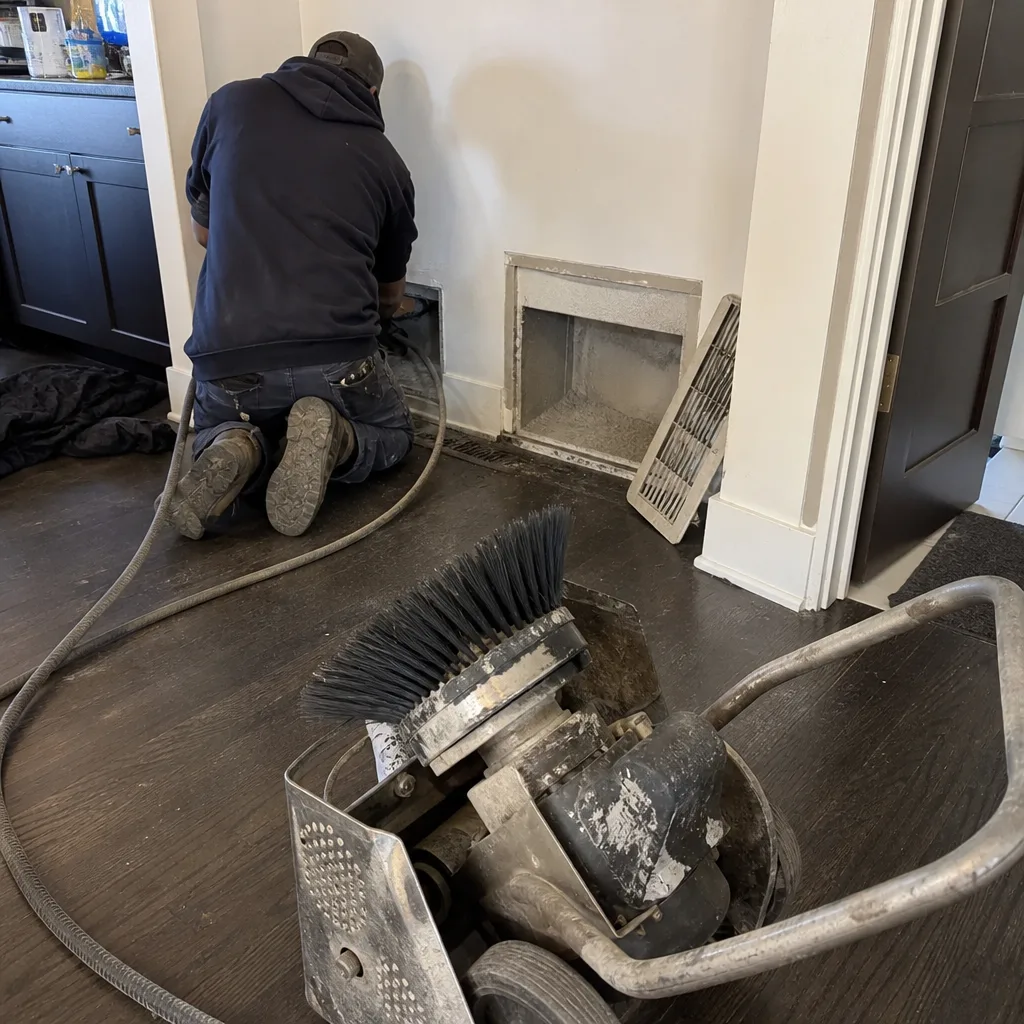
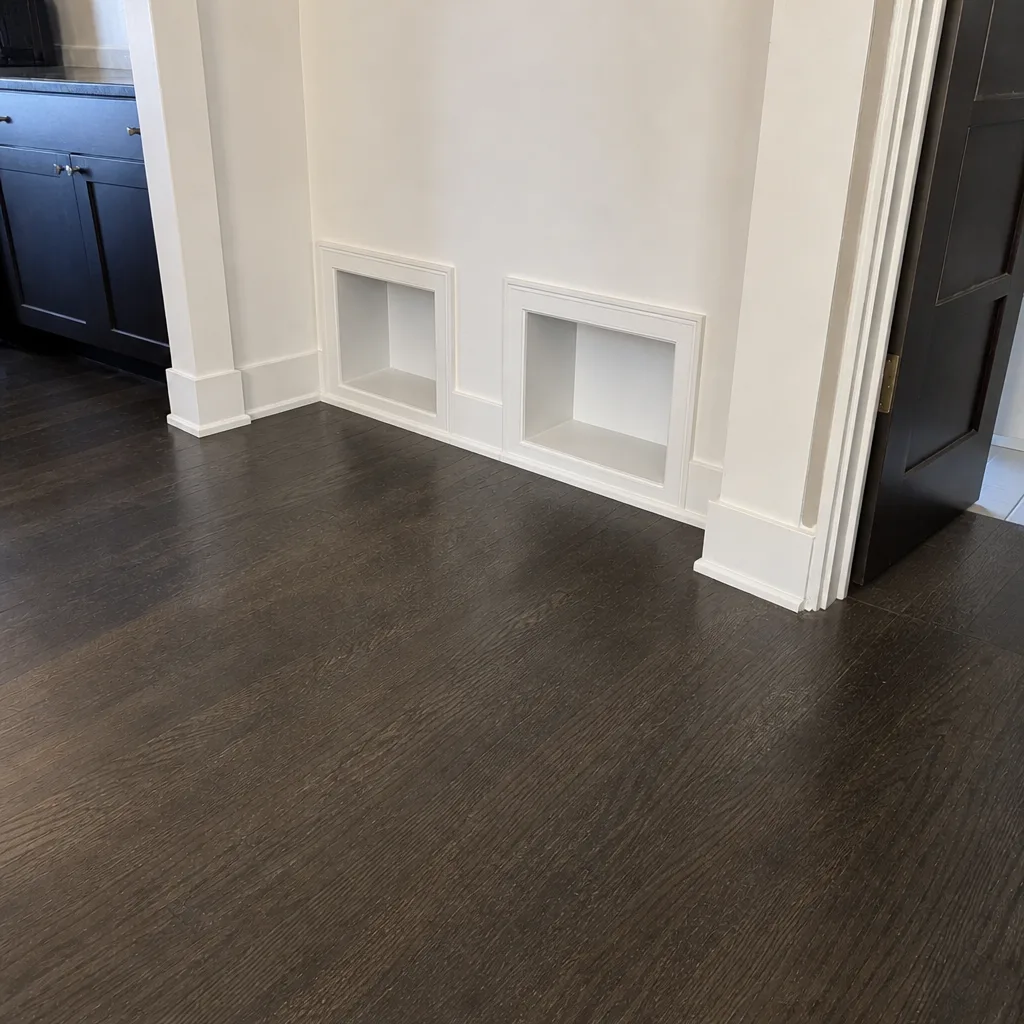
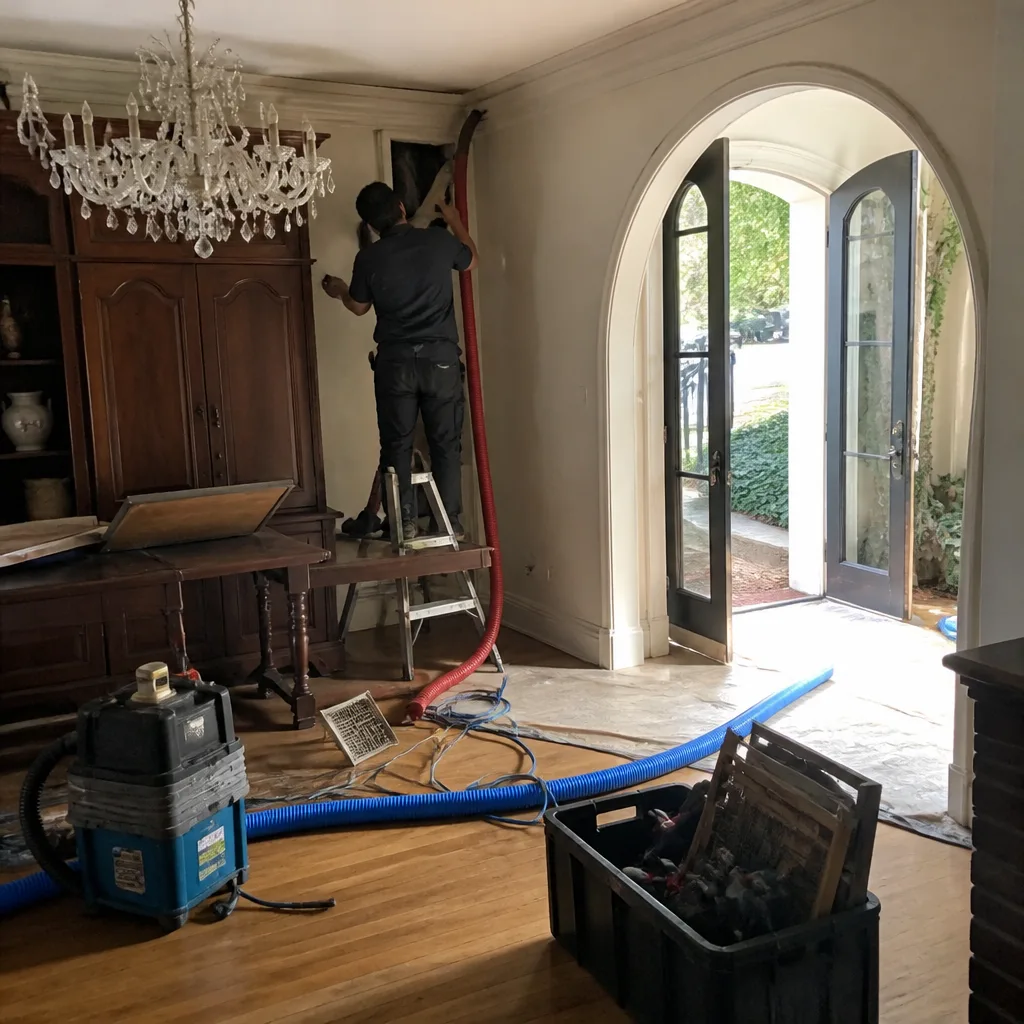
Whole-system duct and dryer vent check with before-and-after photos - you see exactly what came out of your vents
That "$99 whole-house special" is a bait ad - the real number appears once they are in your hallway, or the "clean" is a shop-vac at the register. We photograph the inside of your ducts before and after instead.
Air Duct Cleaning Warning Signs: A Buckhead Homeowner’s Reference Guide
Most duct problems in Buckhead don’t fail quietly. They smell, they dust, they leave temperature gaps between rooms that no thermostat adjustment fixes. The trouble is that homeowners meet these signals every day and read them as normal. A faint musty smell when the HVAC kicks on isn’t a minor annoyance – it usually means microbial growth is being pushed into every room, and in Buckhead’s humidity that growth spreads faster than most people expect. This guide sorts the warning signs into three urgency tiers: what needs action now, what should be scheduled within the month, and what can wait for your next maintenance visit.
Quick Answer
Duct cleaning is warranted when you notice a musty or stale smell that returns every time the system runs, visible dust streaks from registers, uneven room temperatures, or debris blowing out of supply vents. Signs that need immediate attention include pest or animal evidence in ducts, water staining around vents, mold growth, and dust plumes after renovation. Odor-only issues with no debris should be diagnosed as airflow or coil problems before cleaning is booked.
Styles & brands we work with
- Whole-home duct cleaning
- Dryer vent cleaning
- Camera inspection
- Sanitizing & deodorizing
Table of Contents
- Tier 1: Warning Signs That Need Attention This Week
- Tier 2: Signs to Schedule Within 30 Days
- Tier 3: Signs to Monitor at Your Next Maintenance
- Distinguishing Duct Odors From Drain Pan, Coil, and Air Handler Odors
- What Visible Dust Discharge Patterns Are Telling You
- Why Uneven Room Temperatures Are Usually a Duct Problem
- Post-Renovation Warning Signs for Buckhead Homes
- Common Mistakes to Avoid
Tier 1: Warning Signs That Need Attention This Week
The signs in this tier are not cosmetic. They mean something is actively compromising your air system, and the longer it runs, the more of the duct network gets pulled into the damage. In our experience, homeowners wait on these because they don’t look dramatic – a small stain, a slight smell. That’s the mistake.
Watch for these immediate-action signals:
- Animal evidence at registers. Droppings, nesting material, scratched grilles, or a sudden roaring airflow noise can mean a rodent or bird has breached the duct network. This is a contamination event, not a nuisance. Stop using the system until a professional inspects it.
- Water staining or rust around vents. Any moisture visible at a supply or return register points to a breach, a condensation problem, or a leak from above. Water and duct interiors don’t coexist well – water feeds microbial growth.
- Visible mold at a register or inside the first foot of visible duct. Stop running the system and get a professional assessment, including a plan to identify the moisture source.
- Dust plume after renovation. If you had kitchen or bathroom drywall work done and drywall dust is now discharging into rooms, the ducts have to be cleaned before it circulates further. Drywall dust is fine enough to settle in every crevice.
- A pet or occupant with sudden respiratory symptoms. New or escalating coughing, sneezing, or allergy flares in one room’s occupant can track to a localized contamination source.
Buckhead’s older homes, especially those built in the 1960s through 1990s, are especially vulnerable to these problems because original duct configurations weren’t designed for modern renovation loads. If you’re near Garden Hills or Peachtree Park and your vents look suspicious, get the inspection before you spend money on anything else.
Tier 2: Signs to Schedule Within 30 Days
The signs in this tier are meaningful but not emergencies. They indicate the system is degraded and drifting toward a more expensive fix if left too long. Scheduling within the month is the right answer.
Here’s what belongs in Tier 2:
- Persistent musty or stale smell every time the HVAC kicks on. It comes and goes with the blower, which strongly suggests the ductwork itself – not the air outside.
- Visible dust streaking from registers. Dust trails on the wall above a supply vent almost always mean positive pressure escaping through a gap or a failing seam. It’s a dust and a leak problem at once.
- Uneven room temperatures that don’t respond to thermostat adjustment. If two rooms are five degrees apart on the same setting, the system is losing air somewhere between the air handler and the room. Read the temperature section below for the full read.
- Allergy symptoms that ease when you leave the house and return when you come back. That pattern tracks airborne particles, and those often originate in your ductwork.
- New pet in the house or a pet with higher shedding. Pet dander collects in return ductwork and compounds quickly.
- Excessive dust on surfaces within 48 hours of cleaning. A home that never had a dust problem suddenly having one is a sign the return side has gotten loaded with debris or the filtration has failed.
In Buckhead, this tier is the most common category we see. The signs are subtle enough to dismiss, but real enough that a scheduled cleaning in the next few weeks is the right call.
Tier 3: Signs to Monitor at Your Next Maintenance
These are the signs that belong on a checklist, not on your calendar. You don’t need to schedule a job for them today, but they should be verified when the system is next serviced.
- A faint odor only when the heat first turns on in the fall. Once-a-season “burn-off” smells are usually dust cooking off the heat exchanger, not a duct contamination event. If it clears in a few minutes, note it. If it persists for the season, it moves up a tier.
- Registers with visible dust but no streaks. Light dust on the grille face is normal. Dust trails, dust puffs, or debris on the floor below a vent are not.
- One room colder than the rest by two to three degrees. Within tolerance for most homes. If it widens to four or five degrees, read the temperature section below.
- Occasional “ticking” or “whistling” when the blower runs. Sometimes a loose register, sometimes a partially closed damper. Worth flagging at the next inspection.
- Dryer taking longer than usual to dry a load. Your dryer vent cleaning interval is worth checking; a slow dryer is often a lint-loaded vent, which is a separate fire-safety issue.
- Visible dust inside the register boot when you clean the grille. A light film is normal. A thick, discolored coating that returns weeks after cleaning is worth a professional look.
These signs don’t need a service call, but they do need a written note so the next technician can verify them in one pass. A run-down of warning signs checked against what’s actually there is far better than a vague memory.
Distinguishing Duct Odors From Drain Pan, Coil, and Air Handler Odors
Not every HVAC smell comes from your ducts. Before you book duct cleaning, spend ten minutes identifying the odor’s likely source. The intervention that fixes a drain pan problem is not the same as the intervention that fixes a duct problem.
Odors fall into recognizable categories, and each points to a different component:
- Musty, damp, or “cellar-like” smell that returns every time the blower runs – duct-origin most often. Consistent with microbial growth in the duct interior or the air handler’s insulation. This is the duct cleaning target.
- Sour, sewage-like, or “rotten” smell that appears after rain or during humid stretches – drain pan or condensate line. The pan under the indoor coil holds standing water in a system that isn’t draining correctly. Cleaning the ducts won’t help; the pan and line need attention.
- Sharp, chemical, or “hot” smell at the supply registers – coil or heat exchanger. If it’s a new smell and appears only with heat, get an HVAC technician to inspect the heat exchanger. Do not run the system until it’s checked.
- Fishy, burnt-plastic, or “electrical” smell – wiring, motor, or control board. Stop the system and call an HVAC technician before anything else.
- Pet or urine odor concentrated at registers – likely animal intrusion into the duct, especially if you’re in an older Buckhead home with original flex duct or an unsealed crawlspace connection.
What ties these together is that the wrong intervention wastes money. If the smell is a drain pan, duct cleaning won’t change it. Once the correct source is confirmed as duct-origin contamination, the right work is deep cleaning along with sanitizing – our air duct cleaning work pairs the two because a clean-but-not-sanitized duct will often smell again within a season.
Where sanitizing is appropriate, it’s the step that separates debris removal from treating what’s actually growing on the duct surface. We use Nikro and Abatement Technologies equipment for the extraction and containment side so that contaminants are removed rather than redistributed through the home.
What Visible Dust Discharge Patterns Are Telling You
Dust patterns aren’t random. Where they collect, and how fast they return, tells a technician which type of failure is happening inside the duct. This section walks through the common patterns and what each usually means – not so you can fix it, but so you know what to describe when you call.
Read the pattern first, then act:
- Dust streaking upward from the register on the wall. Positive pressure escaping a gap. Usually a failing seam, a loose boot connection, or unsealed takeoff. Fixing the leak is what keeps it from returning – this is why duct repair and sealing belong with the cleaning, not after it.
- Dust puffs visible when the system first kicks on. Material in the duct is being lifted. Often loose debris in flex duct, sometimes a collapsed liner.
- Specks of insulation or black flakes at a register. Interior duct lining has failed. Fiberglass lining inside older ductwork breaks down and releases fibers. This is a health-relevant pattern and calls for inspection.
- Fine gray powder settling under one specific vent. Drywall dust leftover from a renovation, or debris from a nearby breach. Confirming which is which requires opening the boot.
- A single room with visible discharge while others are clean. The problem is local to that branch run. A collapsed section, a separated joint, or a compromised branch connection is usually the cause.
- Roaring or whistling at a register while dust appears elsewhere. The duct network is unbalanced. Air is escaping the loud register and finding its way out wherever it can.
For homes in Peachtree Heights or Buckhead Forest with original 1970s-1990s ductwork, pattern three (lining failure) is the most common and the most overlooked. Fiberglass insulation loses its integrity slowly, so the signs start subtle and progress. A technician with proper lighting and camera equipment can rule it out or confirm it in one inspection.
Why Uneven Room Temperatures Are Usually a Duct Problem
When a room won’t hold temperature, homeowners usually call an HVAC contractor first – assuming the equipment is failing, or the thermostat is bad, or the system is undersized. In our experience, most of those calls end with a duct diagnosis, not an equipment diagnosis.
The reason is that an air conditioner can only condition the air it delivers. If a duct run is leaking 20% of its air into a crawlspace or an attic, the room at the end of that run gets 80% of the air it should. The equipment looks fine because it’s doing its job; the delivery is the problem.
Try this before you call anyone:
- Close every interior door in the house, then walk room by room and compare airflow at each supply register with your hand. A register that’s clearly weaker than the others points to a branch problem.
- Check the return side. If you have one central return and the doors are usually closed in most rooms, the system is fighting pressure imbalances. Opening a bedroom door often changes how a nearby supply feels.
- Get the temperature right at the register itself with an IR thermometer after the system has been running 20 minutes. A 10-plus degree gap between registers on the same supply side is a strong duct signal.
- Note when the problem started. If it grew gradually, that points to a slow leak or liner failure. If it started suddenly, that points to a separated joint or a damper that slipped.
In a Buckhead home with a finished basement or a two-story layout, uneven temperatures upstairs are almost always a duct-sealing problem. The ducts feeding upper rooms run longer distances through hotter attic space, and leaks there get magnified. Cleaning the ducts and skipping the sealing step fixes the debris problem but leaves the temperature problem untouched – which is exactly the pattern our full-service HVAC cleaning work is built to avoid.
Post-Renovation Warning Signs for Buckhead Homes
Buckhead sees a lot of renovation. Kitchen renovations, bathroom remodels, basement finishes, and second-story additions are regular work in neighborhoods like Tuxedo Park and Pine Hills. All of them generate dust, and every one of them is a duct-risk event regardless of how careful the contractor is.
Here’s the sequence to watch for – in approximate order of how it develops:
- Day 1-7 after demolition: Drywall dust and construction debris enter the return system if returns are left open or if a renovation wall was opened near a duct run. You won’t necessarily see this yet.
- Week 1-2 after drywall and paint: Fine dust begins circulating through supply registers as the HVAC runs. Fine drywall dust is small enough to stay airborne for hours.
- Week 2-4 after the contractor leaves: Dust accumulates on blinds, ceiling fans, and horizontal surfaces faster than normal. Registers show a film that reappears within days of cleaning. This is the clearest signal that the ducts took a construction-load hit.
- Week 4 onward: Persistent “chalky” smell that doesn’t clear. Usually the fine dust settling in return ducting. Sometimes it can be a wet-dust issue if the renovation involved moisture – worth ruling out.
- Six months post-renovation: If the renovation involved a kitchen, you may notice grease vapor odor drifting into other rooms. That’s a sign of a cooking exhaust problem, not a duct problem, and it’s worth calling us separately about.
The best practice is simple: before the renovation starts, close off and tape any supply or return register in the work zone, and run the HVAC as little as possible during the demolition phase. After the work is done, have the ducts inspected. Cleaning within 30 days of drywall finishing is the right window – before that, dust is still settling; after that, the ducts deposit dust into every room for months.
How Duct Sealing Makes the Cleaning Last
Clean ducts stay clean when leaks are sealed. Skip the sealing step and the cleaning has a time-limited benefit – dust re-enters through the same gaps within months. This is the reason we offer duct repair and sealing as part of the same visit as cleaning, not as a separate appointment.
What sealing typically involves:
- Locating breaches at joints, takeoffs, boots, and the air handler connection.
- Confirming airflow isn’t being starved by a duct that should stay partially open (some systems are designed to leak in specific places for pressure balance to work).
- Sealing with the appropriate material – mastic, foil tape, or aerosolized sealant – depending on the accessibility and duct type.
- Verifying improvement with airflow readings at the registers after the sealant cures.
A sealed system doesn’t just stay cleaner; it delivers air more efficiently, which is why post-sealing airflow improvements often solve uneven temperatures that were previously attributed to the equipment.
What Professional Equipment Actually Changes
The difference between a duct cleaning that fixes the problem and one that doesn’t is equipment and process. A consumer-grade shop vacuum can pull some loose debris from a register boot, but it can’t reach the length of the run, agitate the duct wall, or contain the material it does pull.
Professional equipment works because:
- Contact agitation from tools like Rotobrush loosens debris from the duct wall, where it’s attached. Suction alone leaves most of it.
- HEPA-level containment, including equipment from Abatement Technologies, traps the removed material – the whole point is that it leaves your home, not redistributes through it.
- Camera inspection verifies what’s actually in the duct and whether the cleaning worked, rather than relying on a visual once-over at the register.
- Filtration integration through Honeywell and Aprilaire systems creates ongoing defense after the cleaning – better filters, better cabinets, and in some cases whole-home air quality upgrades.
Commercial-grade equipment, residential care. That’s the combination that makes a duct cleaning a durable change rather than a one-season reset.
See the difference
 Before
 After
 Before
 After
 Before
 After
Common Mistakes to Avoid
- Booking duct cleaning for a smell you haven’t sourced. If the smell is a drain pan or coil problem, cleaning the ducts won’t fix it. Spend the ten minutes in the odor section before booking.
- Choosing a quote on the basis of a “per-vent” price alone. A low per-vent number can climb quickly once the technician is on-site. Ask for a whole-system flat price before the work begins.
- Skipping the sealing step. Cleaning without sealing is a temporary fix. If the company doesn’t offer repair and sealing in the same visit, expect to repeat the job within a year.
- Ignoring dryer vent cleaning as a separate service. A slow dryer is a fire risk, not a convenience issue. It deserves its own appointment; it isn’t part of the duct cleaning.
- Waiting for a “big” signal. Duct problems start subtle. A faint odor or light dust reappearing fast is the best time to schedule. Waiting is how a $400 cleaning becomes a repair job.
- Assuming the thermostat is the problem with uneven rooms. Replace a thermostat only after a duct inspection. Nine times out of ten, the equipment is fine.
- Not asking for before-and-after photos. Legitimate work produces visible evidence. Ask for photos of your own ducts before and after the cleaning. A company that can’t produce them is worth replacing.
When to Call a Professional
Call a professional when you see any of the following: animal evidence in a register or duct, visible mold anywhere the system touches, water staining around a vent, sudden airflow changes, or a musty smell that returns each time the blower runs for more than a few days. Call if a slow drying cycle or a persistent lint smell suggests your dryer vent cleaning is overdue, and call if you’ve had renovation work done in the last 60 days and dust is now circulating faster than usual. Same-day service and free estimates are available in Buckhead.
Frequently Asked Questions
Most Buckhead homes need duct cleaning every three to five years, though homes with pets, allergy-sensitive occupants, or recent renovation work often benefit from a two-to-three-year interval. There’s no fixed national rule; the interval depends on how fast contamination builds. A quick check each year at the registers is enough to see whether the schedule holds.
Whole-system duct cleaning in Buckhead typically runs in the low-to-mid four figures depending on the number of systems, the number of register runs, and whether sanitizing or sealing is included. We give a flat price per system agreed before work starts. Call (844) 443-4682 for an exact quote; estimates are free.
If the smell comes and goes with the blower – sharpest right after the system starts and easing as it runs – it’s most likely duct-origin. A sour smell after rain, or a smell concentrated near the air handler, is usually a drain pan or coil issue. The distinction matters because the fix is different. Call us and we’ll talk through it before scheduling.
Cheap quotes usually leave out one of three things: containment (the equipment that keeps debris out of your home), agitation tools (which actually remove debris from the duct wall), or the sealing step that keeps the cleaning from being repeated in a year. A per-vent price can look low on the phone and grow once the crew is on-site. Ask for a flat whole-system price up front.
Ask for before-and-after photos of your ducts, a written scope of the work performed, and verification that the sealant has cured before the crew leaves. The best answer to “was it done” is visual evidence of your own system, not a promise. Call (844) 443-4682 if you want us to walk you through what a full job includes.
Yes. Atlanta’s summer humidity means condensation inside ductwork is more likely, which feeds microbial growth and accelerates the return of musty smells. It also makes the sealing step more important – a leak that lets in humid attic air becomes a growth problem in a single season. Cooling months are the ideal time for an inspection before growth spreads.
The Bottom Line
Most duct problems announce themselves weeks or months before they get expensive. The signs – musty smell tied to the blower, dust trailing from registers, uneven room temperatures, post-renovation debris – are the signals that tell you which tier of urgency you’re in. Tier 1 needs a call this week. Tier 2 needs a booking within the month. Tier 3 belongs on the checklist at your next maintenance visit. Differentiating them keeps you from overpaying for the wrong fix and from ignoring a real problem. Clean ducts stay clean when the system is sealed, the equipment is professional, and the process is verified. We handle all five services – air ducts, dryer vents, HVAC, air quality, and duct repair and sealing – as one connected job.
Call Air Duct Cleaning Buckhead at (844) 443-4682 for a free estimate. We answer 24/7. Fast dispatch from 7am to 7pm, Sunday through Friday. Same-day service is often available. Our technicians have up to 8 years of experience. Estimates are free and the price is set per job by the written estimate.
Written by the team at Air Duct Cleaning Buckhead.