
Last updated November 25, 2026
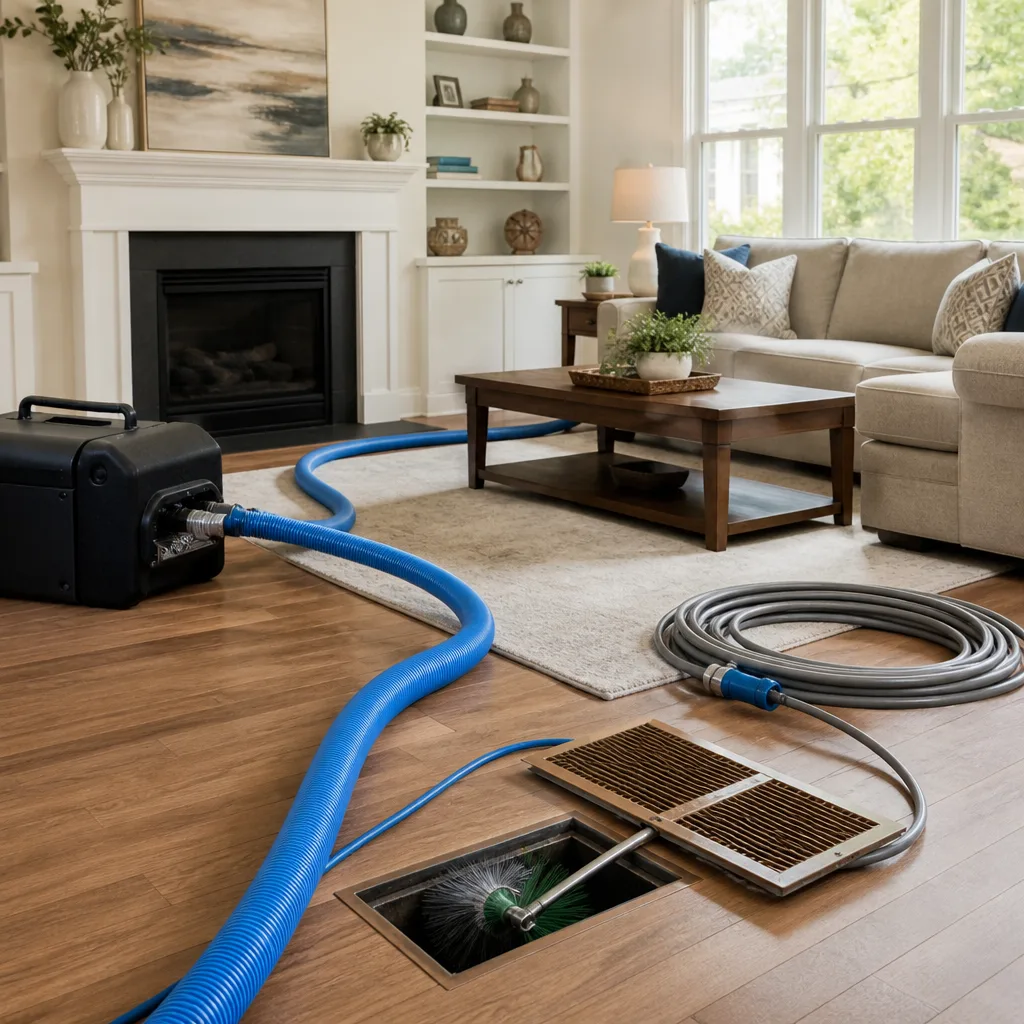 Whole-home duct cleaning
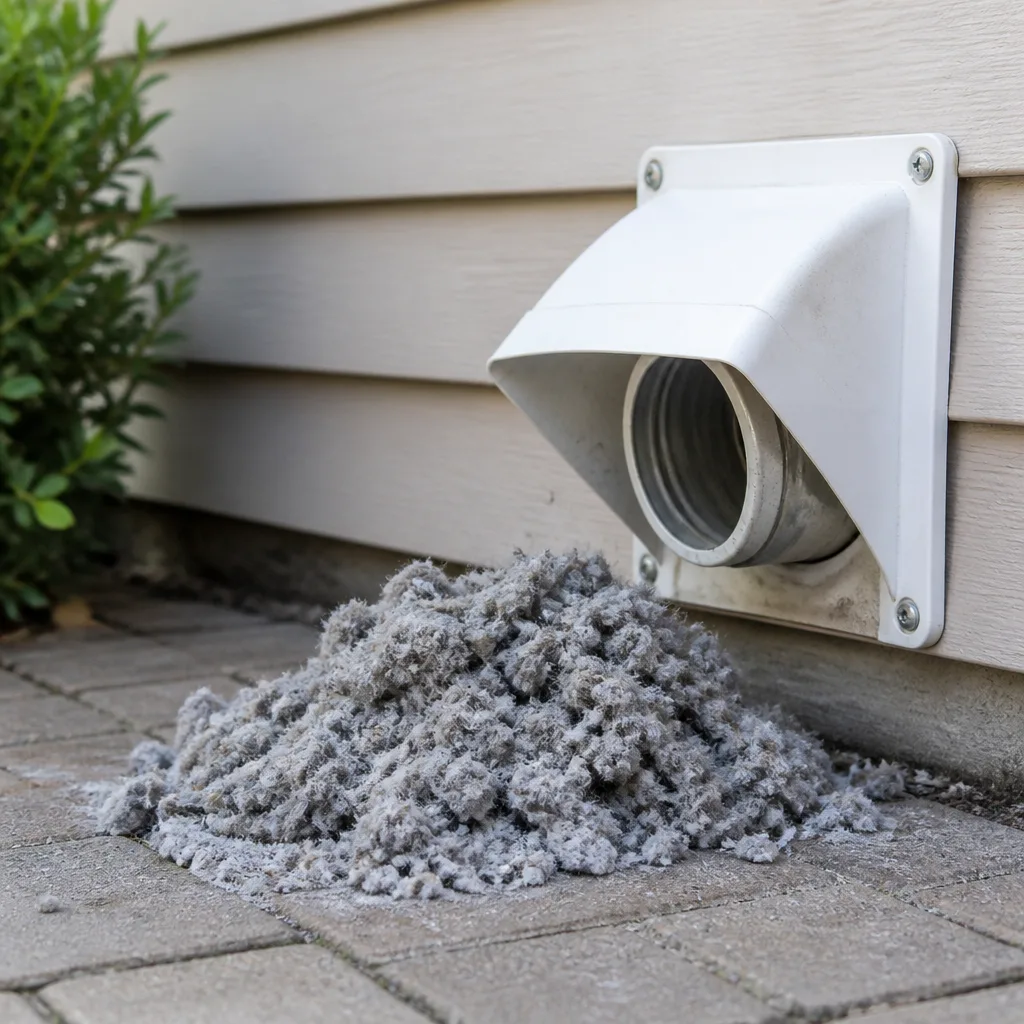 Dryer vent cleaning
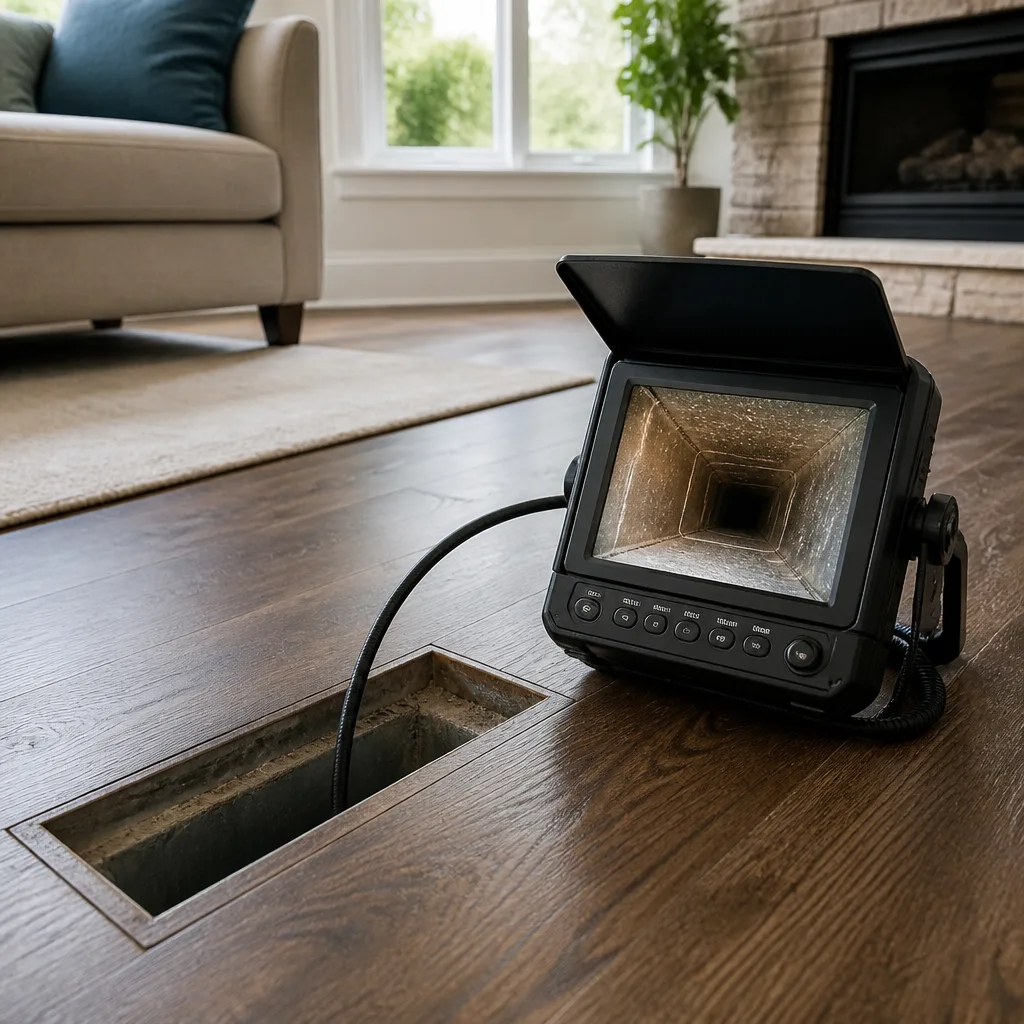 Camera inspection
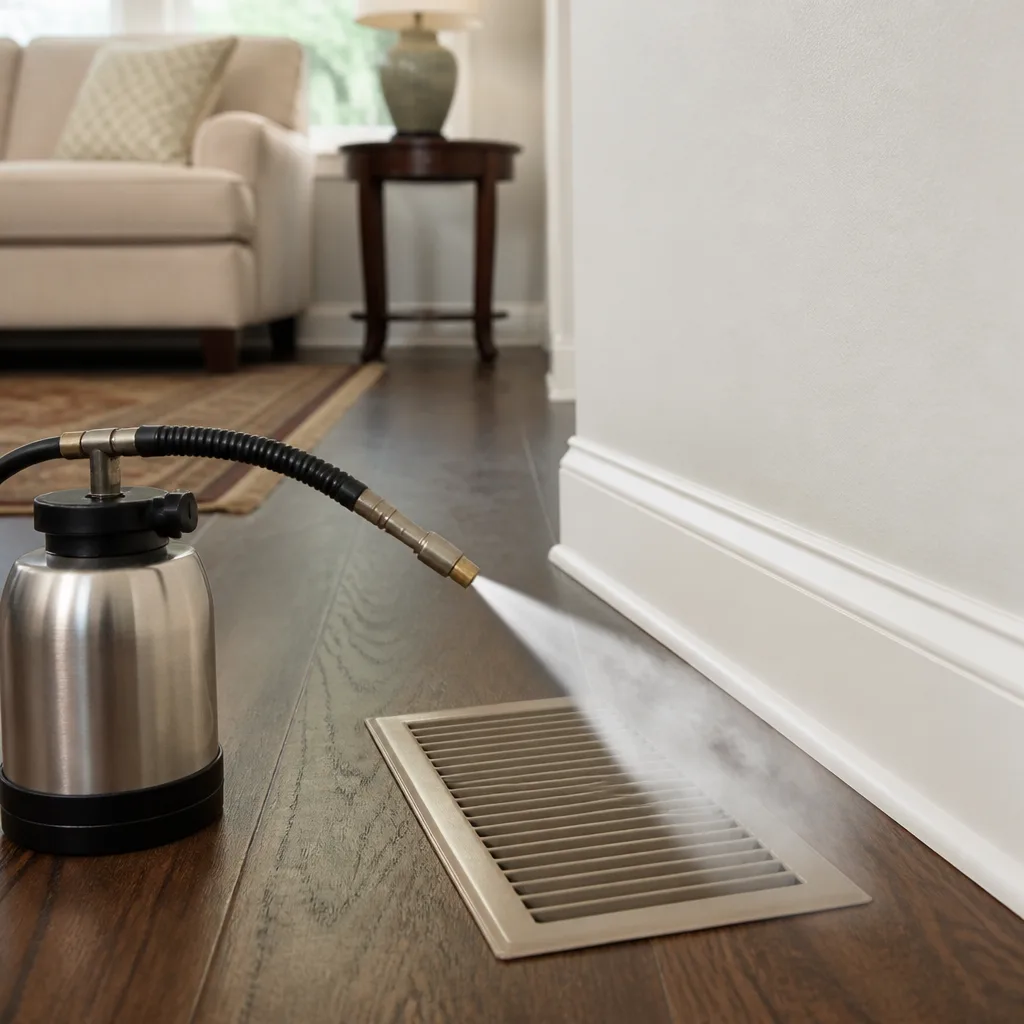 Sanitizing & deodorizing
Whole-system duct and dryer vent check with before-and-after photos - you see exactly what came out of your vents
That "$99 whole-house special" is a bait ad - the real number appears once they are in your hallway, or the "clean" is a shop-vac at the register. We photograph the inside of your ducts before and after instead.
The Complete Guide to Air Duct Cleaning in Buckhead
Most homeowners in Buckhead assume their ducts are either clean or dirty, and that a cleaning service simply removes the dirty part. That framing misses the real problem. In a neighborhood where much of the housing stock predates modern mold-resistant duct materials, the question isn’t whether dust has collected inside the system. It’s whether the system’s original materials, sealed decades before anyone thought about indoor air quality, are still holding up under Buckhead’s humidity, tree canopy, and red clay soil. This guide walks through what duct cleaning in Buckhead actually involves, why generic national advice falls short here, and how to tell a real source-removal job from a surface wipe-down. You’ll finish knowing what your air system needs and what a thorough cleaning should look like.
Quick Answer
Air duct cleaning in Buckhead means removing accumulated debris, pollen, and microbial growth from the entire air system – supply ducts, return plenums, and the air handler coil – using commercial-grade negative air machines and agitation tools, then sealing any leaks so the clean interior stays clean. In Buckhead’s older homes, the job matters more than the national average because original flex duct, high humidity, and dense tree pollen speed up contamination faster than in newer suburban construction. A professional cleaning addresses the source; a low-bid service usually just stirs the surface.
Styles & brands we work with
- Whole-home duct cleaning
- Dryer vent cleaning
- Camera inspection
- Sanitizing & deodorizing
Table of Contents
- Why Buckhead Homes Need Duct Cleaning More Than the National Average
- Red Clay, Tree Pollen, and How Contamination Builds Here
- Source-Removal Cleaning vs. Surface-Agitation Cleaning
- Flex Duct in Older Buckhead Homes: The Higher-Risk System
- What Commercial-Grade Negative Air Machines Actually Do
- Why Supply-Only Cleaning Leaves the Job Half Done
- How to Choose a Duct Cleaner in Buckhead
- What Duct Cleaning Costs in Buckhead
Why Buckhead Homes Need Duct Cleaning More Than the National Average
Most national duct-cleaning guides are written for a generic American house. Buckhead doesn’t really have those. The housing stock here skews older and larger than metro Atlanta as a whole, and much of it was built before duct materials were formulated to resist mold. That single fact reframes everything.
A duct system installed in the 1970s or 1980s was built to move air, not to withstand years of moisture cycling. Original flex duct from that era is often a thin inner liner wrapped in insulation. Once humidity finds its way into the liner, mold can establish itself on the interior surface. Cleaning a duct with active microbial growth requires more than vacuuming – it requires the liner to be sanitized or, in some cases, replaced.
Buckhead’s climate compounds this. Atlanta’s humid summers mean condensation forms inside ducts whenever the air conditioning cycles off and warm outside air seeps in through gaps. In newer, tighter homes that leakage is smaller. In older Buckhead homes with original ductwork, unsealed joints let in more warm air, which means more condensation, which feeds the growth cycle. The dense tree canopy that gives Buckhead its character also slows the drying of exterior humidity that pushes back into the system through return leaks.
What we’ve learned working in this neighborhood is that the contamination timeline is shorter than national guides suggest – not because Buckhead is unusual in temperature, but because the combination of older duct materials, generous attic humidity, and heavy pollen loads creates conditions that newer suburban homes simply don’t face.
The practical takeaway: if your home is in one of Buckhead’s established neighborhoods and the ductwork is original, “clean enough” means something different than it does for a house built in 2015. For a related local overview, see our main Air Duct Cleaning Buckhead service page.
Red Clay, Tree Pollen, and How Contamination Builds Here
Buckhead sits in a landscape defined by red clay soil and a dense, mature tree canopy – two factors that change how fast ducts get dirty and what’s inside them.
Red clay and near-home soils
Red clay is fine and easily disturbed. When it dries it becomes airborne dust more readily than many sandy or loamy soils. Around older Buckhead homes, where grading and drainage were finalized decades ago, that clay dust works its way into exterior returns, crawlspaces, and garage air handlers. Once in the return side of a system, clay dust is drawn into the air handler, past the filter, and held against the coil, where humidity turns it into a paste that captures everything behind it.
Pollen loads that exceed suburban Atlanta
The tree canopy that makes Buckhead attractive also produces a heavier pollen load than newer, less-treed parts of the metro. Pine, oak, and other mature trees release fine particulates that settle on every surface and enter HVAC returns in quantity. Those particles don’t stay loose inside the duct. They bind to moisture on the interior surface and become a food source for mold and dust mites.
How the timeline works
In general terms, contamination builds in three stages:
- Particle accumulation. Pollen, clay dust, and pet dander collect in the duct lining and on the coil.
- Moisture binding. Buckhead’s summer humidity condenses on cool duct surfaces, turning loose particles into a sticky layer.
- Biological growth. Once there’s a film of food and moisture, mold and dust mites can establish themselves, especially on older flex duct liners that lack modern mold-resistant coatings.
That’s why a cleaning done in spring may look different from one done after the year’s pollen flush and again after a humid summer. The stage of the cycle matters for how deep the job needs to go. A thorough air duct cleaning addresses all three stages in a single visit.
Source-Removal Cleaning vs. Surface-Agitation Cleaning
There’s a meaningful difference between what a professional cleaning does and what most low-bid services perform, and it’s the single most important thing to understand as a Buckhead homeowner evaluating bids.
Surface-agitation cleaning stirs up visible dust using a brush or air whip, then vacuums what it can catch. It’s quick, it’s cheap, and it often looks impressive when the technician shines a light down the register. What it doesn’t do is remove the source of contamination – the films that stick to the liner and the coil.
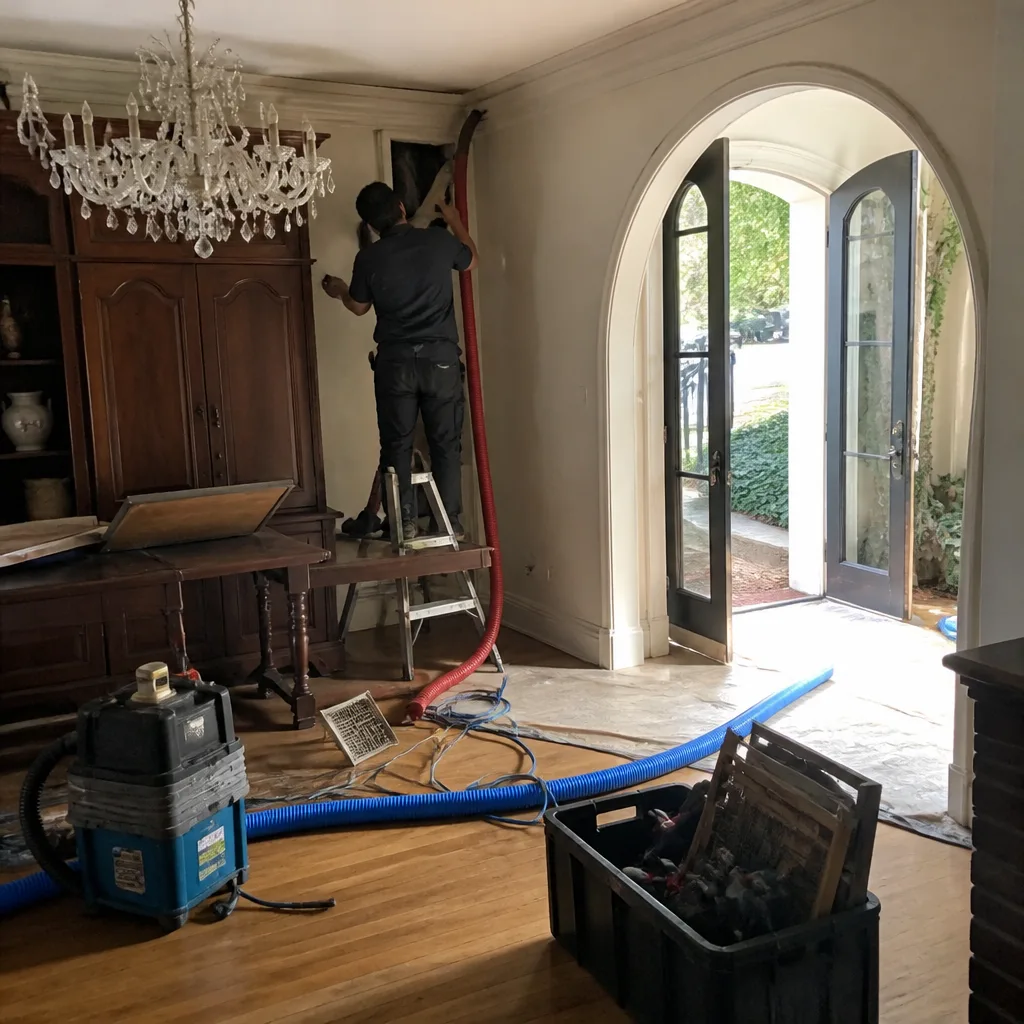
Source-removal cleaning uses a systematic process. It starts with containment, uses agitation tools sized for the duct interior, and relies on high-powered negative air equipment to pull the loosened debris into a sealed container. The goal is to reduce the surface to a clean state and confirm with a camera inspection before the job is considered finished.
What a professional source-removal job includes
- Containment setup so loosened debris stays in the system until it’s captured, not blown into living areas.
- Agitation using rotary and whip tools sized for the duct type – flex and rigid metal each need different tools.
- Negative air pressure drawing the loosened material into a HEPA-filtered collection unit, typically an Abatement Technologies platform, which is built for contaminant containment rather than surface cleanup.
- Coil and plenum cleaning, because the blower, coil, and return side are where contamination concentrates first.
- Camera verification so you can see what’s inside the ducts before and after.
If a bid doesn’t describe containment, agitation, and verification, the price difference is likely explained by what’s being left behind. For a walk-through of what a proper cleaning visit looks like, see our full air duct cleaning service details.
Flex Duct in Older Buckhead Homes: The Higher-Risk System
If your Buckhead home has original flexible ductwork, that detail alone makes the system higher-risk than a rigid metal system installed around the same time. It’s not a question of brand or installation quality – it’s a material difference.
Why flex duct holds contamination
Flexible duct is a plastic inner liner wrapped in insulation and a foil or plastic jacket. The liner surface is textured, and older liner materials weren’t formulated to resist mold growth the way newer ones are. Every fold and ridge in the liner catches particles. Because flex duct also tends to sag and bend between ceiling joists, low spots collect moisture. In a Buckhead attic in July, that moisture has nowhere to go.
Industry guidance generally holds that if a flex duct liner is saturated, holds visible biological growth, or has begun to break down structurally, cleaning is not the answer – replacement is. A cleaning can remove debris from a sound liner; it can’t repair a compromised one. That’s why a professional inspection matters more in Buckhead’s older housing stock than in new construction.
What rigid metal does differently
Rigid metal ductwork – galvanized sheet metal – has nothing for contamination to penetrate. It can hold dust and dirt on the surface, but its surface is smooth and non-porous. Cleaning is more effective and more durable on metal ductwork than on flex. If your Buckhead home has a mixed system of rigid trunk lines and flex branches, expect the branches to need the most attention.
The repair-and-seal step that makes cleaning last
Here’s where the story connects back to the start: clean ducts stay clean when leaks are sealed. Every loose joint in flex or metal ductwork is a pathway for attic air, clay dust, and pollen to re-enter the system. Cleaning without addressing those leaks means the contamination comes back faster. A full-scope duct repair and sealing service belongs on the same visit as the cleaning, not on a separate invoice for a different contractor.
What Commercial-Grade Negative Air Machines Actually Do
The single biggest physical difference between a professional duct cleaning and a low-bid visit is the vacuum. A shop vac cannot replicate what a truck-mounted or portable commercial-grade negative air machine accomplishes, and the gap isn’t small.
What the physics demand
Duct cleaning requires two things a household vacuum can’t produce together: high air volume and sustained negative pressure. A shop vac produces strong suction at a narrow point but very little measured airflow through a whole house of ductwork. It also exhausts filtered air back into the same room, which, unless the filter is HEPA-rated and properly sealed, redistributes the fine particles the technician was supposed to remove.
A commercial unit like those from Nikro or Abatement Technologies is built for a different job. It connects to the duct system at a single point and pulls air through the entire run of ductwork under sustained negative pressure. As the technician agitates the interior surfaces, loosened debris travels with the airflow into the unit’s HEPA filtration, where it’s captured. A properly set up negative air machine keeps the whole system under negative pressure for the duration of the job, which is what keeps debris from escaping into living areas.
Tools that match the equipment
Agitation is the other half. A rotary brush or air whip needs to reach the interior surface of every duct section, which means the tool must match the duct type and diameter. Rotobrush platforms are spec’d for exactly this: a rotating brush head with a vacuum line attached, so the brush loosens and the machine captures in one pass. Homeowner kits that mimic the look of these tools don’t have the airflow to keep up.
Why it matters for Buckhead homes specifically
Older Buckhead duct systems often have long runs and multiple branches, and the contamination at the far end is the hardest to reach. Only sustained negative pressure reaches the far branches without re-distributing debris along the way. That’s what “commercial-grade equipment, residential care” actually means in practice.
Why Supply-Only Cleaning Leaves the Job Half Done
A duct system has two halves: the supply side that delivers conditioned air to rooms, and the return side that pulls air back to the air handler. Many low-bid services clean only the supply ducts. That’s half the job, and in Buckhead homes it’s usually the less contaminated half.
The return plenum and the air handler coil
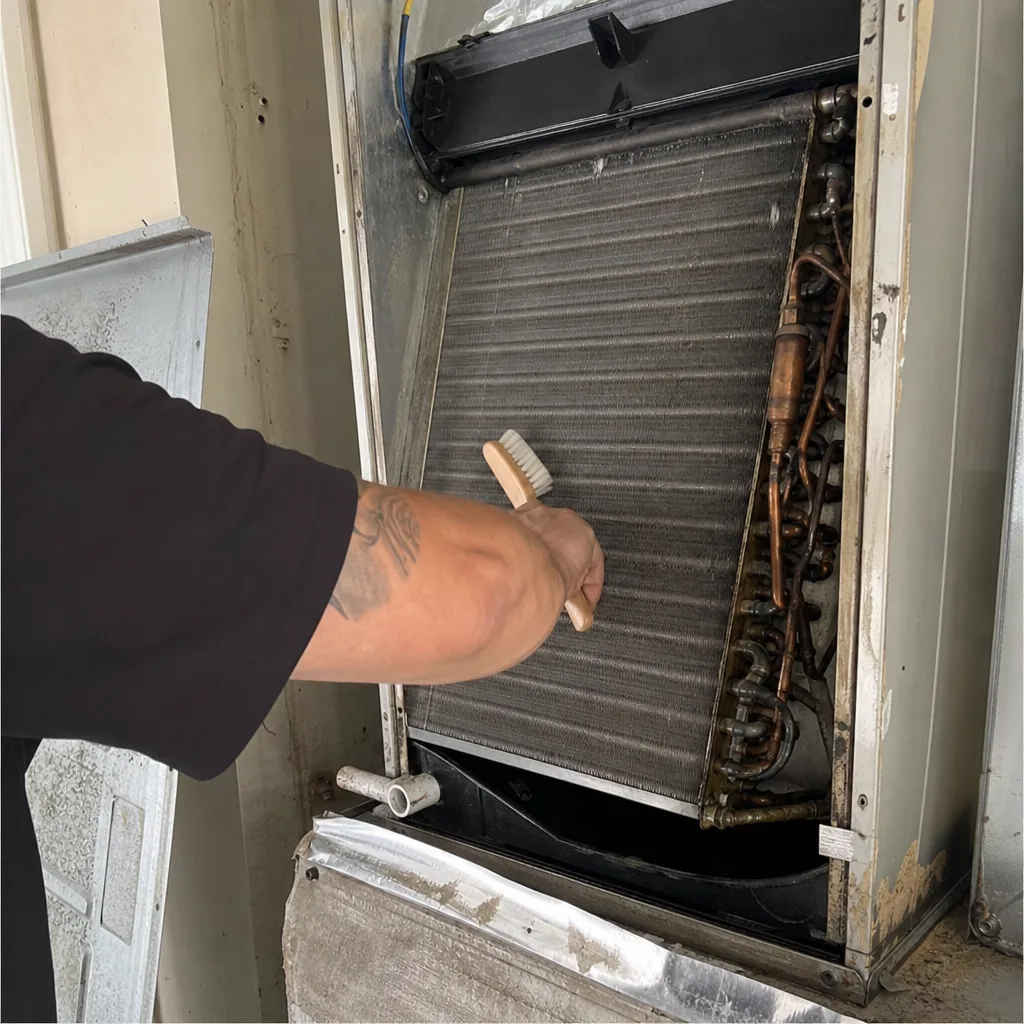
The return plenum is the large duct section between the return registers and the air handler. Because it carries room air loaded with dust, pollen, and pet hair back to the coil, it collects more contamination per square foot than any supply duct. The air handler coil sits directly behind the filter, and its fins trap whatever passes the filter. Once that’s coated, the system loses efficiency and the coil becomes a reservoir that recontaminates the whole system each time the blower runs.
Cleaning supply ducts without cleaning the return side and the coil is like shampooing the top of your hair and skipping the back. It looks better, but it isn’t clean.
The full-scope process
- Inspect the entire system with a camera, including return plenum and air handler coil.
- Contain openings and set up negative air equipment.
- Clean supply ducts with rotary tools sized to each duct section.
- Clean the return side, including the plenum and return registers.
- Clean the air handler coil and blower housing – this belongs on the same visit as duct cleaning for the reasons above. Our HVAC cleaning service covers this.
- Sanitize surfaces where microbial growth was present, using products specified for the system’s materials.
- Seal leaks found during inspection so the system stays clean longer.
- Verify with before-and-after photos of your ducts – not stock images.
Homes with heavy contamination loads, especially those with a compromised coil, benefit from an air quality approach that treats airborne contaminants alongside the mechanical surfaces. That’s the difference between sanitizing and simply cleaning, and it’s covered in more depth in the Air Quality & Sanitizing section below.
How to Choose a Duct Cleaner in Buckhead
Not every duct cleaning service in Buckhead operates the same way, and the differences show up in the details. Here’s what to look for before you book.
Questions to ask
- What equipment will you bring? A professional operation should be able to name its platforms. Rotobrush and Nikro are the industry standards used by commercial HVAC and remediation contractors.
- Do you clean the return side and the coil? If the answer is “just supply ducts,” keep looking.
- Will I see before-and-after photos of my own ducts? A camera inspection with documented images is the standard you want.
- Is the price a flat price per system, or per vent? One flat price per system agreed before work starts is the answer you want – per-vent pricing is a common source of surprise charges.
- Do you also repair and seal ducts? A cleaner who can only clean will leave leaks for another contractor.
What we bring to the work
Our technicians have up to 8 years of experience, and the equipment we use is the same professional grade specified by commercial contractors: Rotobrush and Nikro for cleaning, Honeywell and Aprilaire for filtration and air-quality products, and Abatement Technologies for contaminant containment. The company offers five services – air duct cleaning, dryer vent cleaning, HVAC cleaning, air quality and sanitizing, and duct repair and sealing – which means the full air system is handled on one visit rather than handed off to a second contractor.
About the trust question
Duct cleaning has a reputation problem for a reason: the industry has a bait-and-switch history where low advertised prices become far larger invoices once a technician is on site. If you’re comparing quotes, the honest answer is one flat price per system, agreed before work starts, with no per-vent pricing and no surprise add-ons. The local professional we connect you with is licensed and insured as their state requires. Before-and-after photos of your own ducts are the standard, not the exception.
What Duct Cleaning Costs in Buckhead
Duct cleaning in Buckhead is priced per system, not per vent, and the honest range depends on system size, contamination level, and whether repair and sealing is included. A flat price agreed before work starts is the standard you should expect.
Typical whole-system cleaning for a residential home runs from a few hundred dollars for a straightforward single-system home up to the low four figures when the job includes deep cleaning of a heavily contaminated system plus repair and sealing. Those are estimates, and the written estimate from the technician on site sets the final price – never a phone quote from a competitor, and never a teaser coupon.
Why some quotes are so much lower
If a quote comes in dramatically below the others, it’s usually because the underlying job differs. Lower quotes typically mean supply-only cleaning, no verification, no containment, and sometimes no negative air machine at all. The work happens, but it’s surface-level. That’s the honest answer to the question “why are some duct cleaning quotes so much cheaper?” – the two quotes aren’t describing the same job. Call (844) 443-4682 for an exact quote if you’d like to compare against what you’ve already received. Estimates are free.
Related services that often belong on the same visit
Two adjacencies come up often in Buckhead homes. First, dryer vent cleaning: lint buildup in the dryer vent line is a recognized fire hazard, and it’s a separate system from the HVAC ducts but worth handling at the same visit. Second, air quality work: Honeywell and Aprilaire filtration products are installed upstream of the coil to catch more of what’s carrying through the system. Both connect to the same air-handling picture. Our dryer vent cleaning service covers the first; a proper duct and HVAC cleaning visit covers the second.
Common Mistakes to Avoid
- Booking a coupon-price cleaning before understanding scope. The advertised price almost always reflects a surface-level job. Ask what’s included before you book, and be skeptical of any quote that doesn’t mention return side or coil.
- Skipping the camera inspection. Without before-and-after images of your own ducts, you have no way of knowing whether the work was actually done. Insist on it.
- Cleaning ducts without cleaning the coil. A contaminated coil recontaminates the duct system on the first blower run. In older Buckhead homes, coil contamination is the rule, not the exception.
- Ignoring flex duct that needs replacement, not cleaning. A compromised flex liner isn’t a cleaning problem. If the liner is saturated or structurally deteriorating, cleaning won’t fix it and often makes the situation worse.
- Skipping the seal. Clean ducts stay clean when leaks are sealed. Older Buckhead duct systems have plenty of leaks – sealing is part of the job, not an optional add-on.
- Sanitizing without cleaning first. Sanitizing a surface that still has dirt and debris on it doesn’t accomplish much. Debris removal comes first; sanitizing addresses what’s left.
- Treating the duct system as an isolated component. Ducts, return plenums, coil, filter, and dryer vent are one connected air system. Any component left out of scope undermines the others.
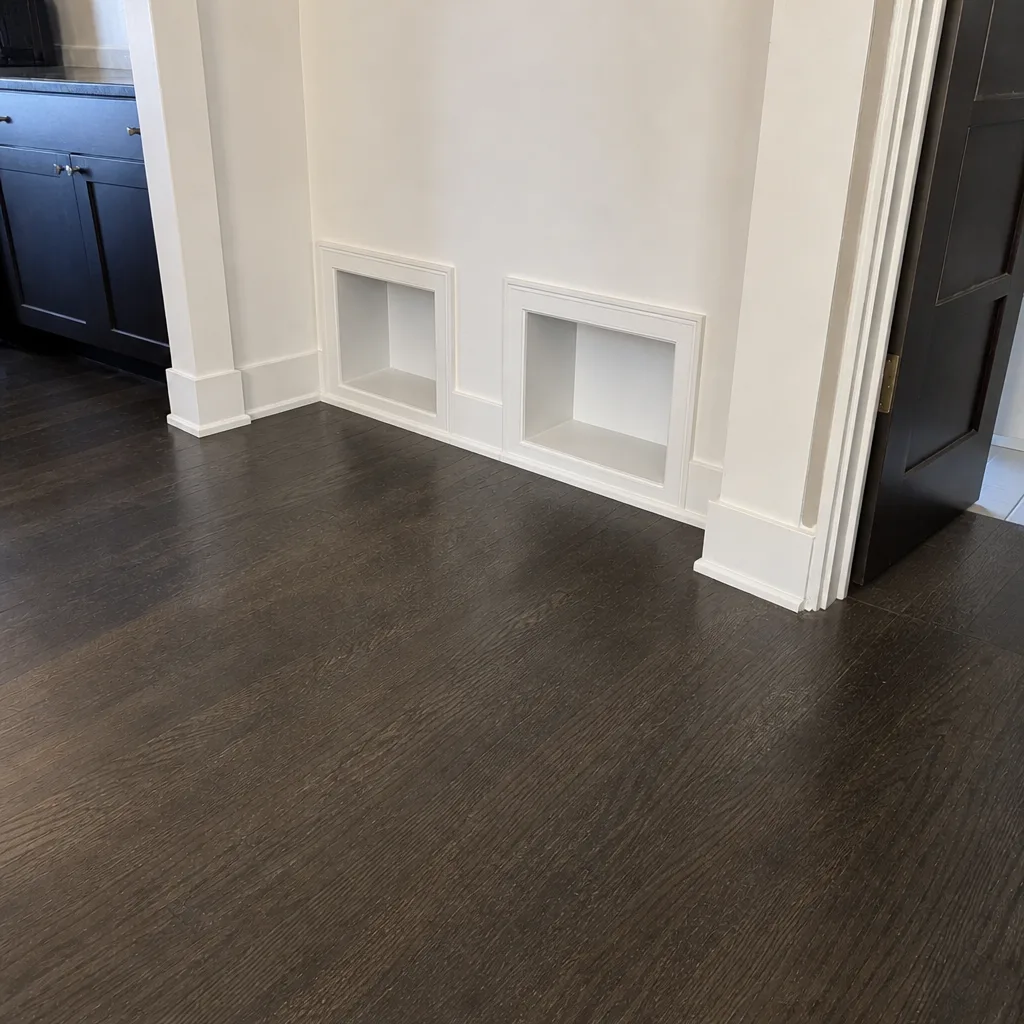
See the difference
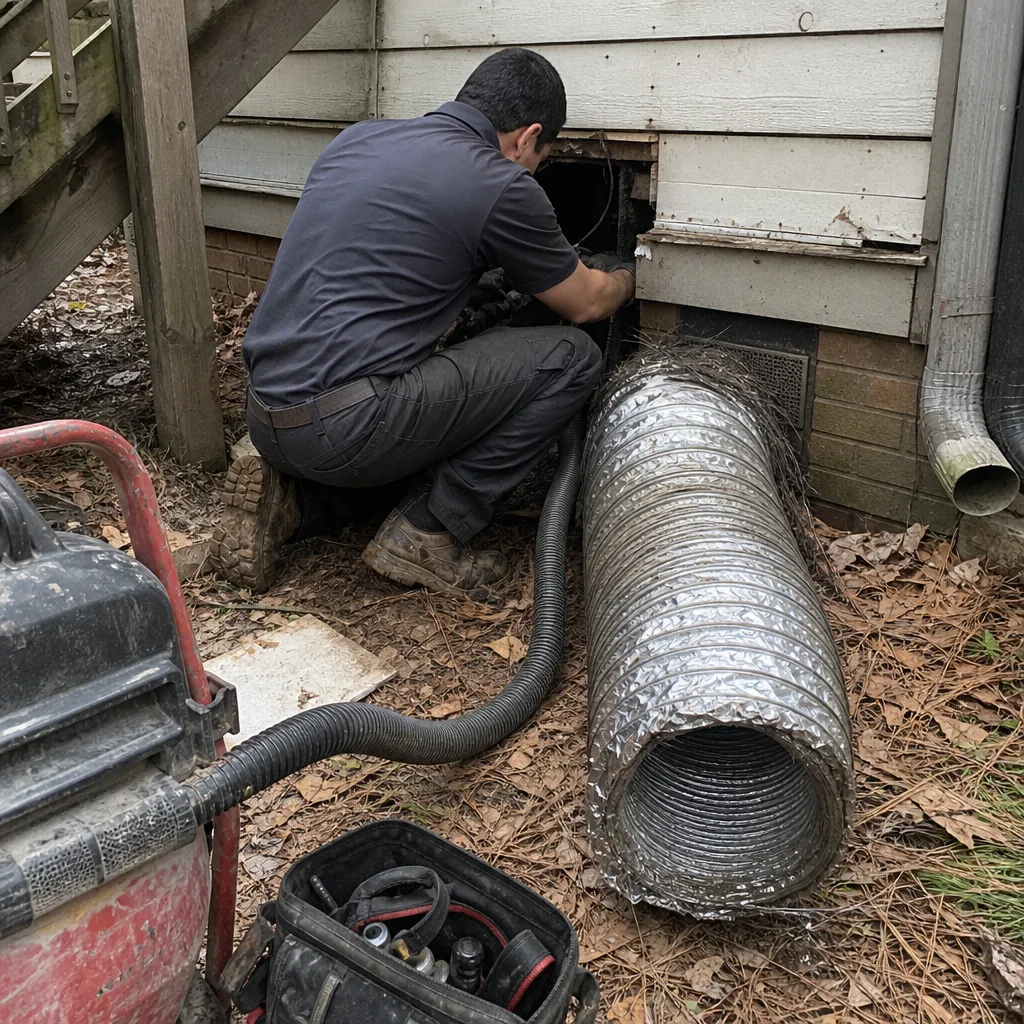 Before
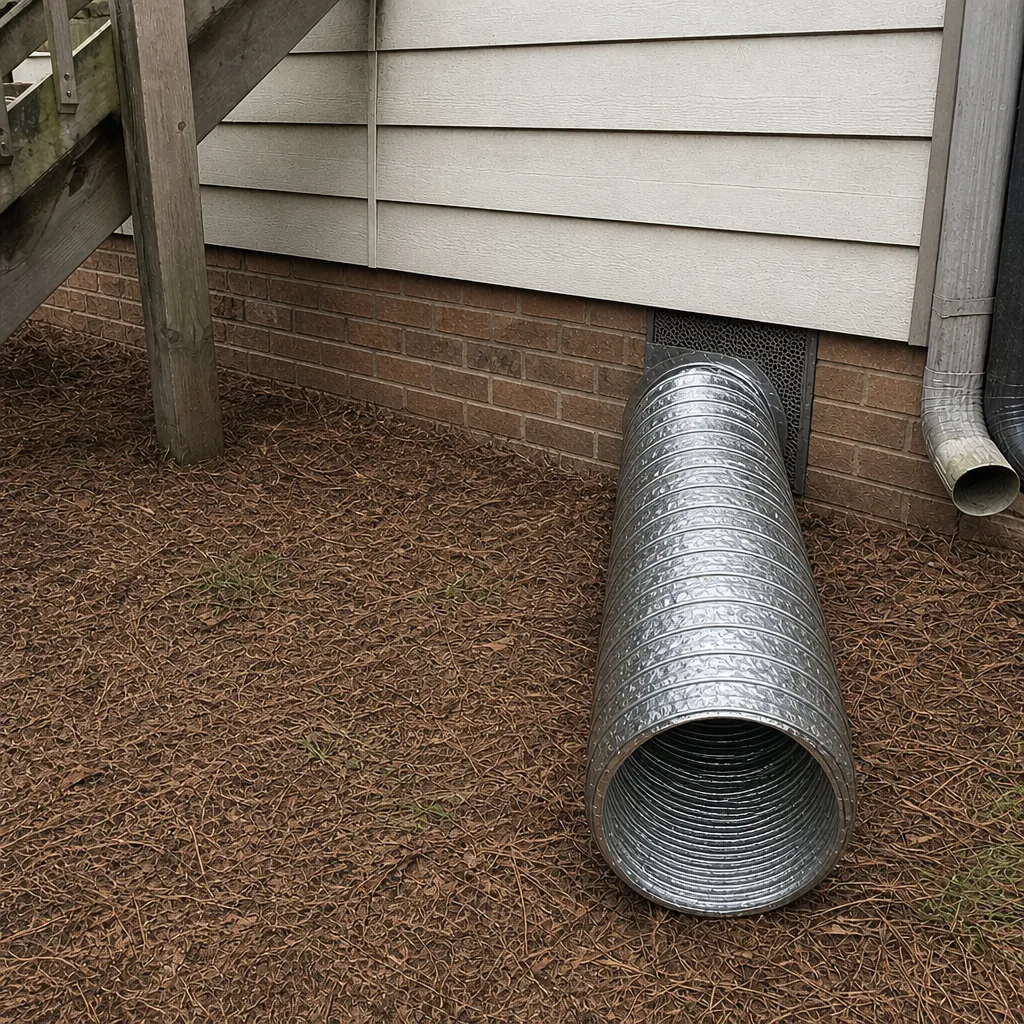 After
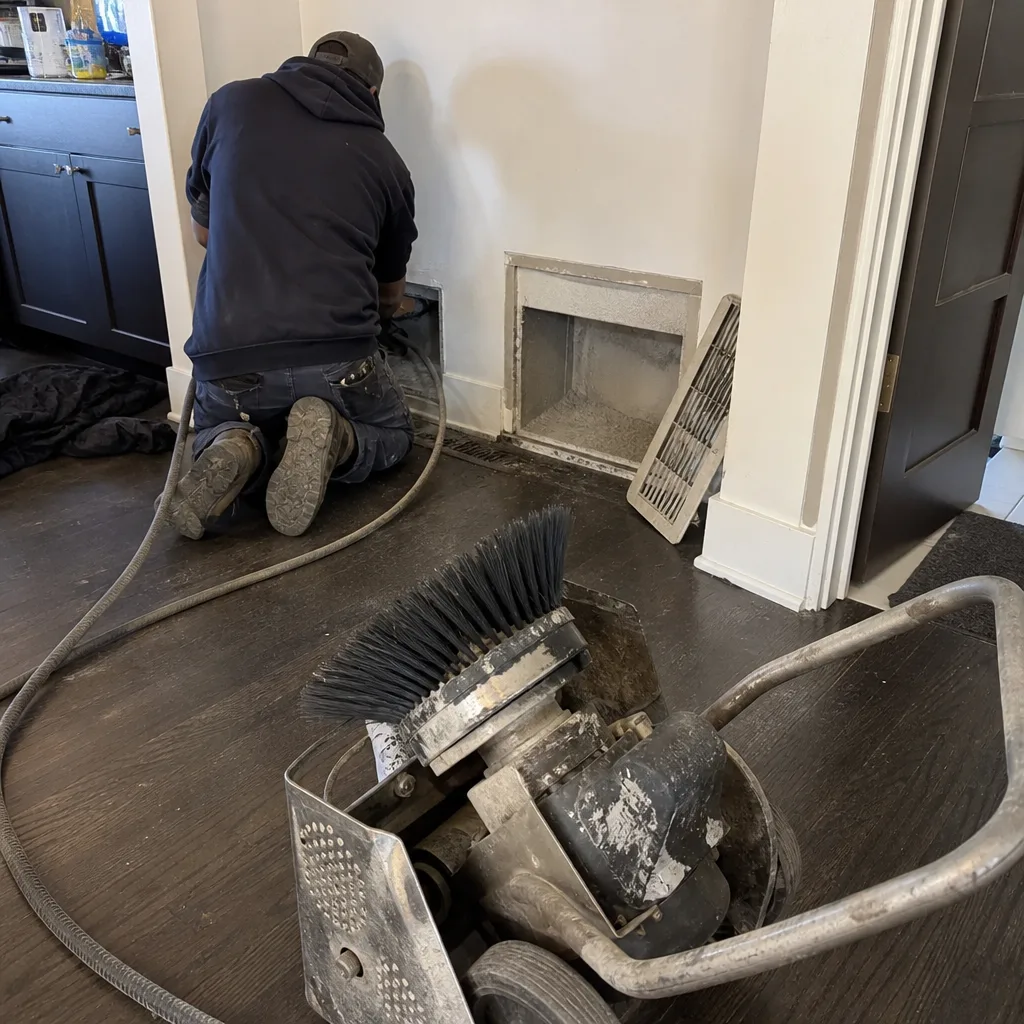 Before
 After
 Before
 After
When to Call a Professional
If you notice persistent dust on surfaces after cleaning, a musty smell when the system first runs, visible debris in a supply register, or an increase in allergy symptoms after moving into a Buckhead home with original ductwork, a professional inspection is warranted. Homes that recently replaced carpet, completed a renovation, or moved into a property where the duct history isn’t known benefit from a documented inspection and cleaning. If the air handler coil shows visible contamination, the return side is heavy with dust, or a flex duct liner is visibly compromised, cleaning (and often repair or replacement) is the right next step. If you’re comparing two very different quotes and want to know what the difference actually reflects, a walk-through answers the question faster than a phone comparison. Air Duct Cleaning Buckhead offers free estimates in Buckhead – call (844) 443-4682.
Frequently Asked Questions
Air duct cleaning in Buckhead is priced per system, typically from a few hundred dollars for a straightforward residential system up to the low four figures when deep cleaning, sanitizing, and duct repair and sealing are included. The written estimate sets the final price. Call (844) 443-4682 for an exact quote – estimates are free.
Cheap quotes usually reflect a different job – supply-only cleaning, no containment or negative air equipment, and no camera verification. The work described is not the same work. A flat price per system from a service that describes its full scope is the honest comparison. Call (844) 443-4682 to compare a real quote against what you’ve been offered – estimates are free.
Before-and-after photos of your own ducts, taken during the visit, are the standard. A professional cleaning includes camera inspection and documented images. If a company won’t provide them, that’s your answer. Call (844) 443-4682 to schedule a walk-through – estimates are free.
Most homes benefit from cleaning every three to five years, but Buckhead’s older housing stock, tree pollen, and humid summers can shorten that timeline. Homes with original flex duct or a history of allergy symptoms typically need it sooner. Call (844) 443-4682 for a specific recommendation – estimates are free.
Not automatically, but older flex duct with original liner is higher-risk for moisture and mold than rigid metal. A professional inspection determines whether the liner is sound enough to clean or needs replacement. Call (844) 443-4682 to schedule an inspection – estimates are free.
Yes, in almost every Buckhead case. The coil sits directly behind the filter and collects whatever passes through; a contaminated coil recontaminates the ducts. Cleaning both on one visit is the standard. Call (844) 443-4682 for a scope review – estimates are free.
The Bottom Line
Duct cleaning in Buckhead isn’t a generic service applied to a generic house. Older housing stock, original flex duct, red clay dust, heavy tree pollen, and humid summers create contamination conditions that national guides don’t capture – and those conditions reward a source-removal approach over a surface wipe. The key points: ask what equipment the service brings, insist on return-side and coil cleaning, verify with before-and-after photos of your own ducts, and choose a cleaner who can seal leaks on the same visit. One flat price per system agreed before work starts is the standard you deserve. Call (844) 443-4682 for a free estimate. We answer 24/7. Fast dispatch from 7am to 7pm, Sunday through Friday.
Written by the team at Air Duct Cleaning Buckhead.