
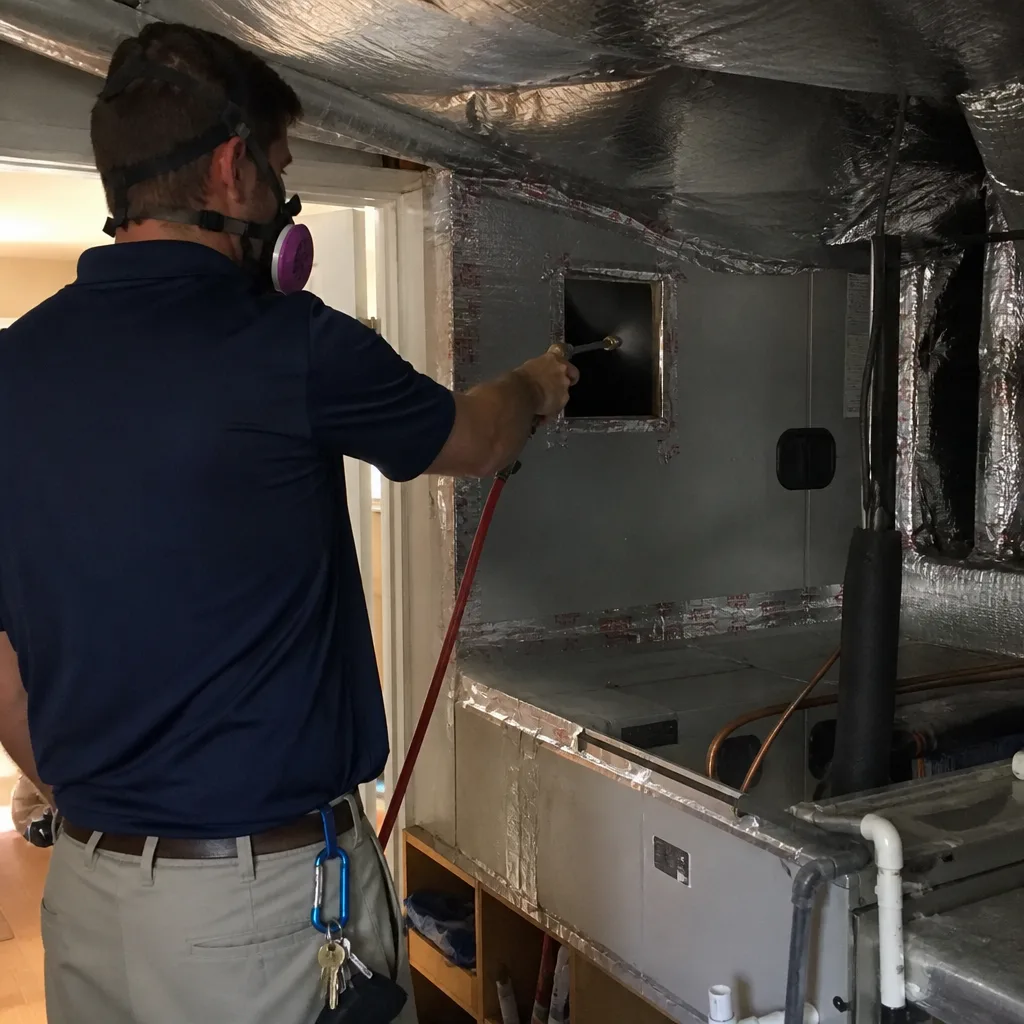
Last updated November 25, 2026
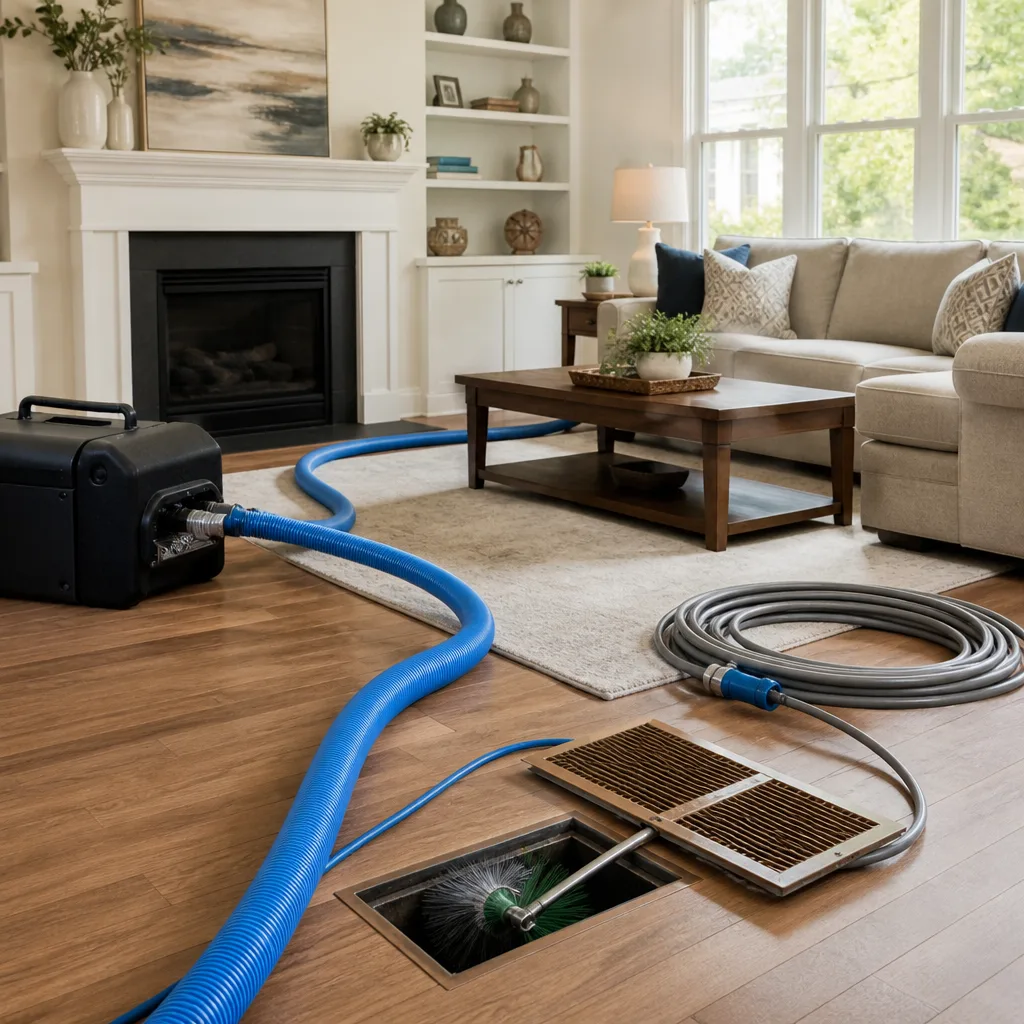 Whole-home duct cleaning
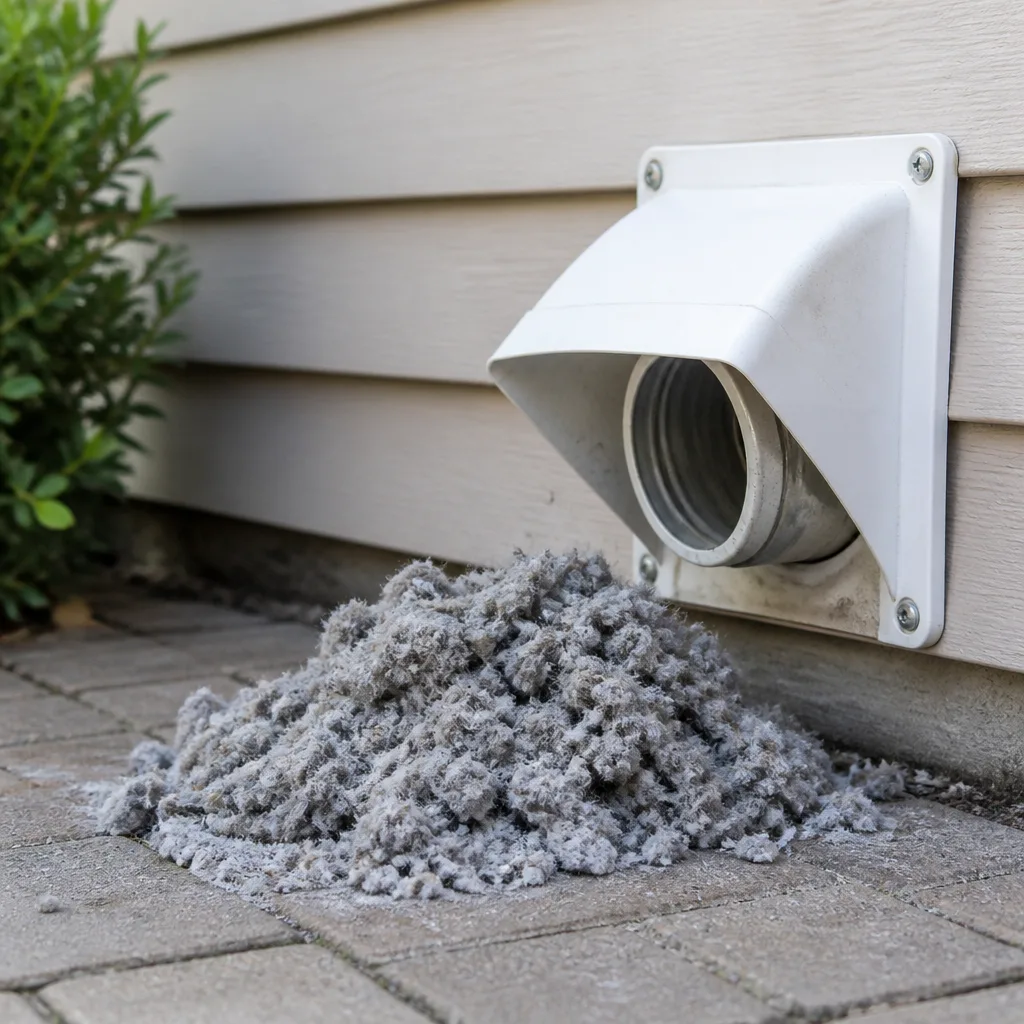 Dryer vent cleaning
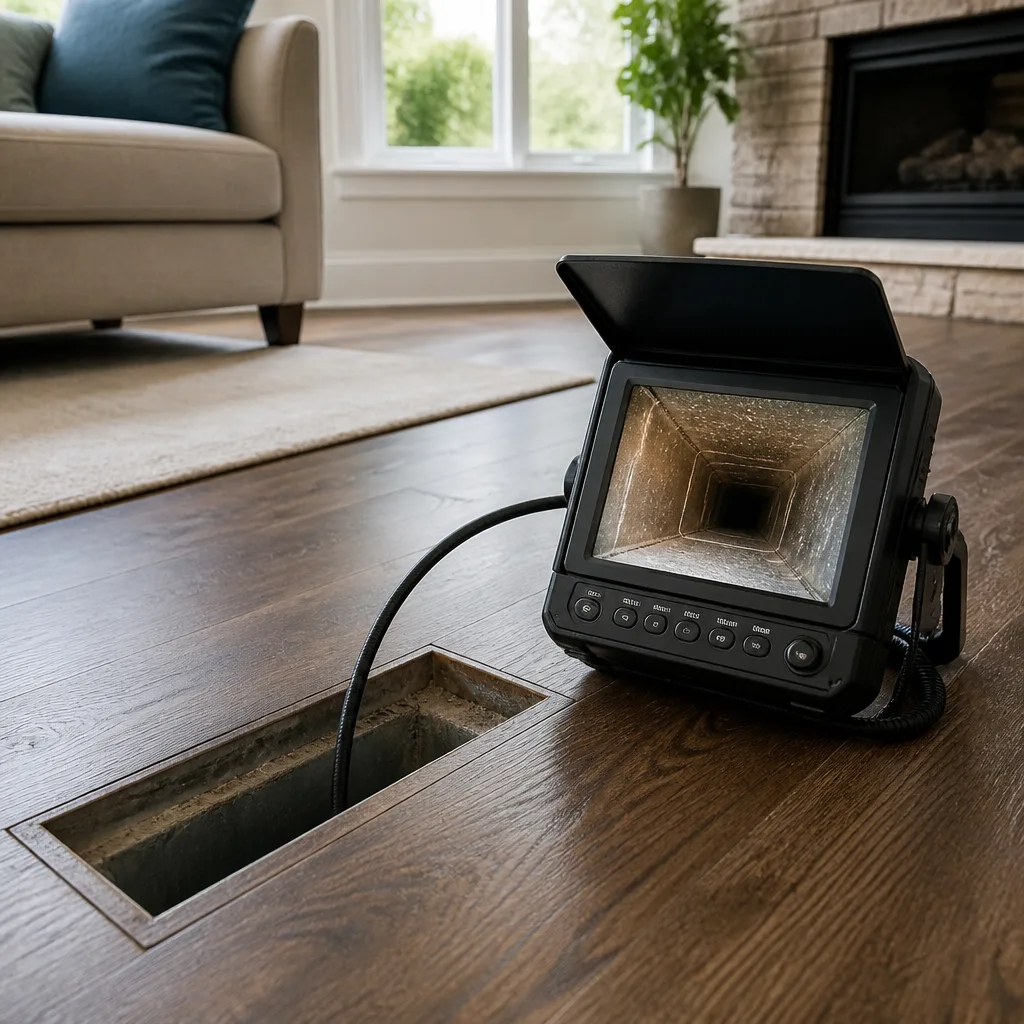 Camera inspection
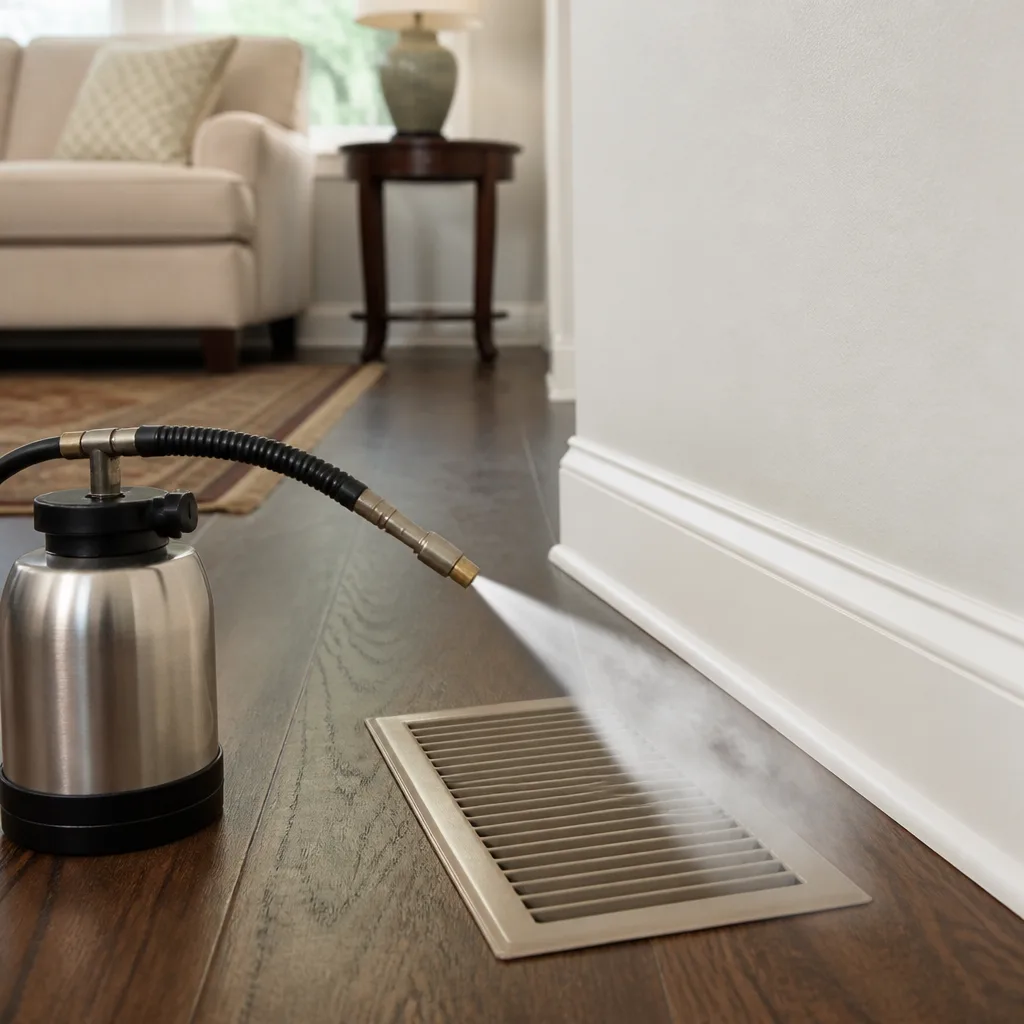 Sanitizing & deodorizing
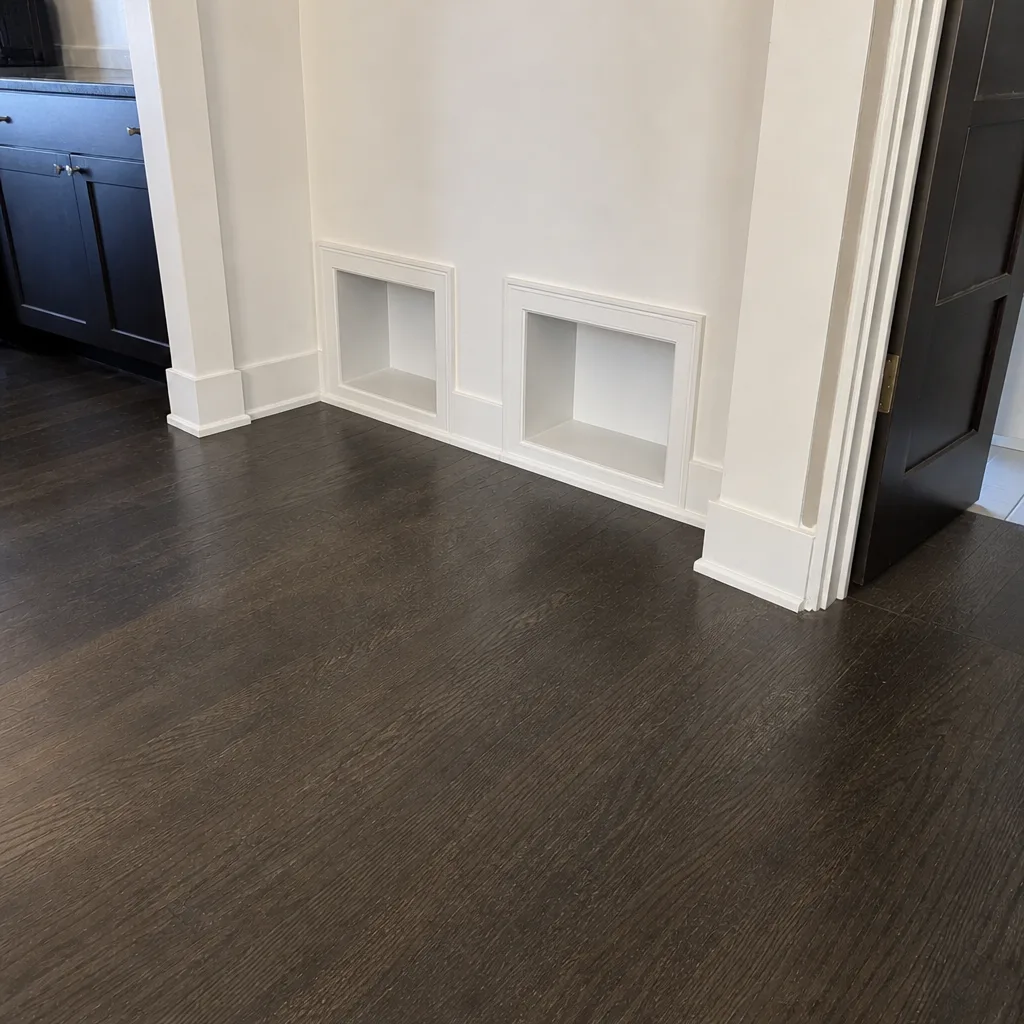
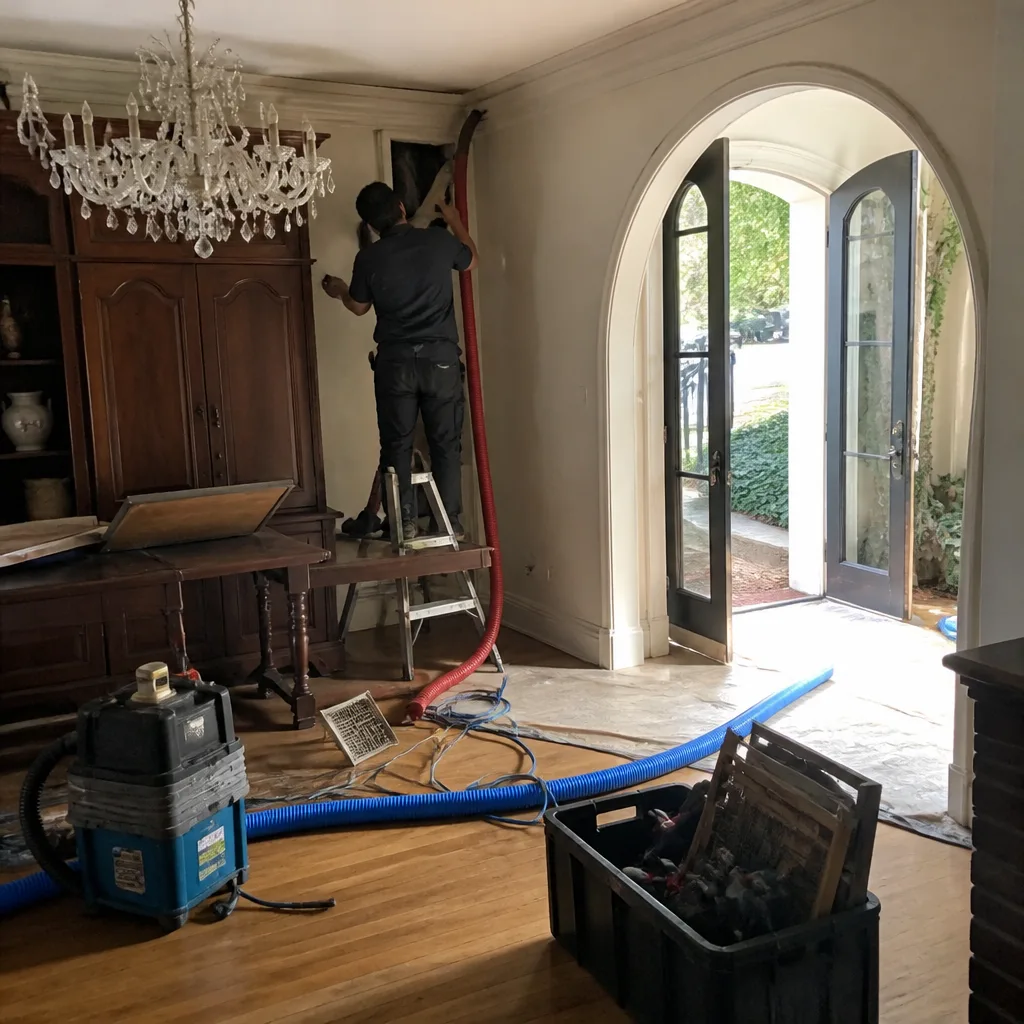
Whole-system duct and dryer vent check with before-and-after photos - you see exactly what came out of your vents
That "$99 whole-house special" is a bait ad - the real number appears once they are in your hallway, or the "clean" is a shop-vac at the register. We photograph the inside of your ducts before and after instead.
DIY vs Professional Air Duct Cleaning: The Buckhead Homeowner’s Decision Guide
Here’s the part most duct cleaning articles skip: a homeowner with a shop vac and a brush kit genuinely can clean the first 18 inches of a supply duct. The problem is that the contamination in a Buckhead home’s ductwork typically starts at the air handler, 15 to 40 feet in the other direction. Everything between that first vent and the source stays untouched. This guide explains the physics behind why, maps out what a homeowner can honestly do alone, and shows you where DIY stops and professional equipment has to take over. By the end, you’ll know exactly which side of that line your own home sits on.
Styles & brands we work with
- Whole-home duct cleaning
- Dryer vent cleaning
- Camera inspection
- Sanitizing & deodorizing
Quick Answer
DIY air duct cleaning can handle surface maintenance at the vents and registers you can reach, but it cannot remove contamination from the duct system’s source because it lacks the negative air pressure and mechanical agitation that professional equipment generates. In a Buckhead home, professional cleaning with commercial-grade machines like Rotobrush or Nikro is the only method that actually evacuates debris from deep in the system rather than recirculating it into your living space. The honest split is this: DIY for registers and filters, professional for source removal and everything past the first few feet.
Table of Contents
- Why Negative Air Pressure Is the Whole Ballgame
- What You Can Legitimately Do Yourself in Buckhead
- Where DIY Runs Into a Wall
- When a DIY Attempt Makes Professional Work Harder
- Buckhead’s Older Homes and the Flex Duct Problem
- The Cost-Benefit Math: When DIY Savings Are Real
- What a Professional Cleaning Actually Involves
- How to Judge a Duct Cleaning Company
- Common Mistakes to Avoid
- When to Call a Professional
- Frequently Asked Questions
- The Bottom Line
Why Negative Air Pressure Is the Whole Ballgame
Duct cleaning isn’t dangerous the way electrical work or gas lines are. Nothing about a shop vac and a brush is going to hurt you. The limitation is mechanical, not a matter of skill or bravery. It comes down to one principle: debris only leaves a duct system when air is moving toward a collection point and away from the living space, under pressure that’s strong enough to carry it.
Here’s what happens with a household vacuum. You pull air toward the wand, which is fine at the register. But the wand has no seal against the duct walls, so the vacuum’s suction is diluted by open air the moment you insert it. Debris that’s been bonded to the duct surface by years of moisture cycling and dust accumulation doesn’t lift. Worse, the agitation from a brush can loosen material that then settles back down a few feet away, or gets pushed further toward the air handler where it piles up in a spot you can’t reach.
Professional equipment works differently. A commercial negative air machine, the kind built around platforms like Rotobrush or Abatement Technologies, creates a sustained pressure differential across the whole system. One end is sealed to a collection unit, and the machine pulls the entire duct’s air volume toward it. Then mechanical agitation, usually a rotating brush or air whip on a long flexible line, breaks contamination loose from the duct walls and the moving air carries it into the collection unit rather than into your hallway.
That combination is what “source removal” means. Not a stronger vacuum. A sealed system, directed airflow, and agitation working together so that what’s loosened actually leaves. You can’t replicate it with consumer tools because consumer tools don’t seal against the duct and can’t create the air volume. Same principle as a pressure washer versus a garden hose: the hose is fine for rinsing a patio, and useless for stripping a deck.
Most Buckhead homes have their air handler tucked into a closet, a crawlspace, or an attic corner, and the trunk line feeding it runs far from any register a homeowner can reach. The contamination that matters most, near the coil and the plenum joints where moisture collects, sits precisely where the accessible end of the system doesn’t go.
What You Can Legitimately Do Yourself in Buckhead
A surprising amount, actually, and we’d rather you spend an afternoon on the parts that help than waste a weekend fighting the parts that don’t. Here’s the honest DIY list. These steps genuinely improve your indoor air and reduce the load on the system, with nothing lost.
- Pull and clean every supply and return register. Take the grilles off with a screwdriver, wash them in the sink or hose them outside, dry them completely, and reinstall. Registers collect an enormous share of visible dust. This is real, useful maintenance and it takes an hour.
- Vacuum the first reachable stretch of each run. With the register off, use a shop vac with a crevice tool to pull surface dust from the first foot or so. Don’t jam a brush deep into flex duct; more on that below.
- Upgrade your filter, and change it on schedule. A pleated filter rated MERV 8 to MERV 11 is a sensible default for most Buckhead homes, balancing particle capture against airflow restriction. Higher MERV ratings catch finer particles but can strain an older blower, so check with an HVAC tech before going very high. Changing it on schedule does more for your air than any single cleaning.
- Do a visual inspection at accessible points. With the register off and a flashlight, look for visible dust buildup, discoloration, sagging flex duct, or separation at joints. You’re gathering information, not fixing anything yet. Note what you see.
- Keep the return side clear. Don’t block return registers with furniture or rugs. A starved return pulls dust from every gap in the system instead of through the filter.
None of this is wasted effort, and none of it replaces professional source removal. Think of it as the maintenance layer, and the professional visit as the deep reset. Both belong in a home that’s serious about air quality.
Where DIY Runs Into a Wall
Here’s where the shop vac stops being useful, and it’s important to be clear-eyed about it. None of these are judgments about your competence. They’re structural limits of the tools, and once you see them you can stop blaming yourself for a duct system that still smells faintly musty after a weekend of effort.
- Deep contamination past the first few feet. Debris that’s bonded to duct walls 10, 20, 30 feet in cannot be loosened or evacuated with consumer suction. The brush tip doesn’t reach it and the airflow can’t carry it.
- Microbial growth. Mold and mildew in a duct system need treatment, not just removal. Cleaning alone doesn’t kill surface growth, and household products aren’t formulated for duct interiors. This is why sanitizing is a distinct professional step.
- The air handler and evaporator coil. The coil is where condensation happens and where dust mats into sludge. Cleaning it requires accessing the unit, often with the plenum open, and it’s a job for someone who knows what they’re doing around refrigerant lines and electrical.
- Leaks you can’t see or reach. Duct leakage in inaccessible runs can’t be found or sealed by hand. This matters because clean ducts stay clean when leaks are sealed; uncleaned leaks pull fresh dust in within weeks.
- Proper containment and evacuation. A professional setup keeps contaminated air out of your living space entirely. A shop vac running in a bedroom does the opposite, whether or not you can see the dust.
If you’re noticing odors, recurring allergy symptoms, or visible debris beyond the registers, this is the point where it’s time to call. Air Duct Cleaning Buckhead handles air duct cleaning that addresses the source of the problem, not just the register surface.
When a DIY Attempt Makes Professional Work Harder
This is the section most guides skip, and it’s the one we want Buckhead homeowners to read twice. Some DIY attempts don’t just fail to help. They genuinely make the eventual professional job more involved, and occasionally turn a cleaning visit into a repair visit.
The most common failure mode is compressed debris. Brush a duct without proper evacuation, and loosened material ends up packed into a joint, a plenum corner, or a takeoff collar where airflow is lowest. Material that was spread thinly along the duct wall is now a dense plug in a spot that’s harder to reach and harder to break apart. Professional agitation can usually handle it, but it takes longer and can require more careful work than if the duct had been left as-is.
The second failure mode is damaged duct liner. Interior duct liner, which many residential systems use for sound and thermal control, is a non-woven material on the inside of the duct. A homeowner-grade brush spinning at the wrong speed or pushed hard against it will shred the liner surface. Torn liner becomes a collection point for dust and moisture and it can’t be cleaned the way intact liner can. It has to be replaced or the affected run has to be replaced entirely. That’s a real cost, and it’s why we tell people to stop at the register and not feed a powered brush into a lined duct.
The third is disturbing a sealed connection you didn’t know was fragile. Older Buckhead homes often have duct joints sealed with mastic or tape that’s dried out. Yanking on a register boot or a flex duct connection can open a leak that wasn’t there before, and the leakage then pulls unconditioned attic or crawlspace air into the system. What started as a cleaning project now needs a duct sealing appointment.
Air Duct Cleaning Buckhead offers Air Duct Cleaning Buckhead alongside duct repair and sealing for exactly this reason: when a run is torn or open, we can fix it in the same visit rather than leaving you on the phone with a second contractor. That full-scope approach is the difference between cleaning that lasts and cleaning that needs a follow-up.
Buckhead’s Older Homes and the Flex Duct Problem
Buckhead has a substantial stock of mid-century and older homes, and plenty of them still run with original or partially replaced flex duct. That matters enormously for how you should think about DIY cleaning, because flex duct is the least forgiving duct type to agitate with consumer tools.
Flex duct is a flexible plastic inner core reinforced by a wire helix, wrapped in insulation, and often protected by an outer jacket. The inner core is thin. A shop vac brush or a powered auger pushed into a run can catch on the helix wire and tear the core, or abrade it to the point of failure. Once the core is compromised, air bypasses the insulation, condensation forms, and the duct becomes a moisture problem rather than a dust problem. That’s a repair, not a cleaning, and it’s an entirely avoidable one.
Older homes in Buckhead also tend to have more duct leakage at the connections, because the sealants used when the system was installed have had decades to dry and crack. This is the reason the cleaning and sealing conversation belongs together. A professional cleaning on a leaky system will not stay clean for long; the same holes that let debris escape also let new dust in.
We see the same pattern in the surrounding areas, from established ranches to newer construction where flex duct was used generously throughout. If your home has any flex in the supply runs, the honest advice is this: pull the registers, vacuum the first reachable stretch, and leave the rest to professional equipment with the right control and the right agitation. If it happens to be time for a professional visit, our HVAC cleaning service goes after the coil and air handler as well as the ducts, since that’s where a large share of the contamination actually originates.
The Cost-Benefit Math: When DIY Savings Are Real
The economic argument for DIY is real in a narrow band and false everywhere else. Here’s the honest breakdown, using the price ranges typical of professional whole-system cleaning in the Buckhead market.
| Scenario | Typical Professional Range | Is DIY Worth It? |
|---|---|---|
| Visible dust at registers only, recent install, no symptoms | Cleaning quote for a whole-home system | Yes for register cleaning and filter work; skip the full cleaning |
| Musty odor, allergy symptoms, visible debris beyond registers | Mid-range quote plus possible sanitizing | No. Professional source removal plus sanitizing is the fix |
| Duct leakage suspected, high energy bills | Cleaning plus sealing quote | No. Leakage needs professional sealing, not cleaning |
| Dryer vent clogging, longer dry times | dryer vent cleaning quote | No. Dryer vent clogs are a fire-safety issue and need proper equipment |
| Water damage or recent renovation dust | Cleaning plus possible air-quality treatment | No. The scope is beyond surface work |
The DIY savings are real when the problem is surface dust and filters. You can save a few hundred dollars that way and genuinely extend the time between professional cleanings, which is why we recommend it. The DIY trap is when the homeowner applies that same logic to a system that actually needs source removal. In that case the DIY attempt spends the afternoon, achieves nothing, and defers a real fix, often for months or longer, while the contamination continues to cycle through the home on every air cycle.
The more expensive trap is when a DIY attempt damages a run. Registers and filters cost almost nothing. Flex duct runs are real money, and a torn liner has to be replaced rather than cleaned. That’s the point where the “savings” flip into a cost, and it isn’t hypothetical for older Buckhead homes where the duct system is the most expensive-to-replace part.
Pricing is always per job, set by written estimate, so the exact number depends on the number of runs, the system configuration, and whether repair is needed. Call (844) 443-4682 for a free estimate, and we’ll tell you honestly whether the cleaning is even necessary yet.
What a Professional Cleaning Actually Involves
If you’ve never hired this out, the process can sound mysterious. Here’s the honest walkthrough of a typical professional visit, so you know what’s normal and what’s a red flag.
- Assessment and setup. The technician walks the system: registers, air handler, return trunk, visible flex, any signs of leakage or water intrusion. Then the collection unit is connected at the main trunk or at a strategic point.
- Containment. Negative air equipment is applied, and the collection runs throughout. Depending on the system, this may involve sealing registers temporarily and controlling the path of airflow.
- Agitation. Long flexible agitation tools, usually air whips or rotating brushes on a controlled speed, work through each run. The negative air pressure pulls loosened material back toward the collection unit rather than into the home.
- Source removal at the air handler. The coil and plenum are cleaned, often with separate tools suited to the evaporator coil rather than the ducts. This is where a lot of the load lives.
- Sanitizing where needed. If microbial growth or persistent odor is present, a sanitizing step follows the cleaning. This is a distinct service, not a substitute for cleaning, and it’s why our air quality work exists.
- Repair and sealing if needed. Torn flex, opened joints, or leakage found during cleaning is addressed in the same visit rather than deferred.
- Verification. Before-and-after photos of the duct interior, taken during the job, are the best way to see the work. Ask for them; a legitimate company expects the question and has the images ready.
That last point matters. The reason to ask for photos isn’t distrust, it’s that duct work is invisible once the register covers go back on. Without documented before-and-after images, you’re taking the vendor’s word for it.
How to Judge a Duct Cleaning Company
Buckhead’s duct cleaning market ranges from professional operations with properly equipped trucks and trained technicians to crews with a shop vac and a business card. The difference shows up in what they say when you ask questions before booking.
Ask what equipment they use. A serious company names the actual platforms: Rotobrush, Nikro, Abatement Technologies, or equivalent negative air units. They’ll explain how the machine seals to the system and where the collection happens. A crew that can’t name their equipment or describes it only as “industrial-grade” is telling you they don’t think you’ll ask again.
Ask what’s included. Professional cleaning covers registers, the ducts themselves, the air handler, and the blower where accessible. If the quote only covers the registers and the first few feet of duct, it’s surface work and it’s priced like surface work.
Ask about repair and sealing. Duct repair is a specialty that not every cleaner has in-house. If the company can only clean and refers repair to someone else, the cleaning still happens but leaks get left for the next contractor, and the system loses some of what the cleaning gained. Companies with full-scope duct service, including repair and sealing, can address both in one visit.
Ask about air quality and sanitizing. Cleaning removes debris. Sanitizing addresses microbial growth. Filtration upgrades like those from Aprilaire or Honeywell are a separate layer. A company that offers all three as distinct services understands the difference. A company that lumps them together in one price is usually doing one and charging for all three.
Ask for before-and-after photos as part of the quote. Not a promise of photos after the job, but a description of how the job will be documented. Any company worth calling expects this.
We hold our own process to these standards. Our technicians have up to 8 years of experience, and we use commercial-grade equipment in that same discipline. Duct repair and sealing are part of what we do, not referred out. The same scope covers air quality and sanitizing when the job calls for it. And every job is priced per system with a written estimate, so you know the number before work starts.
Common Mistakes to Avoid
- Running a powered brush deep into flex duct. The inner core tears easily and a torn run has to be replaced. Stop at the first reachable stretch and let a professional handle the deep work with controlled agitation.
- Assuming a stronger shop vac will do the job. Suction isn’t the bottleneck. Without a seal against the duct and sustained negative air pressure across the whole system, debris recirculates into the room rather than leaving the building.
- Cleaning ducts without addressing leakage. Clean ducts stay clean when leaks are sealed. In an older Buckhead home, unaddressed leaks pull fresh dust into the system within weeks of cleaning.
- Using household bleach or cleaning products inside a duct. Duct interiors aren’t a surface you can spray down with consumer products. Some materials off-gas and some components are damaged by moisture. Sanitizing uses products formulated for duct interiors, applied by professionals.
- Skipping the filter change after cleaning. A loaded filter after a cleaning pulls the debris right back into the system. Change the filter soon after and keep to a schedule.
- Hiring whoever quotes the lowest price without asking about equipment. Duct cleaning is a scope-and-equipment business, and a very low quote usually signals a very small scope. The cheapest visit rarely does what the home needs.
- Trusting a quote that doesn’t include the air handler. A large share of the contamination load lives at the coil and plenum. A quote that skips that area is a partial cleaning, not a full system one.
When to Call a Professional
The cases where professional cleaning is clearly the right call are easy to spot once you know what to look for. Repeated or worsening allergy symptoms in the home, a musty or dusty odor that returns after cleaning, visible debris or discoloration beyond the registers, moisture or water damage anywhere in the system, or a renovation that generated fine dust throughout the living space. High energy bills paired with a system that runs constantly can point to duct leakage, which belongs to a professional sealing job rather than cleaning. And the same goes for your dryer vent: longer dry times and a warm dryer cabinet are reasons to book a professional visit, not to reach for the shop vac. That’s a fire-safety call, not a cleaning preference.
Air Duct Cleaning Buckhead offers free estimates in Buckhead, and we’ll tell you honestly when the right answer is a filter change and register cleaning on your own. When it’s time for the full job, we handle the complete air system: ducts, HVAC, dryer vent, air quality, and duct repair. Call (844) 443-4682. We answer 24/7. Fast dispatch from 7am to 7pm, Sunday through Friday.
Frequently Asked Questions
Professional whole-system duct cleaning is priced per job based on system size and configuration, and the written estimate sets the final price. The number depends on the number of runs, whether the air handler needs to be cleaned, and whether any repair or sealing is required. Call (844) 443-4682 for an exact quote. Estimates are free.
You can clean the registers and the first reachable stretch of each supply run, which is genuinely worth doing. You cannot achieve source removal without sustained negative air pressure and professional agitation, so the deep contamination past the first few feet stays put. Surface maintenance is the honest limit of DIY.
The lowest quotes usually cover a much smaller scope: registers and the first accessible few feet, no air handler, no repair, and no sanitizing option. A professional quote covers the whole system, including the air handler and verification photos. The price reflects what’s actually being done. If a quote looks dramatically lower, ask what’s included before you book. Call (844) 443-4682 to compare quotes and see what a full-scope estimate looks like.
Before-and-after photos of your own ducts, taken during the job, are the honest proof. Ask for them as part of the process, not as a favor. A company that’s actually cleaned the system will already have documentation ready. It’s the single best way to verify invisible work.
Most homes don’t need it on a fixed schedule. Professional cleaning is worth it when there’s a specific reason: symptoms, odors, water intrusion, renovation dust, a new-to-you home, or a major HVAC service. Between those reasons, regular filter changes and register cleaning do real work. Our team can diagnose whether the full cleaning is actually due yet.
Yes, particularly in Buckhead’s older homes where flex duct or aged duct liner is present. A powered brush can tear the flex core or shred interior liner, and damaged liner can’t be cleaned, only replaced. The repair often exceeds the cost of the professional cleaning a homeowner was trying to avoid. Call us first if you’re unsure which duct types you’re dealing with.
The Bottom Line
DIY duct cleaning isn’t dangerous, but it’s physically limited. Consumer tools can clean registers and the first reachable stretch of supply runs, and that maintenance genuinely helps between professional visits. They can’t create the negative air pressure that source removal requires, and they can’t reach the contamination living at the air handler and deep in the system’s runs. In Buckhead’s older homes, a shop vac brush can do real damage to flex duct and liner. The right call depends on the system, not on a preference. Learn the equipment, ask the questions, and hire for the full scope when the scope is actually needed. Clean ducts stay clean when the leaks are sealed, and that’s the professional step a shop vac simply can’t do.
If your home is telling you it’s time for the real thing, call (844) 443-4682 for a free estimate. We answer 24/7. Fast dispatch from 7am to 7pm, Sunday through Friday.
Written by the team at Air Duct Cleaning Buckhead.
See the difference
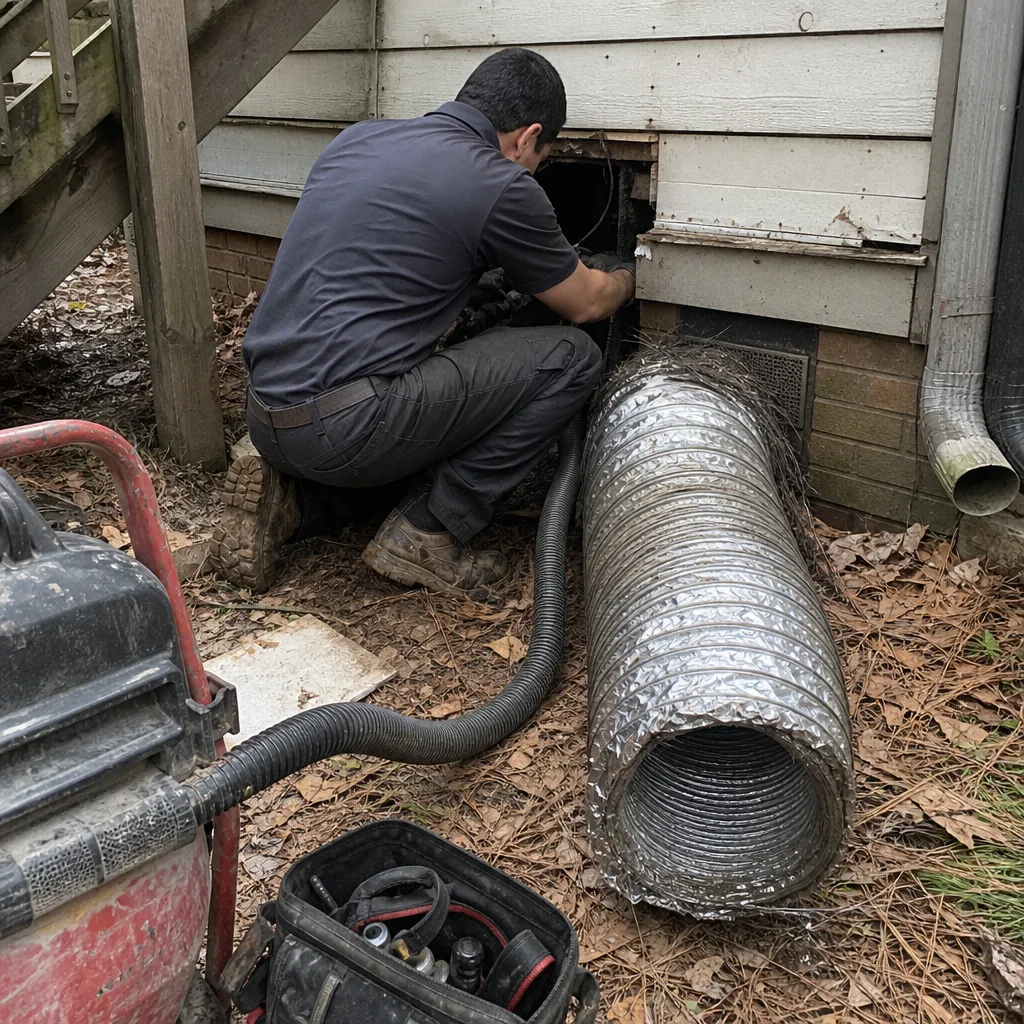 Before
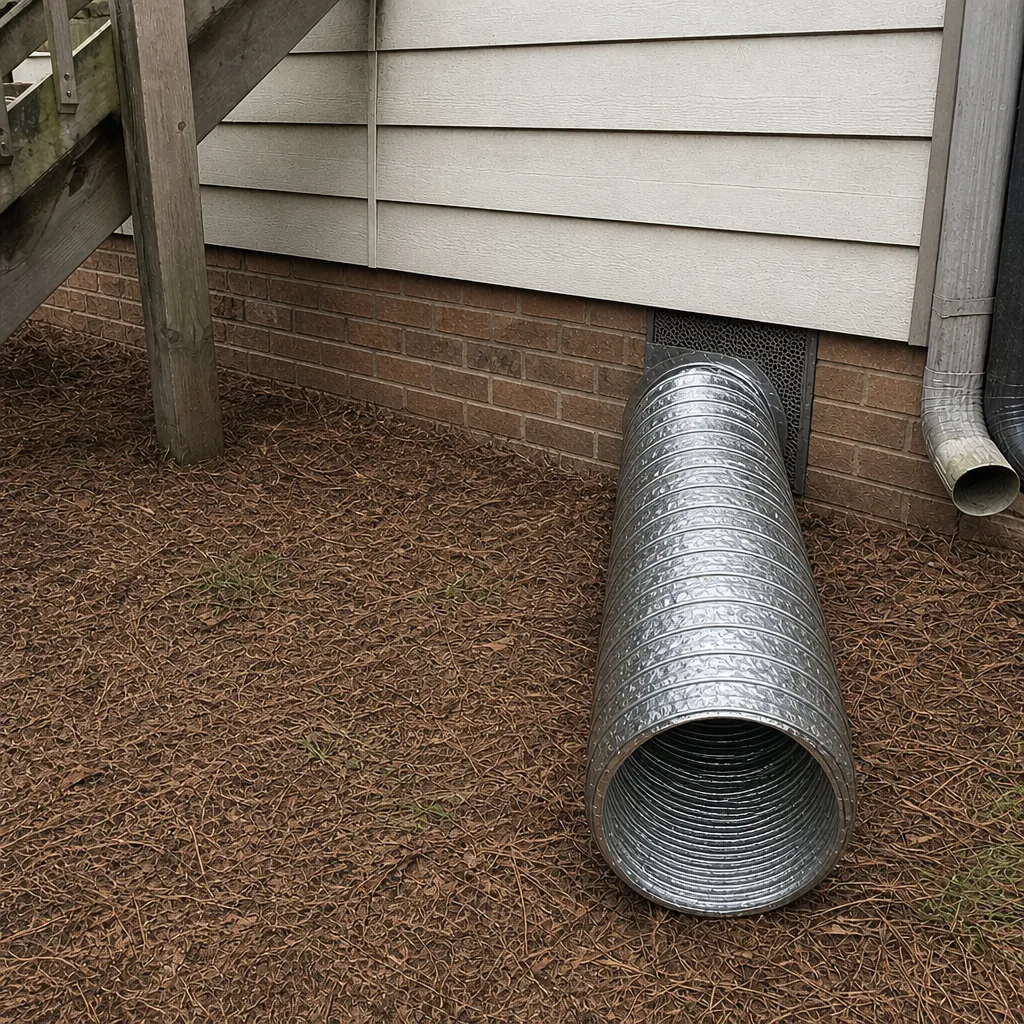 After
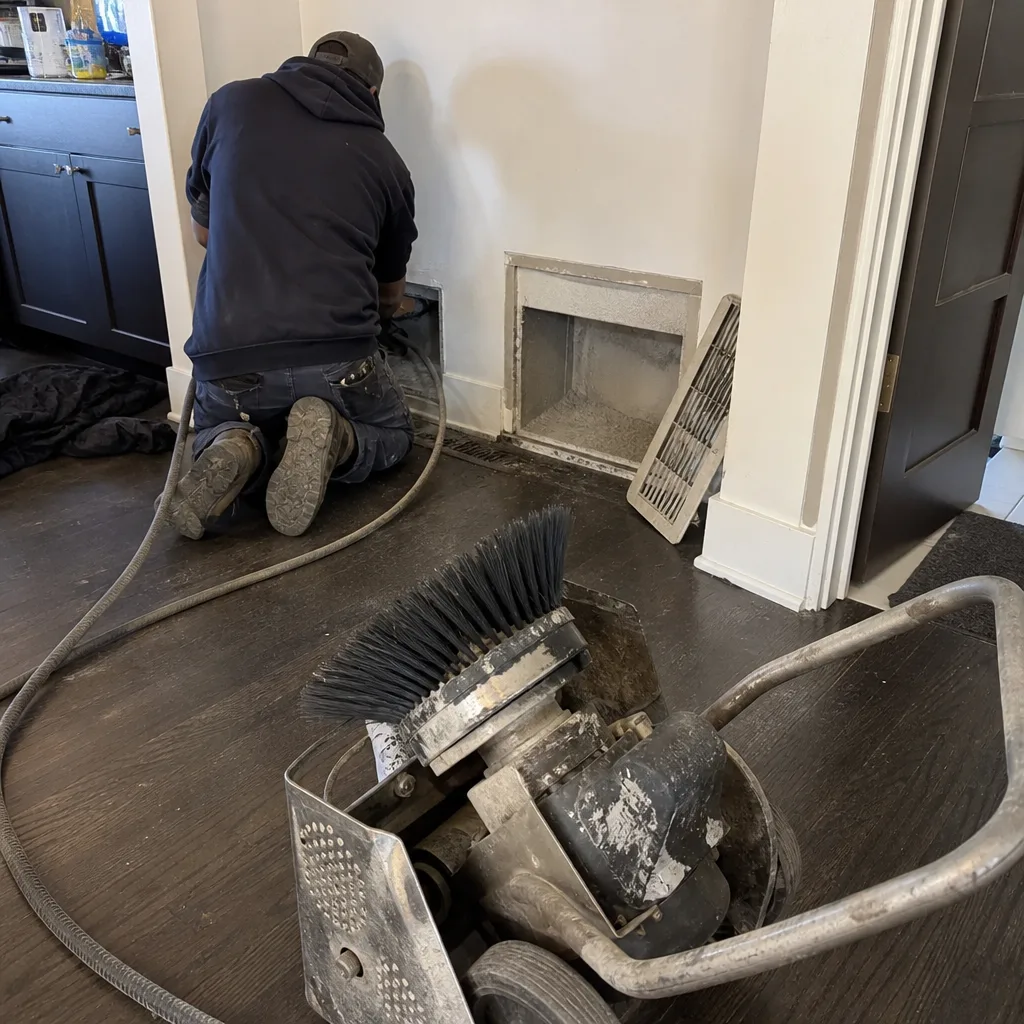 Before
 After
 Before
 After